
The Recent COAI Price Drop: Cause and Implications for Investors


 Aime Summary
Immediate Causes of COAI's Price Drop
COAI's recent turmoil stems from a confluence of factors. First, the broader market's shift in late October 2025-from AI-driven tokens to meme coins-triggered a sector-wide sell-off. This rotation reflects a broader trend of capital chasing short-term hype over long-term utility, a pattern that has amplified volatility in speculative tech assets.
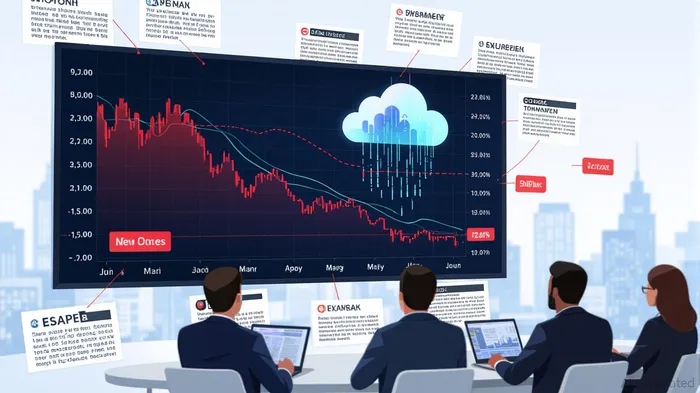
Second, COAI's own trajectory has been marked by extreme price swings, including a 150x surge followed by a 94% collapse. Such volatility has fueled skepticism about the project's legitimacy, with critics labeling it a "pump-and-dump" scheme. Compounding these concerns is the token's extreme centralization: the top 10 wallets control 87.9% of COAI's supply. This concentration of ownership raises red flags about potential manipulation and undermines trust in the project's decentralized claims.
Broader Small-Cap Tech Sector Trends
COAI's struggles are not isolated. The small-cap tech sector in 2025 has been characterized by heightened volatility, driven by its sensitivity to macroeconomic shifts and speculative behavior. Unlike large-cap counterparts, small-cap stocks-particularly in tech-are often less liquid and more prone to overvaluation, especially in environments where investor sentiment swings rapidly.
However, the sector is not without tailwinds. Easing monetary policy-including rate cuts-has historically favored small-cap stocks, with the Russell 2000 Index outperforming the S&P 500 by 12.4% in 3Q25. This outperformance reflects a shift toward smaller, agile firms adapting to AI-driven productivity gains and regulatory easing. For instance, companies like Chinasoft International have shown resilience through strong earnings growth and insider buying, illustrating how fundamentals can anchor value even in volatile markets.
Investor Sentiment and COAI's Unique Challenges
Investor sentiment for COAI has been further eroded by internal missteps. The project's leadership transition-from founder Thomas Siebel to Stephen Ehikian-coincided with a 19% annual revenue decline and a $117 million net loss in the latest quarter. These financial struggles, coupled with a retracted annual forecast, have deepened doubts about COAI's ability to execute its AI platform vision.
Externally, COAI faces a crowded AI landscape. Regulatory shifts in the energy sector and competition from cloud giants like Amazon and Google have intensified pressures, despite strategic partnerships with Microsoft. This context highlights a broader challenge for small-cap tech firms: balancing innovation with operational scalability in a market where hype often outpaces substance.
Implications for Investors
For investors, COAI's price drop serves as a cautionary tale about the risks of speculative small-cap tech investing. While the sector offers opportunities for outsized returns-particularly in AI and AI-driven productivity-the path is fraught with volatility. As noted by a report from Royce & Associates, small-cap tech stocks with unproven business models, like COAI, are especially vulnerable to external shocks such as tariffs or economic slowdowns.
Yet, the sector is not without promise. Active management and a focus on fundamentals-such as insider buying, earnings momentum, and transparent governance-can help identify undervalued opportunities. For COAI, this would require addressing governance concerns, diversifying token ownership, and delivering on its AI platform's long-term potential.
Conclusion
The COAI price drop is a microcosm of the broader small-cap tech sector's duality: a landscape of innovation and opportunity, but also of volatility and risk. As investors navigate this environment, the key lies in distinguishing between projects with sustainable value propositions and those driven by speculative fervor. In 2025, where market rotations and macroeconomic shifts continue to shape investor behavior, due diligence and active management will be paramount.

La combinación de la sabiduría tradicional en el comercio con las perspectivas más actuales relacionadas con las criptomonedas.
Latest Articles
Stay ahead of the market.
Get curated U.S. market news, insights and key dates delivered to your inbox.






Comments
No comments yet