
COAI Price Drop: Causes and Implications for Commodity Investors


 Aime Summary
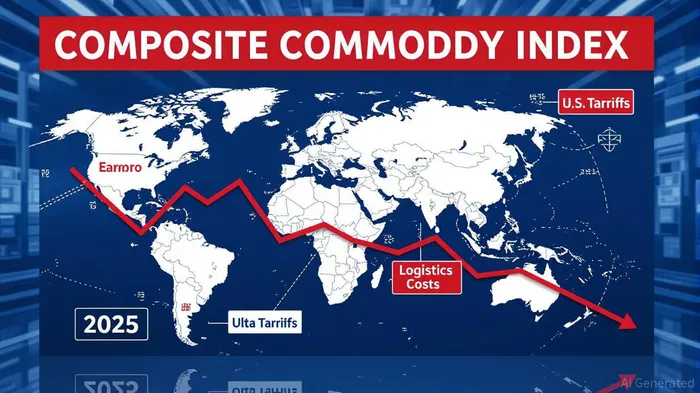
The Composite Commodity Index (COAI) has experienced a sharp decline in 2025, sparking intense debate among investors and analysts. This drop, driven by a confluence of structural supply-demand imbalances and shifting market sentiment, underscores the fragility of global commodity markets amid geopolitical and economic headwinds. For investors, understanding the root causes and broader implications is critical to navigating this volatile landscape.
Structural Shifts: Tariffs, Costs, and Supply Chain Pressures
The COAI's decline is inextricably linked to rising tariffs and surging raw material costs, which have strained global supply chains. A case in point is Inter IKEA Group, whose full-year net profit plummeted by 32% in 2025 due to U.S. tariffs inflating commodity prices and logistics costs, according to a
Wall Street Journal report. These tariffs, part of broader trade tensions, have forced companies to absorb costs while slashing prices to retain competitiveness, further eroding profit margins. The U.S. market, where IKEA sources only 15% of its products regionally, has become a microcosm of these pressures, as the Wall Street Journal report notes.
Structural bottlenecks, such as energy transition costs and inflationary pressures, have compounded the issue. For instance, the forged automotive components market-though growing at a 4.5% CAGR through 2031-faces indirect headwinds from elevated material prices, as a
Global Newswire report notes. This highlights a paradox: while certain manufacturing sectors show resilience, the broader commodity ecosystem remains vulnerable to policy-driven disruptions.
Speculative Positioning and Market Volatility
Speculative positioning in commodity markets has further amplified COAI's volatility. During Q3 2025, commodity trading advisors (CTAs) and algorithmic strategies fueled a rally in precious metals like gold and silver, driven by AI demand and a weaker U.S. dollar, according to a
Schroders Q3 2025 review. However, this speculative fervor has not uniformly benefited all commodity segments. The energy sector, for example, remained flat, weighing on the S&P GSCI Index's overall performance, as the Schroders Q3 2025 review notes.
The Commitments of Traders (COT) report from the CFTC offers insight into these dynamics. Non-commercial speculators in the S&P 500 mini-futures market have adopted increasingly bullish net positions, signaling confidence in equity markets, according to a
CFTC report. While this data is lagged and more suited for long-term strategies, it underscores how speculative flows can decouple commodity prices from fundamental demand. For COAI, this means that short-term movements may reflect algorithmic trading patterns rather than underlying industrial activity.
Implications for Commodity Investors
The COAI's decline presents both risks and opportunities. On one hand, investors must contend with compressed margins and geopolitical uncertainties. On the other, structural shifts-such as the AI-driven demand for metals and the energy transition-offer long-term upside. For instance, gold and copper's record gains in Q3 2025, as the Schroders Q3 2025 review notes, suggest that commodities tied to technological innovation may outperform traditional sectors.
However, the lack of a clear correlation between COAI and global manufacturing PMI data complicates strategic positioning, as the Global Newswire report notes. While manufacturing activity in sectors like automotive components is robust, the COAI's performance remains more sensitive to speculative flows and trade policy. This disconnect highlights the need for diversified portfolios that balance exposure to hard-hit sectors with high-growth commodities.
Conclusion
The COAI's 2025 price drop is a symptom of deeper structural and speculative forces. Tariffs, inflation, and algorithmic trading have created a volatile environment where traditional indicators like PMI offer limited guidance. For investors, the path forward requires a nuanced approach: hedging against short-term volatility while capitalizing on long-term trends in AI and energy transition. As the market evolves, staying attuned to both policy shifts and speculative dynamics will be paramount.

Mezclando la sabiduría tradicional en el comercio con las perspectivas de vanguardia en el área de las criptomonedas.
Latest Articles
Stay ahead of the market.
Get curated U.S. market news, insights and key dates delivered to your inbox.






Comments
No comments yet