
The CME Outage and Its Implications for U.S. Market Stability


 Aime Summary
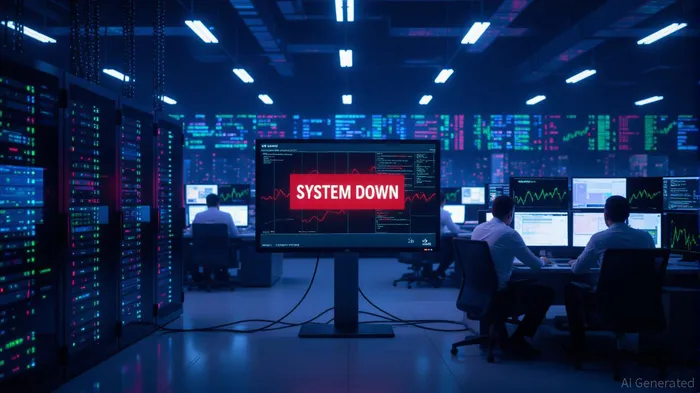
The November 2025 CME GroupCME-- outage, triggered by a cooling system failure at a CyrusOne data center in Chicago, exposed critical vulnerabilities in modern trading infrastructure and raised urgent questions about systemic risk in global financial markets. This incident, which
halted trading across futures, options, and foreign exchange platforms for over nine hours, disrupted key benchmarks such as S&P 500 futures, U.S. Treasury contracts, and crude oil derivatives. The outage not only underscored the fragility of centralized infrastructure but also highlighted the cascading effects of operational failures on market stability.
Systemic Risk and Centralized Infrastructure
The CMECME-- outage exemplifies the growing systemic risks tied to the concentration of financial infrastructure in commercial data centers. According to a report by Bloomberg,
the cooling failure at CyrusOne-a provider serving multiple critical financial hubs-exposed how a single point of failure can paralyze global derivatives markets. This event aligns with broader concerns about the physical and digital dependencies of high-frequency trading systems, which
rely on tightly integrated, energy-intensive infrastructure.
 Academic analyses further emphasize that such outages amplify interconnected risks.
A peer-reviewed study on systemic risk in FinTech notes that operational failures in core infrastructure can trigger cascading effects, particularly during periods of economic stress. For instance, during the CME outage,
gold and silver prices exhibited unexplained volatility, raising questions about whether the disruption was purely technical or compounded by market interventions. These dynamics mirror the October 2025 crypto "black swan" crash, where
leveraged positions and liquidity asymmetries exacerbated market turmoil.
Market Resilience: Lessons and Gaps
The CME outage has reignited debates about the adequacy of market resilience mechanisms.
Regulatory and industry experts stress the need for geographic diversification of data centers, robust contingency planning, and simultaneous settlement systems to mitigate operational risks. For example, the IMF has highlighted the importance of liquidity stress testing and scenario analysis to prepare for infrastructure-related disruptions
as noted in risk analysis. However,
the prolonged duration of the 2025 outage-far exceeding the 2019 incident-suggests gaps in CME Group's disaster recovery protocols.
Moreover, the incident underscores the limitations of current regulatory frameworks. While the CME's resumption of trading on the at noon London time provided some relief,
other markets remained frozen for hours, leaving traders to hedge via swap markets and cash bonds. This fragmentation highlights the need for coordinated contingency measures across asset classes and geographies.
The Path Forward: Innovation and Oversight
Addressing systemic risks in trading infrastructure requires a multifaceted approach.
Policymakers must prioritize operational resilience standards, including mandatory redundancy protocols and real-time monitoring of critical infrastructure. Meanwhile, market participants should diversify risk exposure through alternative investments such as private credit, infrastructure, and hedge funds, which
offer non-correlated returns during crises.
The CME outage also serves as a cautionary tale for the digital asset sector. The October 2025 , driven by macroeconomic shocks and liquidity asymmetries, revealed how
leveraged positions in decentralized markets can amplify systemic vulnerabilities. Strengthening cybersecurity and implementing macroprudential safeguards for both traditional and digital markets are essential to prevent future cascading failures.
Conclusion
The 2025 CME outage is a wake-up call for regulators, market participants, and infrastructure providers. As financial systems grow increasingly interconnected and reliant on digital infrastructure, the risks of operational failures-whether technical, cyber, or environmental-demand proactive mitigation. By investing in resilient infrastructure, diversifying dependencies, and enhancing regulatory oversight, stakeholders can reduce the likelihood of systemic disruptions and safeguard market stability in an era of escalating technological and geopolitical uncertainties.

Stay ahead of the market.
Get curated U.S. market news, insights and key dates delivered to your inbox.




Comments
No comments yet