
CME Group's Recent Outage and Market Stability: Assessing Systemic Risk and Clearing Infrastructure Resilience


 Aime Summary
The recent outage at CME GroupCME-- on November 28, 2025, has reignited critical discussions about the fragility of and the resilience of clearing systems in derivatives markets. Caused by a cooling-system failure at a CyrusOne data center, the disruption halted trading across nearly all of CME's platforms, including Globex, EBS, and BMD, freezing price discovery for critical markets such as U.S. equity futures, crude oil, and global FX
according to Bloomberg. While the incident exposed vulnerabilities in physical infrastructure, the CMECME-- Clearinghouse's robust mitigated systemic risks, underscoring the importance of layered defenses in maintaining .
The Outage: A Physical Bottleneck in a Digital Age
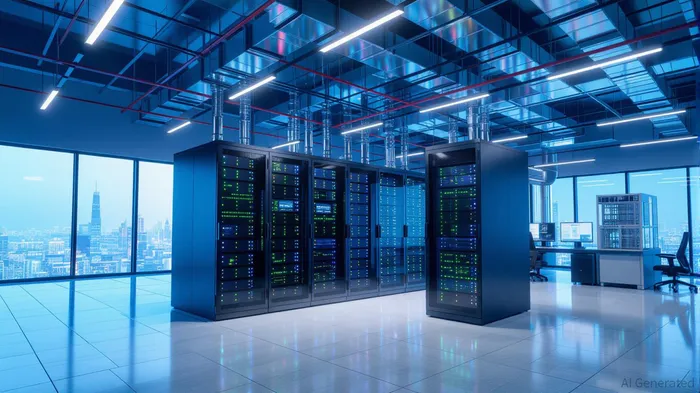
The outage, attributed to a at the CHI1 data center in Chicago, triggered to prevent hardware damage,
. This incident, which lasted longer than CME's 2019 outage, occurred during a historically low-volume period following the U.S. Thanksgiving holiday,
compounding challenges for traders reliant on CME's platforms for liquidity. The disruption highlighted an unexpected vulnerability: modern financial systems' dependence on , rather than computational or , as a critical bottleneck
according to research.
Clearinghouse Resilience: A Shield Against Systemic Risk
Despite the trading halt, CME Clearinghouse maintained operational integrity through its proactive . These include (initial margin requirements), real-time , and to ensure clearing members hold sufficient capital to absorb potential losses
according to CME Group's educational materials. During the outage, the clearinghouse's mechanisms prevented cascading defaults by maintaining liquidity and enforcing , even as price discovery froze
according to market analysis. For instance, the clearinghouse's
reduced capital burdens for clearing members, enabling them to navigate the disruption without triggering .
CME's resilience was further reinforced by its integration of liquidity across asset classes, a strategy that allows for more efficient . , where CME's systems maintained tight spreads despite surging trading volumes
according to Q3 2025 market review. Analysts note that the clearinghouse's ability to function during the outage-albeit without real-time price updates-
demonstrates its role as a in global derivatives markets.
Systemic Risk in Q3 2025: A Broader Context
The outage occurred against a backdrop of otherwise resilient global markets. ,
driven by and accommodative . Expert analyses emphasize that while in private markets has raised concerns, defaults remain contained, and broader has prevented interconnected failures
according to research. Theoretical frameworks for systemic risk, such as and network analysis, further suggest that CME's clearing infrastructure lacks the interconnectedness to trigger widespread contagion
according to research.
Lessons and the Path Forward
The 2025 outage underscores the need for enhanced . CME Group has pledged to review and upgrade its systems, but the incident highlights a broader issue: the concentration of critical in single data centers. As noted by the CME Clearing Risk Working Group,
architectural resilience-such as and -must evolve alongside technological advancements.
For investors, the event serves as a reminder that in derivatives markets remains low, provided clearinghouses maintain robust . However, the exposed by the outage warrant closer scrutiny. As CME Group and other exchanges modernize their infrastructure, the focus must shift from purely digital safeguards to holistic that address both virtual and physical bottlenecks.
Conclusion
CME Group's recent outage, while disruptive, ultimately reinforced the clearinghouse's role as a linchpin of market stability. By leveraging tools like performance bonds and stress testing, the clearinghouse mitigated during the disruption, even as trading platforms faltered. However, the incident highlights the urgent need for infrastructure upgrades to address physical vulnerabilities. For now, global derivatives markets appear insulated from , but the lessons from November 2025 will shape the future of for years to come.

Stay ahead of the market.
Get curated U.S. market news, insights and key dates delivered to your inbox.




Comments
No comments yet