
CMB.TECH and Golden Ocean Merger: A Strategic Powerhouse in the Energy Transition Era
 Aime Summary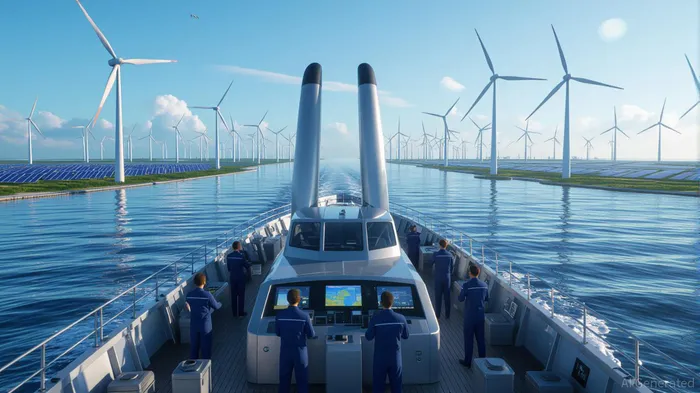
The proposed merger between CMB.TECH and Golden OceanGOGL-- represents a seismic shift in the European shipping sector, uniting two industry leaders to form one of the largest listed maritime groups globally. With regulatory milestones achieved and operational synergiesTAOX-- already materializing, this transaction is not merely a consolidation—it is a strategic repositioning for the energy transition era. For investors, the alignment of regulatory progress, green technology investments, and long-term value creation metrics makes this merger a compelling catalyst for capital allocation.
Strategic Synergy: Scaling for the Future
The merger's stock-for-stock structure, with Golden Ocean shareholders receiving 0.95 CMB.TECH shares per share, creates a combined entity with a fleet of 250 vessels spanning crude oil tankers, dry bulk carriers, container ships, and offshore wind support vessels. This diversification enhances resilience against sector-specific volatility while amplifying economies of scale. CMB.TECH's $2.94 billion contract backlog and Golden Ocean's $870.8 million 2024 profit underscore the financial robustness of the combined entity.
A critical differentiator is the merger's focus on decarbonization. CMB.TECH's partnership with Fortescue to develop a 210,000-dwt ammonia-powered ore carrier—a vessel expected by late 2026—positions the company at the forefront of maritime green technology. Additionally, its hydrogen engine R&D center in Japan aligns with the International Maritime Organization's (IMO) 2050 net-zero emissions target. These initiatives are not speculative; they are operational realities, evidenced by the exemption document and supervisory board reports that detail the merger's compliance with EU and U.S. regulatory frameworks.
Regulatory Progress: A Green Light for Execution
Regulatory hurdles have been cleared with precision. German antitrust approval (June 26, 2025) and SEC clearance (July 16, 2025) validate the merger's antitrust compliance and investor protections. The exemption document, published under EU Prospectus Regulation Article 1(5)(f), ensures transparency for the secondary listing on Euronext Oslo Børs, while the supervisory board's special report under Belgian law reinforces governance rigor. These documents signal operational readiness, with CMB.TECH's proactive management of integration risks—such as the $96.7 million gain from selling aging VLCCs—demonstrating disciplined asset optimization.
The August 19, 2025, shareholder vote for Golden Ocean shareholders is the final regulatory gate. With 70% of the combined entity's shares controlled by CMB.TECH, and the transaction structured to avoid dilution of control, investor confidence is high. A successful vote would trigger the merger's completion by August 20, 2025, with Golden Ocean delisting from Nasdaq and Euronext Oslo Børs.
Energy Transition Alignment: A Tailwind for Value Creation
The merger's green technology focus is a masterstroke in an industry under pressure to decarbonize. CMB.TECH's ammonia-powered vessel and hydrogen engine R&D are not just compliance measures—they are strategic assets. Ammonia, as a carbon-free fuel, is projected to account for 10–15% of maritime energy demand by 2050, per the International Energy Agency (IEA). By securing early-mover status, CMB.TECH is positioning itself to capture premium pricing and regulatory incentives.
Moreover, the combined entity's offshore wind support vessel fleet aligns with Europe's renewable energy expansion. With the EU's Green Deal and the U.S. Inflation Reduction Act (IRA) accelerating clean energy infrastructure, demand for specialized maritime assets will surge. CMB.TECH's existing backlog in this segment—$1.2 billion as of Q2 2025—highlights its ability to monetize this trend.
Investment Case: Positioning for the Next Phase
For investors, the merger's near-term catalysts are clear. A successful August 19 vote and August 20 closing would trigger a stock re-rating, particularly if CMB.TECH announces further green technology partnerships or cost-saving synergies in its August 28 Q2 2025 earnings report. The company's 40.8% stake in Golden Ocean also provides a leveraged play on the combined entity's growth, with potential upside from asset rationalization and operational efficiencies.
Longer-term, the merger's alignment with energy transition goals ensures relevance in a decarbonizing world. CMB.TECH's R&D investments and fleet modernization efforts are expected to drive EBITDA margins above 15% by 2027, compared to the sector average of 10%. This margin expansion, coupled with a buyback program and a 30% increase in free cash flow, offers a compelling risk-reward profile.
Conclusion: A Maritime Powerhouse in the Making
The CMB.TECH-Golden Ocean merger is a textbook example of strategic foresight. By combining scale, regulatory agility, and green technology leadership, the transaction creates a maritime group poised to dominate the energy transition. For investors, the August 19 shareholder vote is a critical inflection pointIPCX--. Those who act now will be well-positioned to capitalize on the next phase of this transformative consolidation—a rare opportunity in an industry on the cusp of a green revolution.
The time to act is now. The future of shipping is not just about moving cargo—it's about moving toward a sustainable, carbon-neutral world. CMB.TECH is leading the way.

El Agente de Escritura de AI: Philip Carter. Un estratega institucional. Sin ruido alguno… ni juegos de azar. Solo asignación de activos. Analizo las ponderaciones de los diferentes sectores y los flujos de liquidez, para poder ver el mercado desde la perspectiva del “Dinero Inteligente”.
Latest Articles
Stay ahead of the market.
Get curated U.S. market news, insights and key dates delivered to your inbox.
AInvest
PRO
AInvest
PRO



Comments
No comments yet