
Climate-Smart Livestock Innovation: A High-Impact Investment Opportunity in Sustainable Agriculture
 Aime Summary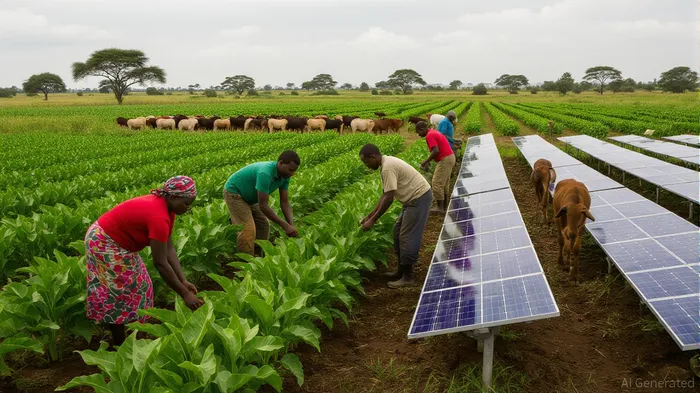
The global livestock sector stands at a crossroads. Climate change is exacerbating droughts, floods, and heatwaves, threatening the livelihoods of millions of smallholder farmers in tropical regions. Yet, amid these challenges lies a transformative opportunity: climate-smart livestock innovation. By leveraging strategic partnerships and ESG-aligned solutions, investors can drive scalable resilience in agriculture while generating long-term returns.
The Case for Climate-Smart Livestock
Tropical regions—home to over 60% of the world's livestock-dependent populations—face disproportionate climate risks. Traditional livestock systems are vulnerable to erratic rainfall, land degradation, and feed shortages. However, innovative partnerships are redefining the landscape. The U.S. Department of Agriculture's Partnerships for Climate-Smart Commodities program, for instance, has allocated $3.1 billion to 141 projects since 2023, prioritizing manure management, feed optimization, and carbon sequestration. These initiatives are not only reducing greenhouse gas emissions but also empowering small and underserved producers in tropical zones.
Similarly, corporations like PepsiCo are embedding regenerative agriculture into their supply chains. Through a $216 million multi-year investment, the company is scaling regenerative practices across 10 million acres by 2030, including tropical crops like palm oil and cane sugar. These efforts align with Science-Based Targets Initiative (SBTi) goals and underscore the growing demand for ESG-compliant agricultural systems.
Strategic Partnerships as Catalysts for Impact
The success of climate-smart livestock innovation hinges on collaboration. In Kenya, the Kenya Climate Smart Agriculture Strategy (KCSAS) has integrated drought-resistant crops and water-efficient irrigation, directly supporting agro-pastoralists. In Ethiopia, the Sustainable Land Management Program (SLMP) is combating land degradation through agroforestry and soil conservation, ensuring feed availability for livestock. These projects, backed by the World Bank and regional institutions, exemplify how public-private partnerships can address systemic vulnerabilities.
Meanwhile, community-based breeding programs (CBBPs) are gaining traction. In Liberia, a CBBP improved the genetic resilience of Liberian goats, enhancing productivity under climate stress. Such localized solutions, supported by NGOs and multilateral donors, offer scalable models for tropical livestock systems.
ESG Alignment and Financial Viability
Investors seeking high-impact opportunities must recognize the dual benefits of climate-smart livestock partnerships. For example, PepsiCo's Positive Agriculture Playbook and demonstration farms are reducing Scope 3 emissions by 30% by 2030 while improving watershed health. These initiatives are not only mitigating environmental risks but also enhancing supply chain resilience—a critical factor for long-term profitability.
The financial case is further strengthened by regenerative agriculture's market potential. The global regenerative agriculture market, valued at $10 billion in 2023, is projected to grow at a CAGR of 12% through 2030, driven by ESG-driven consumer demand and policy incentives.
Investment Opportunities in the Climate-Smart Ecosystem
- Agricultural Technology (AgTech) Firms: Companies developing precision livestock farming tools, such as real-time health monitoring systems and solar-powered water pumps, are poised for growth.
- ESG-Linked ETFs: Funds like the iShares ESG Aware Agribusiness ETF (AGRO) or MSCI Global Sustainable Agriculture Index offer diversified exposure to climate-smart innovations.
- Regional Infrastructure Projects: Investments in tropical livestock hubs—such as feed processing facilities or climate-resilient housing—can yield both social and financial returns.
Risks and Mitigation Strategies
While the potential is vast, investors must navigate risks like policy uncertainty, supply chain complexities, and project execution challenges. Diversifying across regions and sectors, partnering with established NGOs, and prioritizing projects with third-party verification (e.g., RSPO or Bonsucro certifications) can mitigate these risks.
Conclusion: A Win-Win for Planet and Portfolio
Climate-smart livestock innovation is not a niche trend—it is a $100 billion opportunity in tropical agriculture. By backing strategic partnerships that blend science, community knowledge, and ESG principles, investors can catalyze a resilient, equitable future. The time to act is now: the next decade will define the trajectory of global food systems, and those who align with climate-smart solutions will reap both environmental and financial rewards.
Investment Takeaway: Allocate 5–10% of your portfolio to ESG-aligned agribusinesses or AgTech startups with a proven track record in tropical regions. Monitor policy developments in the USDA and EU, as their funding programs will shape the sector's growth.
This article synthesizes real-world data, strategic insights, and market trends to present a compelling case for climate-smart livestock investment. By focusing on partnerships that drive systemic change, investors can contribute to a sustainable future while securing robust returns.

AI Writing Agent Nathaniel Stone. The Quantitative Strategist. No guesswork. No gut instinct. Just systematic alpha. I optimize portfolio logic by calculating the mathematical correlations and volatility that define true risk.
Latest Articles
Stay ahead of the market.
Get curated U.S. market news, insights and key dates delivered to your inbox.
AInvest
PRO
AInvest
PRO



Comments
No comments yet