
Climate Risk and the Insurance Sector: Weather Volatility as a Catalyst for Reinsurance Demand and Portfolio Reallocation


 Aime Summary
The insurance sector is undergoing a profound transformation as climate risk reshapes the landscape of risk management and capital allocation. , driven by , has emerged as a critical catalyst for surging demand and strategic portfolio reallocation. Insurers and reinsurers are no longer merely reacting to losses; they are proactively adapting to a new normal of escalating . This shift has significant implications for investors, who must navigate both the challenges and opportunities presented by a sector in flux.
The Escalating Impact of Weather Volatility
Natural catastrophes have become more frequent and severe, with insured losses reflecting this alarming trend. In 2024, ,
. Munich Re
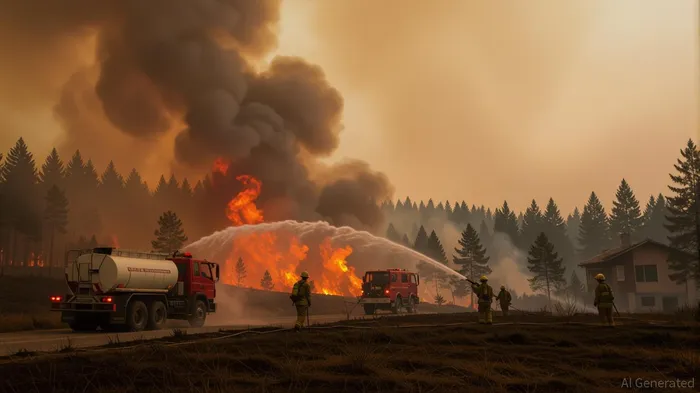
attributes this escalation to climate change, which intensifies weather-related disasters such as , floods, and wildfires. For instance,
according to Munich Re. These figures underscore a systemic shift: climate risk is no longer a peripheral concern but a central driver of financial instability in the insurance sector.
Reinsurance as a Critical Risk Transfer Mechanism
The growing scale of has amplified the role of reinsurance in stabilizing the insurance market. act as a buffer for primary insurers, absorbing large-scale risks that exceed their capacity.
Swiss Re and Munich Re have emphasized reinsurance's importance in managing . For example, Munich Re highlights that while loss prevention measures-such as improved construction and land-use planning-can mitigate future risks,
reinsurance remains indispensable for transferring exposures from . This dynamic is likely to intensify as climate change exacerbates uncertainty, pushing insurers to rely more heavily on reinsurance to maintain and underwriting discipline.
Portfolio Reallocation: A Strategic Imperative
Beyond reinsurance, insurance companies are recalibrating their investment portfolios to align with . Swiss Re, for instance, has adopted a dual approach:
in its investment portfolio and prioritizing and climate solution infrastructure projects.
according to Swiss Re. Similarly, Munich Re has set ambitious targets under its , including
. The company has also excluded direct investments in thermal coal and
. These strategies reflect a broader industry trend: insurers are no longer passive observers of climate risk but active participants in shaping a low-carbon future.
Implications for Investors
For investors, the insurance sector's response to presents both risks and opportunities. On one hand, the rising costs of catastrophe losses and the need for reinsurance could strain profitability in the short term. On the other hand, companies that proactively reallocate portfolios and invest in are likely to emerge stronger in the long run.
Swiss Re's focus on green bonds and sustainable infrastructure aligns with growing demand for , offering potential for both and returns. Similarly,
according to Munich Re. Investors must, therefore, differentiate between insurers that treat climate risk as a liability and those that view it as a catalyst for innovation.
Conclusion
The insurance sector stands at a crossroads, with climate risk redefining the parameters of and capital allocation. Weather volatility has become a powerful driver of reinsurance demand, while strategies are emerging as essential tools for mitigating climate exposure. For investors, the key lies in identifying insurers that are not only adapting to this new reality but also leveraging it to build resilience and seize opportunities. As Swiss Re and Munich Re demonstrate, the future of the will belong to those who act decisively in the face of uncertainty.

Stay ahead of the market.
Get curated U.S. market news, insights and key dates delivered to your inbox.


AInvest
PRO
AInvest
PRO



Comments
No comments yet