
Climate Risk and Agricultural Assets in Fire-Prone Regions: Assessing the Long-Term Viability of Farmland and Vineyard Investments in California's Wine Country Amid Rising Wildfire Threats
 Aime Summary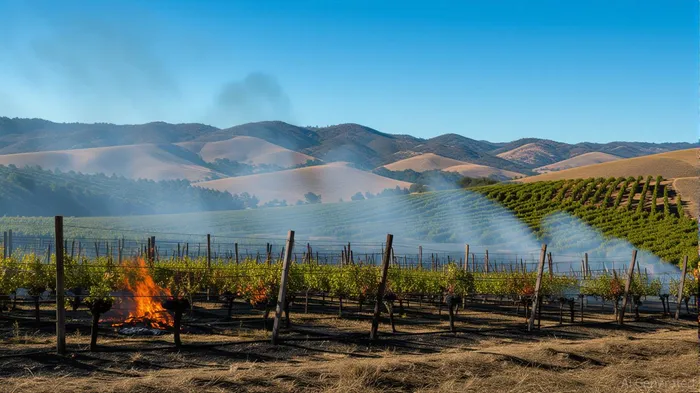
The Allure and the Alarms
California's wine country has long been a beacon for agricultural investors, offering premium farmland, high-value crops, and a global reputation for quality. Vineyards in Napa, SonomaSNOA--, and Paso Robles command land prices ranging from $45,000 to over $100,000 per acre, driven by demand for premium wines and export markets. Yet, this allure is increasingly shadowed by a growing threat: wildfires. From 2015 to 2025, the region has faced a surge in fire frequency and intensity, with events like the Tubbs Fire (2017), Glass Fire (2020), and 2024 wildfires causing over $4.7 billion in agricultural losses. The question now is whether these assets can withstand the compounding risks of climate change and smoke taint, or if they represent a ticking time bomb for investors.
Historical Trends: Fires and Their Aftermath
The data paints a stark picture. Between 2015 and 2025, California's wine regions experienced 12 major wildfires, with 2020 and 2024 being particularly devastating. The Tubbs Fire (2017) destroyed 5,636 structures and 36,807 acres of vineyards, while the 2024 wildfires—though sparing most vineyards from direct flames—inflicted $185 million in smoke-related losses in Napa County alone. These fires are no longer just about flames; smoke taint, caused by volatile phenols like guaiacol, has become a silent killer of grape quality. Even a brief exposure to smoke during harvest can render entire vintages unsellable, with research from UC Santa Cruz revealing that odorless compounds in grapes can later release off-flavors during tasting.
Current Challenges: Smoke Taint and Insurance Reforms
The 2025 market analysis underscores a shift in risk perception. Wildfires are now a dual threat: direct destruction and indirect smoke exposure. For example, the 2024 fires burned over 1 million acres, yet most vineyards avoided physical damage. Still, smoke lingered for weeks, infiltrating grape clusters and devaluing crops. This has forced the industry to innovate. Barrier sprays like kaolin clay and cellulose nanofiber are being tested to reduce phenol absorption, while satellite-based tools like Farmonaut offer real-time monitoring of fire-prone zones.
Insurance, however, remains a patchwork. The California Department of Insurance's Sustainable Insurance Strategy, launched in 2025, mandates the use of climate-informed catastrophe models from Verisk and Karen Clark & Company. These models aim to stabilize premiums by factoring in mitigation efforts—such as fire-resistant infrastructure and defensible space. Insurers like Mercury and AllstateALL-- have already pledged to expand coverage in high-risk areas, but the Los Angeles wildfires of 2025 (which caused $45 billion in insured losses) have strained the FAIR Plan, a state-backed insurer of last resort.
Investment Landscape: Opportunities and Risks
For investors, the calculus is complex. Vineyard land in premium regions offers projected returns of 6–13% (2024–2025), but these must be weighed against rising insurance costs and the risk of long-term land value depreciation. The 2024 fires, for instance, led to a 30% spike in insurance premiums for some Napa growers, with coverage gaps persisting for small-scale operations. Yet, opportunities exist for those who integrate climate resilience. State-funded grants for fire suppression infrastructure, soil remediation, and regenerative practices now offset up to 50% of mitigation costs.
Technology is a game-changer. AI-powered advisory systems and blockchain traceability are being adopted to verify smoke-free harvests and maintain market confidence. For example, ETS Laboratories in Napa Valley offers rapid smoke marker analysis, enabling winemakers to adjust harvest timing and fermentation methods.
Future Outlook: Adapting to a New Normal
The path forward hinges on three pillars: technology, policy, and diversification.
1. Technology: Precision agriculture tools and smoke-taint mitigation research (funded by the proposed Smoke Exposure Research Act of 2025) will be critical.
2. Policy: The Sustainable Insurance Strategy and updated defensible space regulations are stabilizing the market, but federal funding for wildfire research remains uncertain.
3. Diversification: Investors should avoid over-concentration in high-risk zones and consider hybrid portfolios that blend vineyards with fire-resistant crops or agroforestry systems.
Conclusion: Strategic Investment in a Climate-Changed World
California's wine country remains a compelling asset class, but its long-term viability depends on proactive adaptation. Investors must balance the high returns of premium viticulture with the realities of climate risk. Those who leverage grants, adopt cutting-edge technology, and diversify their holdings will be best positioned to thrive in this new era. As the 2025 wildfires have shown, the future of agriculture in fire-prone regions is not about avoiding risk—it's about managing it with innovation and foresight.

Stay ahead of the market.
Get curated U.S. market news, insights and key dates delivered to your inbox.


AInvest
PRO
AInvest
PRO



Comments
No comments yet