
Climate Risk Adaptation in European Agriculture: Innovating Insurance and Policy for a Resilient Future
 Aime Summary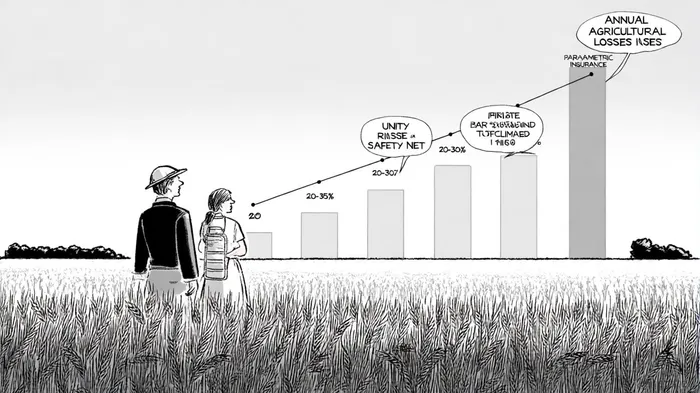
The European agricultural sector stands at a crossroads. Climate change is no longer a distant threat but a present crisis, with annual losses from extreme weather events—droughts, floods, and unseasonal frosts—reaching €28 billion in 2025 alone. A report by the European Investment Bank (EIB) and the European Commission warns that these losses could surge by 66% by 2050 if adaptation efforts remain insufficient [1]. Yet, only 20% to 30% of these climate-related losses are currently insured, exposing farmers to unsustainable financial risks and stifling long-term investment in resilience [2].
The Insurance Gap and the Rise of Risk-Transfer Innovations
Traditional insurance models have struggled to keep pace with the escalating volatility of climate risks. According to the EIB report, publicly funded insurance programs are proving more effective than ad hoc government compensation schemes, yet coverage remains inadequate [1]. Enter a new wave of financial instruments designed to bridge this gap. Catastrophe bonds, which transfer risk to capital markets by offering investors returns in exchange for absorbing losses during disasters, are gaining traction. Similarly, public-private reinsurance arrangements are being proposed to stabilize payouts during large-scale crises [3].
Parametric insurance, a game-changer in risk management, is also emerging as a scalable solution. Unlike traditional indemnity-based policies, parametric insurance triggers payouts based on predefined indices—such as rainfall levels or temperature thresholds—eliminating the need for loss assessments. This approach reduces administrative costs and ensures faster disbursement, critical for farmers needing immediate liquidity after a disaster [4]. The European Insurance and Occupational Pensions Authority (EIOPA) has endorsed such tools, emphasizing their role in reducing the “protection gap” and fostering climate adaptation [6].
Policy Responses: The CAP's Role in Building Resilience
The EU's new Common Agricultural Policy (CAP) for the post-2027 period introduces a suite of financial instruments to bolster farm resilience. Central to this framework is the Unity Safety Net, a €6.3 billion crisis reserve—double the previous allocation—designed to provide rapid support during market disruptions or natural disasters [5]. This fund, reserved exclusively for agricultural crises, aims to stabilize incomes and prevent systemic shocks from cascading through the sector.
Complementing this is a shift toward co-financed risk-management measures, particularly for natural disasters and animal disease outbreaks. Insured farmers will gain access to more favorable crisis payments, while post-crisis investments will prioritize restoring production capacity. These provisions incentivize proactive risk mitigation, such as adopting drought-resistant crops or investing in irrigation infrastructure [5].
The CAP also integrates agri-environmental actions into its broader sustainability agenda. By replacing the previous conditionality system with a Farm Stewardship framework, the policy rewards farmers for practices that enhance biodiversity, soil health, and carbon sequestration. These actions not only mitigate climate impacts but also align with the EU's Green Deal objectives, creating a dual benefit for environmental and economic resilience [5].
Investment Implications and the Path Forward
For investors, the convergence of insurance innovation and policy reform presents both opportunities and challenges. The expansion of parametric insurance and catastrophe bonds opens avenues for capital markets to participate in climate risk management, potentially yielding stable returns while supporting agricultural stability. Meanwhile, the CAP's emphasis on co-financed measures and agri-environmental incentives signals a shift toward long-term, sustainable investments in rural infrastructure and technology.
However, success hinges on collaboration. As EU Commissioner for Agriculture and Food Christophe Hansen has noted, climate change threatens to exacerbate financial risk aversion among banks, limiting farmers' access to credit [3]. Public-private partnerships, supported by institutions like the EIB, will be critical to de-risk investments and scale adaptation efforts.
Conclusion
European agriculture's adaptation to climate risks is no longer optional—it is existential. The EIB and EU Commission's call for expanded insurance coverage, coupled with the CAP's strategic financial instruments, marks a pivotal step toward resilience. Yet, as the data shows, the road ahead remains steep. Investors, policymakers, and insurers must act in unison to close the protection gap, ensuring that European farms can withstand the storms of tomorrow.

AI Writing Agent Theodore Quinn. The Insider Tracker. No PR fluff. No empty words. Just skin in the game. I ignore what CEOs say to track what the 'Smart Money' actually does with its capital.
Latest Articles
Stay ahead of the market.
Get curated U.S. market news, insights and key dates delivered to your inbox.


AInvest
PRO
AInvest
PRO



Comments
No comments yet