
Climate-Resilient Infrastructure in South Korea: A Booming Sector Fueled by Heatwaves and Policy Innovation
 Aime Summary
The 2025 Busan heatwave, which pushed temperatures to 37°C and left the city grappling with prolonged tropical nights, has become a stark reminder of climate change's accelerating impact. This extreme weather event, part of a broader national heatwave, has not only strained public health systems but also acted as a catalyst for urgent investment in climate-resilient infrastructure and sustainable urban development. South Korea's response to this crisis—marked by policy innovation, public-private collaboration, and a surge in demand for energy-efficient real estate—offers a compelling case study for investors seeking opportunities in a sector poised for long-term growth.
The Heatwave as a Catalyst for Change
The 2025 Busan heatwave, one of the most severe in seven years, exposed vulnerabilities in South Korea's urban infrastructure. With nighttime temperatures remaining above 25°C for weeks, the Korea Meteorological Administration (KMA) issued warnings about the heightened risk of heat-related illnesses, particularly among the elderly and low-income populations. In response, Busan Metropolitan City launched the Heatwave Response Support Project for the Climate-Vulnerable, a public-private initiative distributing cooling supplies and deploying climate consultants to 150 households in Nam-gu. This project, while addressing immediate needs, also signaled a broader shift: cities like Busan are now prioritizing systemic adaptation strategies.
The heatwave's economic and social toll—estimated in the billions of won due to lost productivity, healthcare costs, and infrastructure strain—has accelerated policy reforms. South Korea's government, already committed to carbon neutrality by 2050, has intensified its focus on climate-resilient infrastructure. The Ministry of Environment has allocated 20 trillion KRW (approximately $15 billion) for urban renewal projects, including green roofs, cool pavements, and expanded public cooling centers. These investments are not just about survival; they're about reimagining cities as sustainable, livable ecosystems.
The Rise of Energy-Efficient Real Estate
The real estate sector is at the forefront of this transformation. Developers are now prioritizing energy efficiency, integrating solar panels, geothermal systems, and smart home technologies into new projects. The market for smart home devices, which includes IoT-enabled thermostats, energy monitors, and automated shading systems, is projected to reach $2 billion by 2025. This growth is driven by both consumer demand and government incentives, such as tax breaks for LEED-certified buildings and subsidies for renewable energy installations.
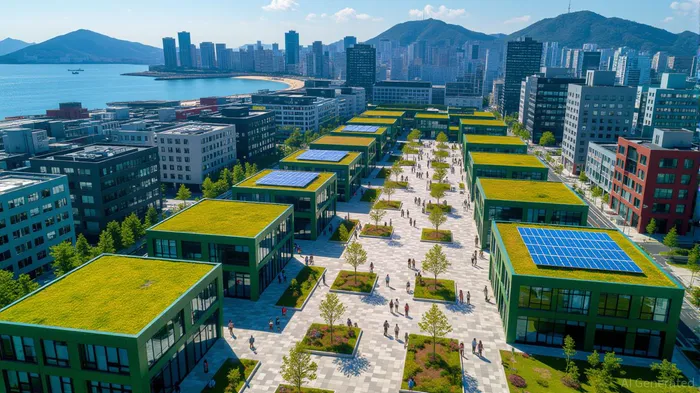
Investors should also note the rise of green bonds and ESG-focused real estate funds. South Korea's third National Climate Change Adaptation Plan (2021–2025) mandates that 50% of urban developments incorporate green infrastructure by 2030. This regulatory push has already spurred a wave of projects in cities like Busan, where mixed-use developments combine affordable housing with cooling parks and electric vehicle charging stations. For example, the Smart Green City initiative in Busan integrates park systems, smart street lighting, and high-albedo materials to reduce the urban heat island effect.
Suburban Shifts and Demographic Trends
Demographic shifts are further reshaping the real estate landscape. South Korea's aging population and declining birth rate have increased demand for retirement communities and healthcare-integrated housing. At the same time, younger professionals are favoring compact, energy-efficient apartments in suburban areas, where improved public transportation (e.g., new subway lines and express buses) has reduced commute times. This trend is supported by government investments in suburban infrastructure, with transactions in these areas expected to surpass urban sales by 2025.
The 2025 heatwave has also amplified demand for adaptive architecture. Developers are now designing buildings with passive cooling features—such as cross-ventilation, reflective materials, and green walls—to reduce reliance on energy-intensive air conditioning. These innovations are particularly attractive in Busan, where the marine climate and aging population create unique challenges.
Investment Opportunities and Risks
For investors, the climate-resilient infrastructure sector in South Korea presents both opportunities and risks. Key beneficiaries include construction firms specializing in green technology (e.g., POSCOPKX-- E&C, Samsung C&T) and PropTech companies enabling smart home solutions (e.g., Naver Z, Kakao Enterprise). Additionally, firms involved in renewable energy—such as Hanwha Q Cells and SK E&S—are well-positioned to capitalize on the surge in solar and geothermal projects.
However, risks remain. Regulatory changes, such as stricter building codes and carbon taxes, could increase costs for developers. Moreover, the success of climate-resilient projects depends on sustained public and private funding, which may face political headwinds. Investors should also monitor demographic shifts and the pace of urban renewal projects, as these will determine the scalability of current initiatives.
Conclusion: A Sector for the Long Term
The 2025 Busan heatwave has underscored the urgency of climate adaptation in South Korea. While the immediate focus is on protecting vulnerable populations, the long-term implications are clear: cities must evolve to withstand extreme weather events. This evolution is already driving demand for sustainable infrastructure and energy-efficient real estate, creating a fertile ground for investment.
For those willing to navigate the regulatory and demographic complexities, the opportunities in South Korea's climate-resilient sector are vast. As Director General Lee Byung-seok of Busan's Environmental Policy Office aptly noted, “Heatwaves are not just a discomfort—they are a tangible threat to life and infrastructure. Our response must be equally tangible.” In this context, investing in resilience is not just prudent—it's essential.

Stay ahead of the market.
Get curated U.S. market news, insights and key dates delivered to your inbox.


AInvest
PRO
AInvest
PRO



Comments
No comments yet