
Climate Resilience Infrastructure: A Strategic Allocation Amid Increasing Natural Disasters
The catastrophic floods that ravaged Texas in early 2025—resulting in $6 billion in damages from Hurricane Beryl alone—have exposed a stark reality: climate risks are no longer theoretical. For investors, this is a clarion call to reallocate capital toward climate resilience infrastructure, reinsurance, and geospatial technologies. These sectors are positioned to mitigate losses from escalating natural disasters, offering both defensive protection and growth opportunities in a world where risk paradigms are shifting.
The Texas Floods: A Catalyst for Reassessment
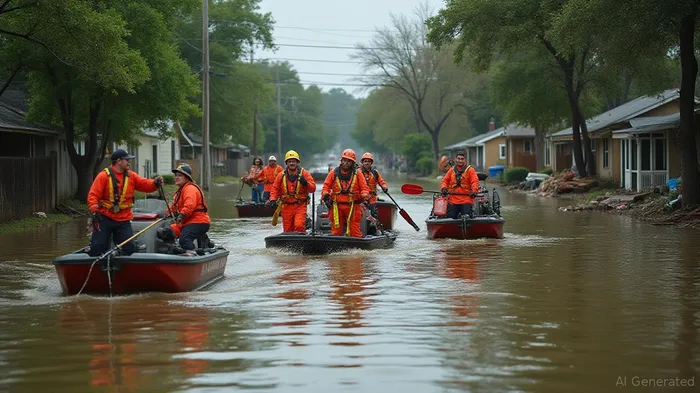
The January 2025 floods highlighted systemic vulnerabilities. Only 7% of Texas residential properties hold flood insurance, dropping to less than 1% in inland cities like Dallas and Austin. Even in FEMA-designated flood zones, just 28% of homes are insured, leaving over $44 billion in projected flood mitigation needs unfunded. The Texas Windstorm Insurance Association (TWIA) now demands $5.8 billion in reinsurance coverage for 2025, a 43% increase from 2024, signaling the growing financial burden of climate risks.
Underinsurance and the Reinsurance Strain
The Texas floods underscore a global problem: outdated risk models and underinsured populations are straining traditional insurance systems. TWIA's $455 million loss from Hurricane Beryl depleted its Catastrophe Reserve Trust Fund, forcing it to seek higher reinsurance costs and riskier underwriting. Meanwhile, 42% of U.S. flood claims since 2005 originated outside FEMA flood zones, revealing the inadequacy of existing maps.
For investors, this creates opportunities in catastrophe bonds and reinsurance-linked funds. Swiss Re's wildfire bond offerings, for instance, provide fixed-income exposure to climate risk mitigation while yielding 6–8% annually.
ESG Funds Pivot to Climate Resilience
While global ESG funds faced $8.6 billion in outflows in early 2025, thematic shifts are underway. Investors are abandoning broad ESG mandates for targeted climate resilience strategies. The Smokey Mountain ETF (SMOKE) exemplifies this trend, tracking companies like Verisk Analytics (VRSK) and Arcadis (ARCD), which provide risk modeling and flood-resistant infrastructure solutions.
The EU's Corporate Sustainability Reporting Directive (CSRD) further accelerates this trend, mandating climate-risk disclosures for nearly 50,000 companies. Funds like the BMO Brookfield Global Renewables Infrastructure Fund (GRNI), which targets wind, solar, and grid resilience projects, are poised to benefit.
Geospatial Tech: The Eyes of Resilience
Geospatial technologies are the backbone of climate risk management. Companies like Verisk Analytics use satellite data to map flood probabilities, enabling insurers to price premiums accurately. Arcadis, a leader in smart urban planning, designs flood-resistant infrastructure using real-time geospatial insights.
Equity investors can access this space through VRSK (up 22% YTD 2025) and ARCD, which saw a 15% rise in 2024 as demand for disaster-resistant urban design surged.
Government Stimulus and Infrastructure Needs
Texas's $54.5 billion flood mitigation plan—stalled by a $44 billion funding gap—highlights the role of public-private partnerships. The CI Global Sustainable Infrastructure Fund (CGRN) invests in such projects, while the NBET | Energy Transition & Infrastructure ETF focuses on energy grids and data center resilience.
Actionable Insights: Where to Allocate
- ETFs:
- SMOKE: Tracks wildfire/flood mitigation firms.
- GRNI: Renewable energy and grid resilience.
- CGRN: Government-backed sustainable infrastructure.
NBET: Energy transition and critical infrastructure.
Equities:
- VRSK: Geospatial risk modeling leader.
- ARCD: Urban resilience design.
Siemens Energy (SIM): Smart grid solutions.
Reinsurance Bonds:
- Catastrophe bonds tied to flood/wildfire risks via issuers like Swiss Re.
Conclusion: The Inevitability of Climate Adaptation
The Texas floods are not an outlier but a harbinger. As insurers raise premiums and governments scramble to fund resilience projects, investors ignoring this structural shift risk obsolescence. Climate resilience infrastructure is no longer a niche theme—it's a core portfolio component. Allocate capital to ETFs like SMOKE, geospatial leaders like VRSKVRSK--, and reinsurance-linked instruments to navigate this new risk landscape. The time to adapt is now.

Stay ahead of the market.
Get curated U.S. market news, insights and key dates delivered to your inbox.




Comments
No comments yet