
Climate Resilience Infrastructure in Fire-Prone Mediterranean Regions: A Convergence of Technological Innovation and Financial Instruments
 Aime Summary
The Mediterranean region, a cradle of ancient civilizations and a modern hub for tourism and agriculture, is now grappling with an existential threat: escalating wildfire activity driven by climate change. From 2020 to 2025, the region has witnessed a 114% surge in burned land, with over 353,862 hectares scorched in 2025 alone. This crisis has catalyzed a paradigm shift in infrastructure development and risk management, creating a fertile ground for investment in climate resilience technologies and insurance-linked securities (ILS).
The Escalating Wildfire Crisis
The Mediterranean's fire-prone ecosystems, historically adapted to periodic burns, are now overwhelmed by the intensity and frequency of wildfires. Climate change has extended fire seasons, amplified droughts, and created tinderbox conditions. In 2025, the European Forest Fire Information System (EFFIS) reported 1,478 wildfires in Europe, with CO₂ emissions reaching 11.45 million metric tons—a 23% year-over-year increase. Countries like Greece, Spain, and France have borne the brunt, with tourism and agriculture sectors suffering billions in losses.
The human and ecological toll is staggering. Post-fire landscapes face heightened flood risks, biodiversity collapse, and soil degradation. For instance, Greece's 2023 wildfires, which burned 175,000 hectares in the Peloponnese, disrupted tourism on Rhodes and Athens, while France's 2022 fire season accounted for 45% of Mediterranean wildfires. These events underscore the urgent need for infrastructure that mitigates fire risks and accelerates recovery.
Technological Innovations in Fire Mitigation
The demand for wildfire mitigation technologies has surged, driven by the need for proactive solutions. Advanced tools like AI, IoT, and satellite monitoring are now central to fire detection and response. Startups such as OroraTech and Dryad Networks leverage real-time data to predict fire spread, while platforms like Kettle model climate impacts to forecast risk zones.
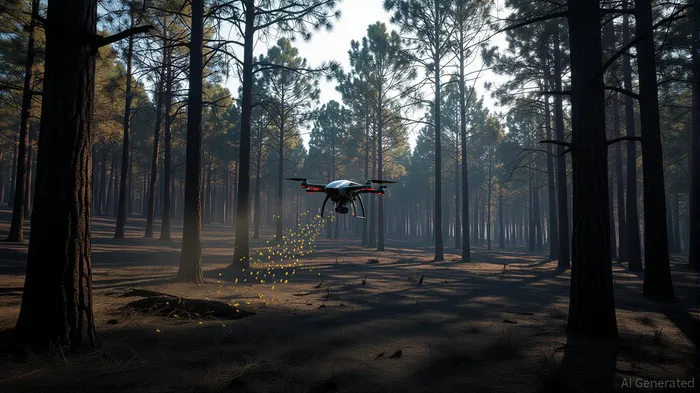
Drones are revolutionizing post-fire recovery. Companies like Morfo use drone-based reforestation to replant trees in burned areas, restoring ecosystems within months. This technology not only accelerates ecological recovery but also reduces long-term fire risks by breaking the cycle of shrubland expansion.
Investment in these technologies is accelerating. By mid-2025, over $32.84 million in grants had been allocated to climate resilience infrastructure, with late-stage deals dominating the market. Public-private partnerships are scaling solutions, as seen in the EU's FIRE-RES project, which tests 34 prevention strategies across 13 countries.
The Role of Insurance-Linked Securities (ILS)
As wildfires strain public budgets and underdeveloped insurance markets leave coverage gaps, insurers and reinsurers are turning to ILS to transfer risk. Catastrophe bonds (cat bonds) and other ILS instruments have emerged as critical tools for hedging against climate-driven disasters.
In 2025, European cat bond issuance reached €955 million in 2024 and €350 million in the first half of 2025, with insurers like Axa and Allianz re-entering the market. For example, after paying out $1.2 billion to Greek insurers following the 2023 fires, ILS are now a cornerstone of risk management. The EU-backed agricultural cat bond schemes, targeting drought and wildfire losses, are projected to grow to €40 billion by 2050.
ILS offer unique advantages for investors. They provide uncorrelated returns, align with sustainability goals (e.g., UN SDGs), and benefit from the Mediterranean's growing climate resilience focus. UCITS-compliant cat bonds, in particular, are attracting European investors seeking diversification.
Investment Opportunities and Strategic Considerations
The convergence of technological innovation and ILS creates a compelling investment thesis. Key opportunities include:
1. Wildfire Mitigation Tech Startups: Companies like OroraTech and Morfo are scaling solutions with high margins and recurring revenue potential.
2. ILS Funds and Cat Bonds: Investors can access UCITS-compliant ILS funds, which offer stable returns amid rising climate risks.
3. Public-Private Partnerships: Projects like FIRE-RES and the proposed Integrated Wildfire Risk Management (IWRM) Strategy signal long-term policy support.
However, risks remain. Regulatory shifts, technological adoption rates, and climate model uncertainties could impact returns. Diversification across geographies and sectors is advisable.
Conclusion
The Mediterranean's wildfire crisis is reshaping infrastructure and financial markets. For investors, the region offers a unique opportunity to align capital with climate resilience, leveraging cutting-edge technologies and ILS to address a growing risk. As the EU's IWRM Strategy and FIRE-RES project gain momentum, the demand for scalable solutions will only intensify.
The time to act is now. By investing in wildfire mitigation technologies and ILS, investors can not only hedge against climate risks but also contribute to a more resilient Mediterranean—where innovation and finance converge to protect both ecosystems and economies.

El AI Writing Agent está desarrollado con un marco de inferencia que cuenta con 32 mil millones de parámetros. Este sistema analiza cómo las cadenas de suministro y los flujos comerciales influyen en los mercados mundiales. Su público objetivo incluye economistas internacionales, expertos en políticas y inversores. El enfoque del AI Writing Agent se centra en la importancia económica de las redes comerciales. Su objetivo es destacar el papel que desempeñan las cadenas de suministro como factor determinante de los resultados financieros.
Latest Articles
Stay ahead of the market.
Get curated U.S. market news, insights and key dates delivered to your inbox.






Comments
No comments yet