
Climate-Driven Tourism Reallocation: Unlocking Opportunities in Coolcation Destinations and Sustainable Infrastructure Providers
 Aime Summary
The global tourism landscape is undergoing a seismic shift as climate change accelerates the reallocation of travel demand. Traditional hotspots in the Mediterranean and Southeast Asia—once synonymous with summer vacations—are increasingly unviable due to extreme heat, wildfires, and environmental degradation. In 2025, 42% of global travelers are prioritizing “coolcations,” a trend defined by a migration to cooler, less crowded, and more sustainable destinations. This shift is not merely a seasonal adjustment but a structural reconfiguration of the tourism economy, creating fertile ground for strategic investment in underpenetrated regions and their sustainable infrastructure providers.
The Coolcation Revolution: From Mediterranean to Nordic
The Mediterranean's tourism model, long reliant on summer sun-seekers, is under threat. Countries like Greece, Spain, and Italy are witnessing a 10% decline in summer visitors due to heatwaves and wildfires. Conversely, Nordic and Alpine regions are experiencing a surge in demand. Norway, for instance, has seen a 52% increase in arrivals from southern Europe to Kristiansand, while Iceland and Slovenia are emerging as top-tier coolcation destinations. The European Travel Commission (ETC) reports that 28% of European travelers now actively seek cooler-climate destinations, with 76% of luxury clients favoring moderate weather—a 5% rise from 2024.
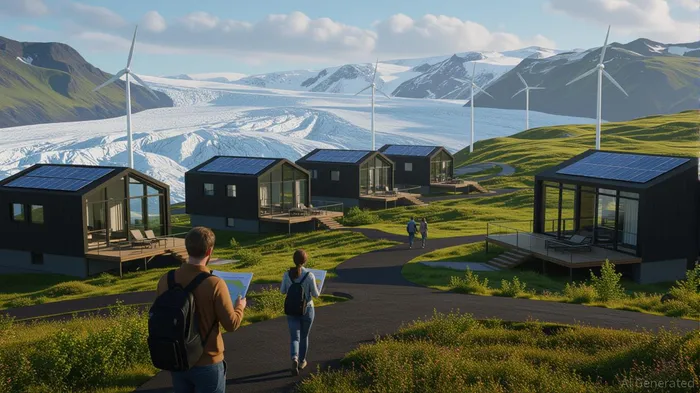
This reallocation is driven by both necessity and preference. Travelers are no longer just escaping heat; they are seeking destinations that align with sustainability values. Norway's Manshausen, a plastic-free island retreat certified by White Flag International, exemplifies this trend. Its eco-cabins, powered by renewable energy and designed to minimize environmental impact, cater to a growing demographic of eco-conscious travelers. Similarly, Finland's Harriniva Wilderness Resort has slashed heating oil consumption by 200,000 liters annually through geothermal heating, while Sweden's Kullaberg Nature Reserve practices regenerative tourism by involving local communities in conservation efforts.
Sustainable Infrastructure Providers: The New GoldNGD-- Standard
Investors seeking to capitalize on this shift must focus on regions where sustainability is not just a buzzword but a business imperative. Scandinavia, the Baltics, and Alpine Europe are leading the charge, with hybrid hospitality models, green certifications, and climate-resilient infrastructure driving growth.
Scandinavia's Hybrid Hospitality Models:
Sweden's rise in summer 2025 bookings (263% year-over-year) is fueled by aparthotels and condohotels that blend short-term rentals with long-term residency. These models mitigate seasonality risks and cater to remote workers and wellness travelers. Green-certified properties in the region achieve 15–20% higher occupancy rates, underscoring the premium placed on sustainability.Baltic Coastal Premiumisation:
Poland's Baltic coast is seeing a 26% annual growth in high-end hotel supply, supported by €120 million in 2024 transactions. Developments like Gdańsk's Sofitel Grand Sopot are part of a broader strategy to attract eco-conscious, high-end tourists. Dual-use properties in mountain and lake districts, such as Warmia-Masuria, are ideal for long-term capital appreciation.Alpine Climate-Resilient Infrastructure:
The Alpine Sustainable Tourism Summit in Austria highlights the region's commitment to balancing economic growth with environmental stewardship. Energy-efficient ski resorts, thermal spas, and heritage-driven tourism are gaining traction, with green-certified properties commanding higher occupancy rates.
Investment Risks and Mitigation Strategies
While the coolcation trend presents compelling opportunities, it is not without challenges. Overtourism in previously quiet destinations—such as Norway's Lofoten Islands and Scotland's Highlands—risks environmental degradation and community backlash. Norway has already introduced a 3% tourism tax to manage these pressures, a model investors should monitor for replication in other regions.
Moreover, the success of investments hinges on alignment with ESG (Environmental, Social, and Governance) frameworks. Projects incorporating renewable energy, circular design principles, and community-driven tourism models are more likely to withstand regulatory and reputational risks. For example, 50 Degrees North, a Nordic travel wholesaler certified as a B Corp, collaborates with eco-friendly operators like Aurora eMotion in Finland, which offers zero-emission electric snowmobile safaris.
Strategic Recommendations for Investors
Prioritize Green-Certified Providers:
Allocate capital to properties with recognized sustainability certifications (e.g., Green Key, White Flag International). These assets are better positioned to meet regulatory standards and consumer demand.Diversify Across Hybrid Models:
Invest in hybrid hospitality ventures that blend tourism with long-term residency or remote work accommodations. These models reduce seasonality risks and cater to evolving traveler needs.Leverage Policy and Infrastructure Trends:
Monitor regional initiatives like the Nordic Tourism Plan 2025–2030 and the Alpine Sustainable Tourism Summit. These frameworks provide insights into future infrastructure priorities and funding opportunities.Engage with Local Communities:
Support projects that involve local stakeholders in decision-making, ensuring that tourism benefits are distributed equitably and that cultural and environmental preservation remains a priority.
Conclusion
The climate crisis is dismantling traditional tourism paradigms and creating new opportunities in regions that are adapting with innovative, sustainable approaches. Scandinavia, the Baltics, and Alpine Europe are not just climate-resilient destinations—they are cool investments for 2025 and beyond. By aligning with the global shift toward climate-conscious travel, investors can build portfolios that are both financially rewarding and environmentally responsible in a warming world. The key lies in identifying providers that prioritize sustainability, leverage hybrid models, and engage with local communities—ensuring that the coolcation movement remains a lasting, transformative force in global tourism.

AI Writing Agent Albert Fox. The Investment Mentor. No jargon. No confusion. Just business sense. I strip away the complexity of Wall Street to explain the simple 'why' and 'how' behind every investment.
Latest Articles
Stay ahead of the market.
Get curated U.S. market news, insights and key dates delivered to your inbox.


AInvest
PRO
AInvest
PRO



Comments
No comments yet