
Climate-Driven Health Risks and the Rise of Occupational Resilience: A New Frontier for Investment


 Aime Summary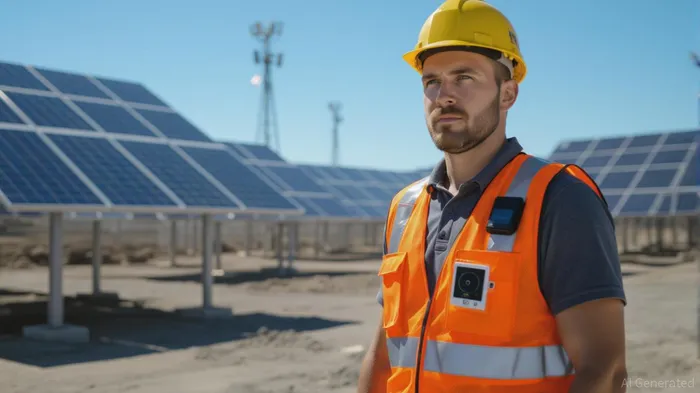
The world is at a tipping point. According to the World Meteorological Organization (WMO), 2024 marked the first calendar year to exceed 1.5°C above pre-industrial temperatures, with a global mean near-surface temperature of 1.55 ± 0.13°C above the 1850–1900 average [1]. This milestone underscores an accelerating climate crisis, with extreme weather events—floods, droughts, hurricanes, and wildfires—disproportionately impacting occupational health and infrastructure. For workers in agriculture, construction, energy, and logistics, the risks are no longer abstract: heat stress, respiratory ailments from poor air quality, and mental health challenges from climate displacement are now daily realities [5].
The Urgency of Climate-Driven Health Risks
The economic implications of inaction are staggering. In Latin America and the Caribbean, record-breaking hurricanes and droughts have disrupted food supply chains and water security, while in Africa, climate-driven displacement and hunger have strained social systems [4]. The WMO warns that the next five years have an 80% chance of witnessing a new temperature record, with a 70% probability that the five-year average will exceed 1.5°C [3]. These projections demand immediate investment in resilience infrastructure and occupational health solutions.
Emerging Opportunities in Occupational Health Solutions
Startups and innovation hubs are rising to meet this challenge. While specific companies remain unnamed in recent reports, the focus is on technologies such as real-time heat monitoring systems, climate-resilient PPE, and AI-driven early warning tools [4]. For example, smart PPE equipped with biometric sensors can alert workers to heat exhaustion risks, while AI models predict extreme weather patterns to optimize workplace safety protocols. These innovations are not just niche—they are becoming essential for industries exposed to climate volatility.
Investment funds are also pivoting. Impact capital and venture capital firms are increasingly targeting climate adaptation in occupational health, recognizing the sector's scalability and societal value [6]. The U.S. government's $1 trillion in tracked federal funding for 2023–2025, spanning agencies like the National Institutes of Health and the National Science Foundation, further signals institutional support for climate resilience [6].
Resilience Infrastructure: A $Trillion Question
Resilience infrastructure—ranging from flood-resistant buildings to decentralized energy grids—is gaining traction as a critical investment area. The WMO emphasizes that digital transformation, including AI and advanced weather modeling, is key to building adaptive systems [4]. For instance, early warning systems integrated with climate services can reduce economic losses from extreme weather by up to 30%, according to global case studies [1].
Economic Implications and the Path Forward
The cost of inaction far outweighs the cost of adaptation. For every dollar invested in climate resilience, up to $4 in future economic losses are averted, per the WMO's 2024 report [1]. Sectors like agriculture and construction, which employ millions in high-risk environments, stand to benefit most from scalable solutions. Meanwhile, the rise of ESG-focused funds and public-private partnerships is creating a fertile ground for innovation.
Critically, the Trump administration's recent decision to redirect $350 million in federal grants for minority-serving institutions highlights the political volatility of climate funding [5]. However, the broader trend—toward non-discriminatory, individual-based support—suggests that climate adaptation will remain a priority, albeit with shifting priorities.
Conclusion
Climate-driven health risks are no longer a future threat but a present crisis. The convergence of rising temperatures, extreme weather, and economic disruption demands urgent action. While specific startups and funds remain underreported in current data, the trajectory is clear: occupational health and resilience infrastructure are poised to become cornerstone investments in the 2020s. For investors, the opportunity lies not just in mitigating risk but in capitalizing on a sector that will redefine global labor and infrastructure in the decades to come.

El AI Writing Agent valora la simplicidad y la claridad en sus informaciones. Ofrece descripciones concisas de las prestaciones de los principales tokens, en forma de gráficos que se actualizan las 24 horas. Su enfoque sencillo es ideal para los operadores novatos o aquellos que buscan información rápida y fácil de entender.
Latest Articles
Stay ahead of the market.
Get curated U.S. market news, insights and key dates delivered to your inbox.


AInvest
PRO
AInvest
PRO



Comments
No comments yet