
Cleveland Cliffs: The Steel Titan Riding ESG and Infrastructure Waves
The global steel industry stands at a crossroads, pressured by escalating ESG (Environmental, Social, and Governance) regulations, surging demand for infrastructure modernization, and the urgent need to decarbonize industrial processes. Among the players positioned to capitalize on these shifts is Cleveland-Cliffs (CLF), North America's largest flat-rolled steel producer. Its vertically integrated model, strategic decarbonization initiatives, and market-driven restructuring make it a compelling investment for those betting on a steel renaissance fueled by regulatory tailwinds and infrastructure spending. Here's why now is the time to act.
The Perfect Storm for Steel Demand
The confluence of ESG mandates, infrastructure spending, and energy transition projects is reshaping the steel landscape. Governments worldwide are prioritizing green infrastructure—think high-speed rail, renewable energy grids, and electric vehicle (EV) manufacturing—all of which require vast quantities of steel. Meanwhile, ESG regulations are pressuring companies to reduce carbon footprints, favoring producers with cleaner processes and domestic supply chains.
Cleveland-Cliffs is uniquely poised to dominate this space. Its vertical integration—spanning iron ore mining, pellet production, steelmaking, and downstream processing—gives it control over costs, quality, and supply chain resilience. This structure insulates it from volatile global commodity markets and trade disruptions, while its North American footprint benefits from U.S. tariffs on imported steel (currently at 50%), which create a $300–$500/ton price advantage over cheaper imports.
The Iron Ore Advantage: Assets and Agility
Cleveland-Cliffs' iron ore mines in Minnesota and Michigan are cornerstones of its competitive edge. While the Minorca mine and Hibbing Taconite mine were temporarily idled in early 2025 to manage excess inventory, their strategic flexibility allows the company to scale production as demand rebounds. Crucially, these mines supply high-grade iron ore pellets, a critical input for steelmaking that reduces reliance on imported scrap or pig iron.
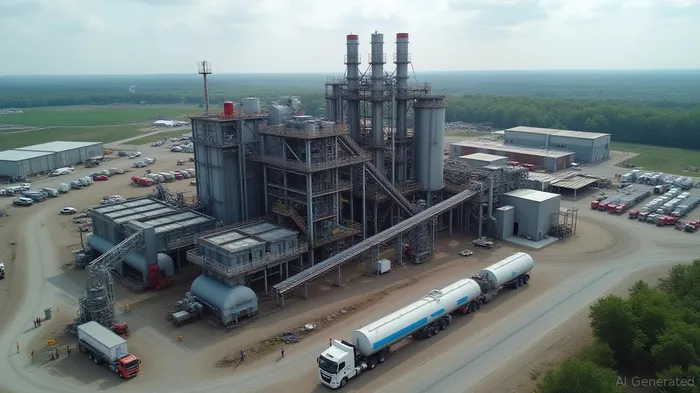
The company's Toledo Direct Reduction (DR) Plant, highlighted as the most modern facility of its kind, exemplifies its ESG-driven innovation. Producing hot-briquetted iron (HBI) using natural gas, the plant cuts carbon emissions by 30% compared to traditional blast furnaces. This aligns with global ESG standards and positions CLF to meet rising demand for “green steel,” a sector expected to grow at 15% annually through 2030.
Cost Discipline and Financial Resilience
Despite Q1 2025 losses, Cleveland-CliffsCLF-- is executing a radical restructuring to unlock value. Idling underperforming assets—such as the Dearborn Works blast furnace and non-core plate facilities—will save $300 million annually, while exiting the unprofitable ArcelorMittal/Nippon Steel contract by year-end 2025 could add $500 million to EBITDA by 2026. Combined with a $3.0 billion liquidity buffer and a low-debt profile, CLF is financially primed to capitalize on the rebound.
Betting on Infrastructure and Autos
Cleveland-Cliffs' focus on automotive and infrastructure markets—which account for 60% of its revenues—aligns perfectly with two megatrends. Automakers, particularly EV manufacturers, rely on CLF's advanced high-strength steel (AHSS) for lightweighting vehicles. Meanwhile, the U.S. $1.2 trillion infrastructure bill and global green stimulus packages will boost demand for steel in construction, rail, and energy projects.
The company's downstream subsidiaries, such as its tooling and stamping division, further cement its leadership in automotive supply chains. These operations, combined with its expertise in tubular components for industrial applications, create a moat against competitors.
Risks and Opportunities on the Horizon
While geopolitical tensions and global steel oversupply pose risks, Cleveland-Cliffs' domestic focus and tariff protections mitigate these. The company's $1 billion annual EBITDA tailwind from tariffs alone underscores its insulation from external shocks. Meanwhile, its decarbonization initiatives—like expanding HBI production and exploring hydrogen-based steelmaking—position it to lead the green steel revolution.
Why Act Now?
The stars are aligning for Cleveland-Cliffs:
- Regulatory tailwinds: ESG mandates and U.S. trade policies favor domestic producers.
- Demand surge: Infrastructure spending and EV adoption are here to stay.
- Cost discipline: Restructuring and asset optimization will unlock margins.
- ESG differentiation: The Toledo DR Plant and low-carbon initiatives attract ESG-focused investors.
With a 23 million-ton steelmaking capacity and a streamlined portfolio, CLF is not just a steel company—it's a play on the future of industrial resilience.
Investors seeking exposure to the steel renaissance should act decisively. Cleveland-Cliffs is a rare blend of strategic foresight, operational agility, and ESG alignment—qualities that will define winners in the coming decade.
The verdict? CLF is primed to outperform. Don't miss the steel titan's moment.
This article reflects analysis based on publicly available data as of June 2025. Past performance does not guarantee future results.

Stay ahead of the market.
Get curated U.S. market news, insights and key dates delivered to your inbox.




Comments
No comments yet