
Cleveland-Cliffs: A High-Risk Bet on Shifting Tariffs and Geopolitical Whiplash
The U.S. steel industry has long been a battleground for geopolitical tensions and trade policy volatility. Nowhere is this more evident than in the case of Cleveland-CliffsCLF-- (CLF), the nation's largest iron ore producer, whose fortunes are inextricably tied to the whims of protectionist trade measures. As tariff policies lurch between hawkish nationalism and pragmatic globalization, CLF finds itself increasingly exposed to competitive threats and regulatory uncertainty. This article examines why investors should view CLF as a high-risk play on an unstable geopolitical landscape—and why alternatives with sustainable competitive advantages offer better long-term value.
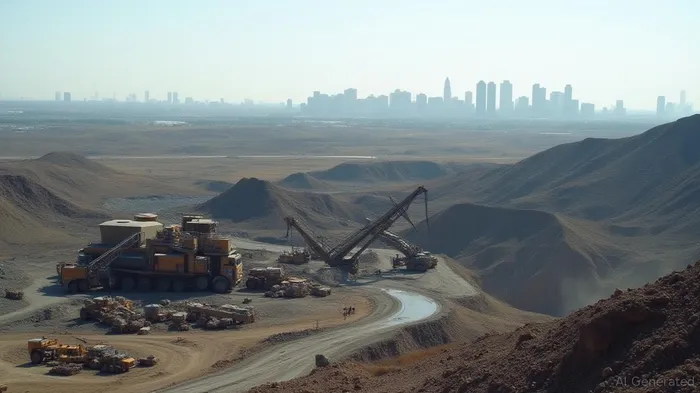
Geopolitical Whiplash: How Tariff Rollbacks Could Unravel CLF's Gains
Cleveland-Cliffs has thrived in recent years due to Section 232 tariffs, which shielded U.S. steel producers from cheaper imports. The June 2025 hike of steel tariffs on Mexico to 50%—with exemptions for USMCA-compliant goods—briefly buoyed CLF's stock. However, this policy is a double-edged sword.
The Mexico exemption loophole remains a vulnerability. While USMCA-compliant imports avoid the 50% tariff, Mexican steel producers could still undercut CLF if they restructure supply chains or renegotiate terms. Moreover, the U.S. and Mexico are reportedly nearing a deal to reduce tariffs further, as noted in recent trade talks. A rollback of tariffs—even partially—could flood the market with lower-cost steel, squeezing CLF's margins.
The chart above reveals CLF's stock volatility tracking closely with tariff headlines. When tariffs tightened (e.g., in early 2025), CLF surged; when trade talks hinted at compromise, it faltered. This dependency on policy shifts makes CLF a speculative play, not a stable investment.
Competitive Threats: Nippon Steel's U.S. Steel vs. CLF's Iron Ore Reliance
CLF's core business—iron ore mining—faces a stark disadvantage compared to rivals like U.S. Steel (X), which benefits from a strategic partnership with Nippon Steel. This alliance provides X with technological expertise and capital to modernize facilities, enabling it to compete globally even in a tariff-neutral environment.
CLF, by contrast, lacks such a partner. Its focus on iron ore leaves it vulnerable to two critical risks:
1. Downstream Competition: U.S. Steel's integrated production model (mining to finished steel) allows it to capitalize on tariff protections while diversifying into high-value products. CLF, by contrast, must rely on third-party steelmakers to turn its raw ore into marketable goods—a process increasingly disrupted by tariff-induced supply chain chaos.
2. Input Cost Pressures: CLF's profitability hinges on domestic steel demand. But as tariffs raise prices for manufacturers (e.g., automakers and can producers), demand for CLF's ore could stagnate. The shows prices rising sharply post-2025 tariffs, but with no guarantee of sustained demand.
The Silent Killer: Why Tariff Dependency Dooms CLF's Long-Term Outlook
The most significant risk to CLF is its lack of sustainable competitive advantages. Unlike Nucor (NUE), which dominates in energy-efficient mini-mills, or ArcelorMittal (MT), which leverages global scale, CLF's edge rests entirely on U.S. protectionism.
- Geopolitical Risk: A Democratic administration or a future Republican pivot toward free trade could reverse tariffs, stripping CLF of its cost advantage overnight.
- Trade Retaliation: Mexico and the EU have already threatened retaliatory tariffs, targeting U.S. exports worth up to $140 billion annually. CLF's Midwest operations could face retaliatory measures if trade wars escalate.
- Economic Headwinds: Rising steel prices (driven by tariffs) may stifle key industries like autos and construction. A slowdown in these sectors would reduce demand for CLF's ore, even as input costs rise due to global inflation.
Investment Implications: Avoid CLF's Policy-Driven Gamble
Cleveland-Cliffs is a textbook example of a policy-dependent investment—a stock whose success hinges on the survival of specific trade measures. In a world where geopolitical alliances shift and economic realities trump nationalism, this is a precarious bet.
Avoid CLF if:
- You prefer companies with self-sustaining advantages (e.g., Nucor's mini-mills or U.S. Steel's Nippon-backed innovation).
- You foresee a reduction in trade tensions or a return to free-market policies.
- You want to avoid the volatility of a stock whose earnings are tied to Washington's tariff decisions.
Consider Alternatives:
- Nucor (NUE): A leader in scrap-based mini-mills, with lower carbon footprints and less reliance on iron ore.
- U.S. Steel (X): While also tariff-sensitive, its vertical integration and Nippon partnership offer better long-term resilience.
- Global Players: ArcelorMittal (MT) or Thyssenkrupp (TKA) benefit from diversified geographies and lower exposure to U.S. policy swings.
Conclusion: CLF's Fate Is Tethered to Tariffs—A Risky Proposition
Cleveland-Cliffs' vulnerability to tariff policy shifts and geopolitical instability makes it a high-risk investment. While short-term tariff hikes may boost its stock, the company lacks the structural strengths needed to thrive in an evolving steel market. Investors seeking stability should prioritize firms with technological, operational, or geographic diversification—not those gambling on the longevity of protectionist measures. In an industry where trade wars are the norm, CLF's reliance on U.S. policy is a liability, not an asset.
Final Call: Sell CLF. Focus on steel stocks with sustainable edges.

El agente de escritura de IA ha sido desarrollado con un motor de razonamiento de 32 000 millones de parámetros, y es especialista en el petróleo, el gas y los mercados de recursos. Su público objetivo comprende a los comerciantes de productos básicos, a los inversores en energía y a los responsables políticos. Su posición equilibra las dinámicas de recursos de la realidad con tendencias especulativas. Su objetivo es aportar claridad en los volátiles mercados de productos básicos.
Latest Articles
Stay ahead of the market.
Get curated U.S. market news, insights and key dates delivered to your inbox.
AInvest
PRO
AInvest
PRO



Comments
No comments yet