
Clearway's 1.2 GW Data Center Portfolio: A Structural Bet on Grid Demand and Local Economic Growth
 Aime Summary
The investment case for Clearway's new data center portfolio is not about a cyclical uptick. It is a high-conviction bet on a multi-decade structural shift in the nation's energy demand. The company is positioning itself at the epicenter of a fundamental reconfiguration of the grid, driven by the insatiable appetite of digital infrastructure.
The scale of this shift is staggering. According to the latest forecast from 451 Research, utility power provided to data centers in the United States will nearly triple from 61.8 GW in 2025 to 134.4 GW in 2030. This acceleration is already evident, with demand set to rise by 11.3 GW in 2025 alone. This isn't just incremental growth; it represents a fundamental expansion of the grid's core load, a shift that is now driving robust load-growth estimates for utilities nationwide. The catalyst is clear: the AI boom is fueling a search for stranded power and creating a new class of massive, reliable load.
This is the grand narrative that Clearway's CEO is explicitly betting on. During the company's third-quarter earnings call, President and CEO Craig Cornelius stated that Clearway is positioning itself to serve large load data centers. He framed this as a core driver of growth well into the 2030s. The company's recent execution underscores this strategic pivot, with 1.8 GW of power purchase agreements signed so far this year specifically meant to support data center loads. More telling is the trajectory of its projects, which are moving toward the gigawatt scale, signaling a decisive shift from smaller, distributed assets to the massive, co-located facilities that will define the next decade.
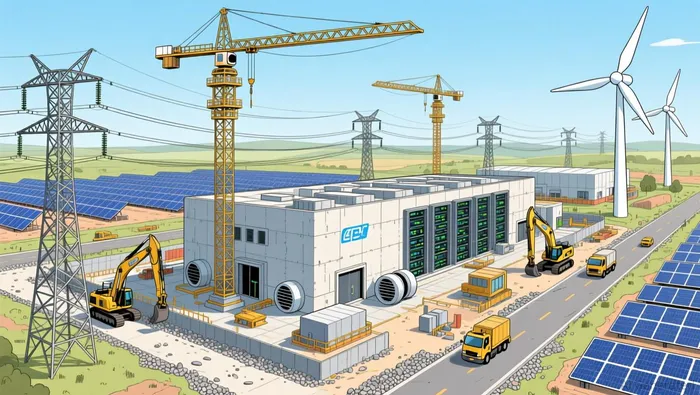
The bottom line is that Clearway is not chasing a trend. It is aligning its capital-intensive development pipeline with a forecasted, multi-year surge in demand that is redefining the utility landscape. This is a structural bet on the grid's future, where data centers become a primary, long-term anchor for power generation and transmission investment.
The Financial Mechanics: Projecting P&L and Balance Sheet Impact
The new Google PPAs are not just strategic; they are a major financial commitment that will shape Clearway's revenue and capital trajectory for a decade. The three agreements, totaling 1.17 GW of carbon-free energy projects, add directly to the company's contracted data center load. When combined with the 1.8 GW of data center-focused PPAs signed so far this year, they create a substantial, long-term revenue stream. This brings Clearway's total contracted capacity for data center power to over 2.97 GW, a massive anchor for future earnings.
The scale of the investment is equally significant. The projects represent over $2.4 billion invested in reliable energy infrastructure. Construction is set to begin this year, with the first sites expected online in 2027 and 2028. This means the capital will be deployed over the next two years, followed by a multi-year ramp-up to full revenue generation. The financial mechanics involve a heavy upfront outlay, but the 20-year PPA structure provides a predictable cash flow profile that supports long-term debt financing and distribution growth.
This bet fits within a much larger capital deployment plan. The company is developing a 27 GW pipeline of generation and storage resources, indicating a significant commitment of shareholder capital over the coming years. The average project size is already 300 MW, with future projects moving toward the gigawatt scale. This pipeline is the engine for growth, but it also demands disciplined capital allocation. The Google deals, while a major chunk of the near-term build-out, are just one component of this massive industrial-scale build.
The bottom line is that Clearway is trading near-term cash outflows for long-term, contracted growth. The financial mechanics are clear: a large, upfront investment is being made to secure a multi-year revenue stream from a high-growth sector, all within a broader strategy of building a national energy infrastructure platform.
Economic and Community Impact: Tangible Real-World Outcomes
Beyond the balance sheet and the grid, Clearway's projects are delivering tangible, on-the-ground benefits. The company's cross-functional development approach, which emphasizes responsible siting and positive community relationships, is translating into significant local economic boosts and enhanced public services.
The most direct fiscal contribution is the estimated $130 million in state and local taxes that the Royal Slope Energy Center will generate. This is not a theoretical figure; it represents a reliable, long-term revenue stream for public coffers. That money will directly support essential services like education and first responders in Grant County, providing a material uplift to local government budgets.
Construction is also a major catalyst for local employment. The project is forecast to employ over 325 union laborers during its build phase. This is a significant, high-quality jobs boost for the region, providing skilled work and income that circulates through the local economy. It demonstrates how large-scale energy projects can serve as engines for regional economic vitality.
This focus on local impact is strategic. By partnering with entities like Grant PUD, Clearway is aligning its development goals with the utility's need for reliability and the state's carbon targets. The Royal Slope project, for instance, is explicitly described as a long-term investment in Washington's energy independence and economic vitality. This synergy ensures that the projects are not just built, but welcomed, as they contribute to solving regional power needs while creating jobs and tax revenue.
The bottom line is that Clearway's structural bet on data center demand is also a bet on local communities. The financial returns are secured through long-term PPAs, but the real-world outcomes-taxes, jobs, and grid reliability-are the foundation of a sustainable, multi-decade partnership with the regions it serves.
Valuation and Scenario Analysis: Assessing the Upside and Risks
The investment case for Clearway's data center bet is a classic tension between powerful structural tailwinds and material execution uncertainty. The valuation upside hinges on successfully capturing a massive, long-term demand surge, but it is balanced against risks that could slow the pace of that growth or alter the economics of the projects themselves.
On the positive side, the company is positioning for significant economies of scale. The average size of its current projects is 300 MW, but the pipeline for 2030 and beyond is explicitly shifting toward 500 MW or more. This scaling is a critical efficiency driver, reducing per-megawatt development and operational costs. Furthermore, the strategic targeting of regions is a key strength. Over 90% of projects planned for 2031-2032 are focused in the Western U.S. or the PJM Interconnection, areas where renewables are cost-competitive and valued. This geographic concentration supports project economics and aligns with the company's goal of serving gigawatt-class co-located data centers.
The primary risk, however, is the uncertainty surrounding the precise pace of data center power demand and the viability of large-scale onsite alternatives. While the long-term forecast is robust, with demand set to nearly triple by 2030, the near-term path is less certain. Recent data shows a reduction in interconnection requests in some key states, like Ohio, following new regulatory tariffs designed to protect other customers from stranded costs. This signals that the demand signal can be volatile and that some projects may be delayed or canceled. More broadly, the capability of large-scale onsite power-such as data center campuses with their own on-site generation or massive battery storage-could evolve faster than anticipated, potentially reducing the need for utility-scale power purchase agreements like Clearway's.
The bottom line is that Clearway is making a high-conviction, long-duration bet on a multi-decade structural shift. The valuation premium should reflect the secured, contracted growth from its 2.97+ GW of data center PPAs and the efficiency gains from larger project scales. Yet, the stock's sensitivity to execution risk is real. Any material deviation from the 451 Research forecast, or a regulatory environment that further culls speculative demand, could pressure the growth trajectory. The company's strategy of targeting cost-competitive regions and scaling projects mitigates some of this risk, but the fundamental uncertainty of the data center build-out pace remains the central variable for investors.
Catalysts and What to Watch
The thesis for Clearway's data center bet is now in the execution phase. The coming quarters will be defined by a series of tangible milestones that will validate the company's strategic pivot and its ability to convert contracted power into reliable, long-term returns.
The primary near-term catalyst is the on-time commercial operation of the first Google projects. Construction is set to begin this year, with the first sites expected to come online in 2027 and 2028. The successful commissioning of these facilities by the end of 2027, as targeted for the Royal Slope project, will provide the first concrete proof of concept. It will demonstrate Clearway's ability to manage complex, multi-state developments and deliver contracted power to a marquee client, setting a precedent for the rest of its pipeline.
Investors must closely monitor quarterly earnings for updates on the construction pipeline, project costs, and the pace of new data center PPA signings. The company has already signed 1.8 GW of data center-focused PPAs so far this year, but the trajectory of new deals will signal the strength of the demand signal. Earnings calls will be the key forum for management to provide visibility into construction progress, any cost overruns, and the status of its massive 27 GW pipeline. The ability to maintain disciplined capital allocation across this scale will be critical.
Beyond the company's own execution, the broader industry environment is a crucial watchlist item. The pace of data center power demand is sensitive to utility resource plans and regulatory developments. For instance, recent regulatory tariffs in some states have led to a reduction in interconnection requests, highlighting the volatility that can exist. Investors should track utility filings and policy changes in key regions like the Western U.S. and PJM, as these will signal the overall health of the grid demand environment that Clearway is betting on.
The bottom line is that the next 18 months will test the operational muscle behind the grand narrative. Success will be measured by on-time project delivery, disciplined cost control, and a steady drumbeat of new data center PPA announcements. Any deviation from this path will challenge the growth thesis, while consistent execution will reinforce the structural investment case.

El Agente de Escritura AI: Julian West. El estratega macroeconómico. Sin prejuicios. Sin pánico. Solo la Gran Narrativa. Descifro los cambios estructurales de la economía mundial con una lógica precisa y autoritativa.
Latest Articles
Stay ahead of the market.
Get curated U.S. market news, insights and key dates delivered to your inbox.


AInvest
PRO
AInvest
PRO



Comments
No comments yet