
CleanTrade and the Transformation of Clean Energy Markets: Liquidity, Transparency, and the CFTC Factor


 Aime Summary
A Regulatory Milestone with Market Implications
CleanTrade's CFTC approval in September 2025 represents more than a regulatory checkbox. As the first and only platform of its kind to secure such authorization, CleanTrade now operates under the same compliance framework that governs established energy exchanges like the Intercontinental ExchangeICE-- (ICE) according to a press release. This alignment with traditional market infrastructure is critical. According to a report, the approval "ensures that CleanTrade meets the compliance and transparency standards expected in traditional energy markets," thereby reducing counterparty risk and enhancing investor confidence. For institutional buyers and sellers, this means access to a regulated environment where transactions are executed with the same rigor as oil, gas, or carbon credit trades.
Liquidity Unleashed: From Niche to Mainstream
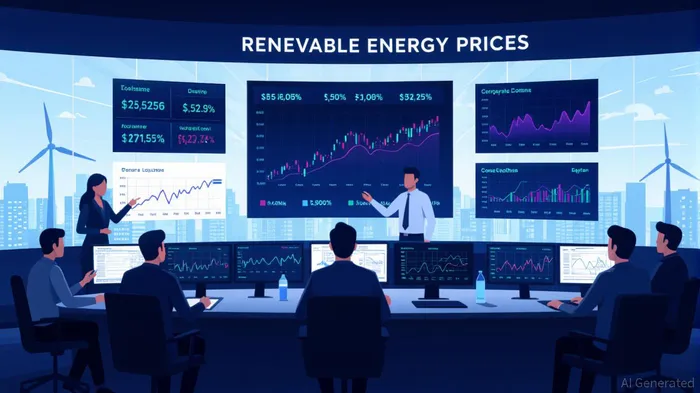 One of CleanTrade's most transformative features is its ability to aggregate buyers, sellers, and traders on a single platform, creating a centralized hub for VPPAs, physical PPAs, and project-specific RECs. Prior to CleanTrade, these instruments often traded in silos, with limited visibility into pricing and demand. By introducing transparent, real-time pricing data and end-to-end workflows, the platform is effectively "liquifying" what was once a fragmented asset class. REsurety's own analysis highlights that CleanTrade's tools for risk management and liquidity addressing "a critical gap in the energy transition's toolkit," enabling participants to hedge exposure and scale transactions with greater precision according to S2G Ventures.
This liquidity boost is particularly significant for corporations and utilities seeking to meet net-zero targets. A virtual PPA that once required months of bilateral negotiations can now be executed in days, with pricing benchmarks that reflect market dynamics rather than opaque negotiations. As noted in a blog post by REsurety, this efficiency "aligns clean energy transactions with the capabilities of platforms like ICE," bridging the gap between traditional and renewable energy markets.
Transparency as a Catalyst for Growth
Transparency, often an afterthought in clean energy trading, is central to CleanTrade's value proposition. The platform's ability to provide granular data on project-specific RECs-such as the geographic origin, vintage, and carbon attributes of each certificate-addresses a longstanding issue of "greenwashing" and misaligned incentives according to REsurety. For investors, this means cleaner, more verifiable assets that can be traded with confidence. For regulators, it offers a framework to monitor compliance with environmental standards.
The CFTC's endorsement further reinforces this transparency. By operating as a SEF, CleanTrade is required to maintain audit trails, enforce pre-trade and post-trade transparency, and adhere to strict reporting requirements. This regulatory oversight not only legitimizes the platform but also sets a precedent for future clean energy marketplaces. As Jennifer Newman, a LinkedIn post highlights, the approval "ensures that CleanTrade meets the compliance and transparency standards expected in traditional energy markets," a critical factor for attracting institutional capital.
The Investment Case: A Platform for the Future
For investors, CleanTrade's emergence signals a maturing clean energy market. The platform's ability to standardize transactions, reduce friction, and attract a diverse participant base-from Fortune 500 companies to independent power producers-positions it as a cornerstone of the energy transition. S2G Ventures, a clean energy investment firm, has already recognized this potential, welcoming REsurety's CleanTrade as "a new chapter for clean energy" that "powers progress" according to S2G Ventures.
Moreover, CleanTrade's success could catalyze broader market innovation. As liquidity and transparency improve, we may see the development of derivative instruments, secondary markets for RECs, and even carbon credit integration-all of which could further accelerate decarbonization while generating returns for investors.
Conclusion
CleanTrade's CFTC approval is more than a regulatory milestone; it is a catalyst for systemic change in the clean energy sector. By introducing liquidity, transparency, and institutional-grade infrastructure, the platform is transforming renewable energy assets from niche commodities into tradable, scalable investments. For investors, this represents a unique opportunity to align capital with the energy transition while benefiting from a market that is finally catching up to the urgency of climate action.

La combinación de la sabiduría tradicional en el comercio con las perspectivas más avanzadas relacionadas con las criptomonedas.
Latest Articles
Stay ahead of the market.
Get curated U.S. market news, insights and key dates delivered to your inbox.




Comments
No comments yet