
CleanTrade's CFTC Approval as a Catalyst for Institutional Investment in Renewable Energy Markets


 Aime Summary
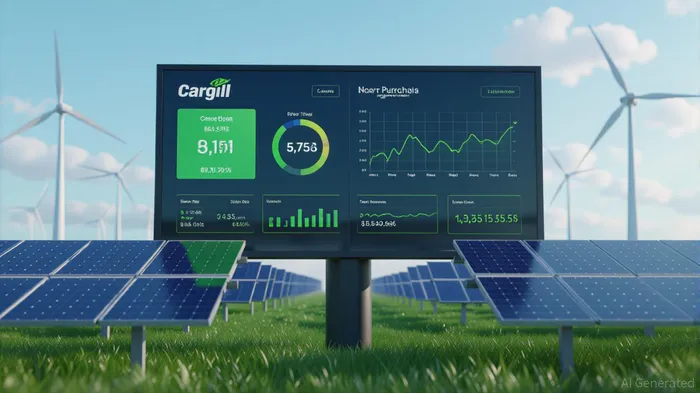 CleanTrade's platform addresses long-standing inefficiencies in renewable energy trading by offering real-time analytics, centralized infrastructure, and robust risk-management tools. The platform's launch was underscored by its first transaction, executed between Cargill and Mercuria, signaling immediate institutional confidence in its structure. By operationalizing VPPAs and RECs as tradable derivatives, CleanTrade has created a bridge between decarbonization goals and financial returns, enabling investors to hedge energy price volatility while supporting clean energy projects.
The implications for ESG-driven portfolios are profound. CleanTrade's CFTC-approved SEF designation has introduced unprecedented liquidity to renewable energy markets, attracting major institutional players such as BlackRock and Cargill. In just two months post-launch, the platform facilitated $16 billion in notional transactions, demonstrating its capacity to scale and meet growing demand for sustainable investments. This liquidity is critical for ESG portfolios, which increasingly require tools to quantify and manage carbon footprints while ensuring competitive financial performance. CleanTrade's integration of ESG analytics and carbon-tracking capabilities further enhances its appeal, enabling investors to align with regulatory frameworks like the EU's Sustainable Finance Disclosure Regulation (SFDR) and meet decarbonization targets.
Critically, CleanTrade's regulatory framework mitigates the risks associated with greenwashing and project-level uncertainty. By standardizing the valuation and trading of clean energy assets, the platform provides institutional investors with the transparency needed to verify the environmental integrity of their holdings. This alignment of financial and sustainability metrics is reshaping how ESG portfolios are constructed, with clean energy derivatives now serving as both a hedge against fossil fuel price swings and a vehicle for measurable carbon reduction.
Looking ahead, CleanTrade's success underscores a broader trend: the institutionalization of renewable energy markets. As climate-related risks intensify and regulatory scrutiny of ESG claims grows, platforms like CleanTrade will play a central role in channeling capital toward projects that deliver both financial and environmental value. For investors, the CFTC's endorsement of CleanTrade is not merely a regulatory win but a strategic inflection point-a signal that clean energy is no longer a niche market but a core component of modern portfolio construction.

Combina la sabiduría del comercio tradicional con las perspectivas de vanguardia en el campo de las criptomonedas.
Latest Articles
Stay ahead of the market.
Get curated U.S. market news, insights and key dates delivered to your inbox.


AInvest
PRO
AInvest
PRO



Comments
No comments yet