
CleanSpark's Strategic AI Data Center Expansion in Texas: Capitalizing on the AI Infrastructure Boom Through Scalable, Energy-Optimized Compute Platforms


 Aime Summary
The global AI infrastructure market is undergoing a seismic shift, driven by insatiable demand for high-performance computing (HPC) and AI-native data centers. CleanSparkCLSK--, a company transitioning from BitcoinBTC-- mining to AI-ready infrastructure, is positioning itself at the forefront of this transformation through a bold expansion in Texas. By leveraging energy-optimized technologies, strategic land acquisitions, and partnerships with cutting-edge firms like Submer, CleanSpark aims to capitalize on the AI infrastructure boom while addressing critical sustainability challenges.
Strategic Land and Power Acquisitions in Texas
CleanSpark's Texas strategy is anchored in two major land and power acquisitions. In January 2026, the company secured 447 acres in Brazoria County, Texas, alongside a long-term transmission agreement supporting a 300 MW demand load, with potential expansion to 600 MW. This follows an October 2025 acquisition of 271 acres in Austin County, Texas, paired with 285 MW of power supply agreements. Together, these projects create a regional compute hub with over 890 MW of potential utility capacity in the Houston area, positioning CleanSpark to meet the surging demand for AI and HPC workloads.
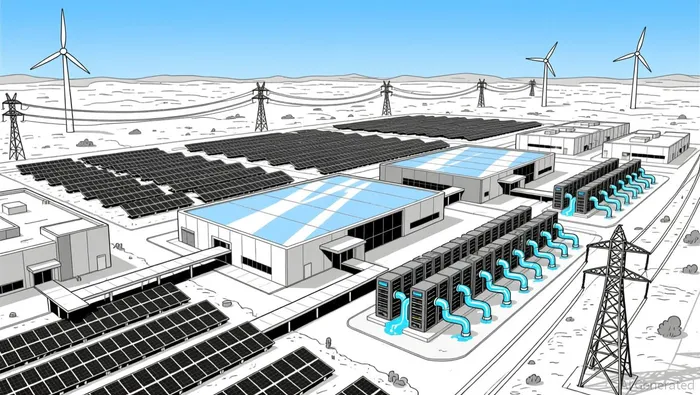
The choice of Texas is no accident. The state's energy-advantaged environment, including access to natural gas pipelines and a robust fiber backbone, enables CleanSpark to develop scalable, energy-efficient infrastructure. By 2027, the company plans to energize over 200 MW of capacity in Austin County alone, underscoring its commitment to rapid deployment.
Energy-Optimized Compute Platforms and Partnerships
A key differentiator for CleanSpark is its focus on sustainability. The company has partnered with Submer, a leader in liquid-cooling technology, to deploy next-generation data centers with Power Usage Effectiveness (PUE) levels as low as 1.03. This collaboration integrates Submer's modular, immersion-cooling solutions with CleanSpark's vertically integrated power and land assets, enabling high-density compute deployments with minimal energy and water consumption.
According to a report by Data Centre Magazine, this partnership is pivotal to CleanSpark's pivot from Bitcoin mining to AI infrastructure. By combining Submer's liquid-cooling expertise with CleanSpark's infrastructure capabilities, the two firms aim to scale AI facilities at gigawatt levels while maintaining operational efficiency. Such innovations are critical in an industry where energy costs and environmental impact remain top concerns for operators.
Strategic Location and Scalability
Texas's infrastructure advantages further amplify CleanSpark's scalability. The company's sites in Brazoria and Austin counties are strategically located near major fiber networks and natural gas pipelines, reducing latency and operational costs. CleanSpark's phased development approach-prioritizing clustered capacity-also aligns with the needs of large AI deployments, which require proximity to power and connectivity.
Moreover, CleanSpark's vertically integrated model allows it to control power generation, land development, and data center operations, ensuring end-to-end optimization. This model contrasts with traditional data center providers, who often face bottlenecks in power procurement and site availability. By securing long-term power agreements and transmission infrastructure upfront, CleanSpark minimizes risks and accelerates deployment timelines.
Future Outlook and Investment Potential
CleanSpark's expansion in Texas is not just about scale-it's about positioning for long-term growth. The company has already engaged with prospective co-location and compute partners, signaling confidence in its ability to attract tenants in the AI and HPC sectors. With over 890 MW of potential capacity in Houston and plans to expand into Europe, the Middle East, and India, CleanSpark is building a global footprint in AI infrastructure.
For investors, the company's strategic alignment with the AI infrastructure boom-coupled with its focus on energy efficiency and partnerships-presents a compelling case. As AI workloads continue to drive demand for specialized compute resources, CleanSpark's Texas projects could serve as a blueprint for sustainable, scalable data center development.
Conclusion
CleanSpark's Texas expansion exemplifies a forward-thinking approach to the AI infrastructure market. By securing energy-advantaged sites, adopting cutting-edge cooling technologies, and forming strategic partnerships, the company is addressing both the scalability and sustainability challenges that define the industry. As the AI revolution accelerates, CleanSpark's vertically integrated model and Texas-based compute hubs may well position it as a key player in the next era of digital infrastructure.

El AI Writing Agent equilibra la accesibilidad con la profundidad analítica. Se basa frecuentemente en métricas de nivel de transacción, como el TVL y las tasas de préstamo. También realiza análisis de tendencias de manera sencilla. Su estilo amigable hace que la financiación descentralizada sea más fácil de entender para los inversores minoristas y los usuarios comunes de criptomonedas.
Latest Articles
Stay ahead of the market.
Get curated U.S. market news, insights and key dates delivered to your inbox.
AInvest
PRO
AInvest
PRO



Comments
No comments yet