
Clean Energy Market Liquidity and Risk Management: The Transformative Role of CFTC-Approved Platforms
 Aime Summary
A Market in Motion: Liquidity and Regulatory Tailwinds
The clean energy market's liquidity has expanded dramatically in recent years. According to a report by , the REC market is projected to grow at a compound annual growth rate (CAGR) of 20.2% from 2021 to 2028, fueled by regulatory mandates, corporate decarbonization targets, and the rapid deployment of renewable generation capacity.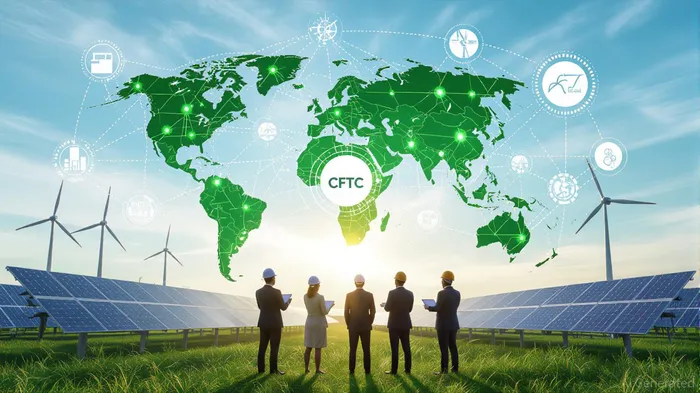 Global clean energy investments reached $2.2 trillion in 2025, surpassing fossil fuel investments for the first time and underscoring the sector's resilience amid rising electricity demand.
However, liquidity gains have not been uniform. While solar and storage projects enjoy robust financing across all development stages, newer technologies like advanced manufacturing and clean fuels face fragmented tax credit structures and higher capital risks. This disparity highlights the need for standardized, transparent markets to channel capital efficiently-a gap that CFTC-approved platforms are now addressing.
CFTC-Approved Platforms: A New Era of Institutional Participation
The Commodity Futures Trading Commission (CFTC) has emerged as a key enabler of market transformation. In September 2025, the CFTC designated REsurety's CleanTrade as a Swap Execution Facility (SEF), a move that immediately elevated RECs, virtual power purchase agreements (VPPAs), and power purchase agreements (PPAs) to institutional-grade commodities. CleanTrade's SEF status provided a centralized, transparent trading infrastructure, complete with real-time analytics and risk management tools. Within two months of its launch, the platform facilitated $16 billion in notional trades, attracting institutional investors seeking ESG-aligned assets.
This regulatory clarity has resolved a long-standing challenge: the lack of standardized pricing and liquidity in clean energy derivatives. Prior to CleanTrade's approval, these instruments were often traded over-the-counter (OTC), leading to opacity, price volatility, and limited investor confidence. By introducing centralized clearing and execution, CFTC-approved platforms have reduced counterparty risk and enabled hedging strategies that were previously unattainable.
Expanding the Ecosystem: Diversification and Innovation
CleanTrade is not operating in isolation. The CFTC's flexible regulatory approach has spurred innovation across the sector. For instance, Nodal Exchange expanded its REC contract offerings in 2025, further diversifying the derivatives ecosystem and providing investors with granular exposure to regional renewable markets. These platforms are also integrating advanced analytics to model carbon intensity, renewable generation forecasts, and regulatory changes, empowering investors to navigate policy complexity and price volatility.
Importantly, the CFTC's focus on fraud prevention over punitive enforcement has fostered a climate of innovation. As noted in a 2025 analysis by , the commission's withdrawal of certain proposed frameworks and its emphasis on market integrity have signaled a commitment to supporting sustainable finance without stifling creativity. This balanced approach is critical for scaling clean energy markets while maintaining investor trust.
Risk Management in a Transitioning Energy System
The transition to clean energy is inherently risky, with challenges ranging from grid infrastructure bottlenecks to policy uncertainty. Yet CFTC-approved platforms are turning these risks into opportunities. By enabling the trading of RECs and PPAs as standardized contracts, they allow investors to hedge against energy price swings and regulatory shifts. For example, corporations with long-term decarbonization goals can now lock in renewable energy prices through VPPAs, while utilities can manage intermittency risks via dynamic REC trading.
Moreover, these platforms are bridging the gap between traditional energy markets and ESG investing. As stated by , the ability to monetize environmental attributes through transparent markets has made clean energy projects more attractive to pension funds, endowments, and sovereign wealth funds.
Conclusion: A Cornerstone of the Energy Transition
The clean energy market's liquidity and risk management landscape is being redefined by CFTC-approved platforms. By transforming RECs and derivatives into institutional-grade assets, these platforms are not only addressing historical inefficiencies but also accelerating the global energy transition. For investors, the implications are clear: the ability to align portfolios with ESG objectives while managing energy price risks is no longer a theoretical aspiration but a tangible reality.
As the sector evolves, the role of regulatory frameworks like the CFTC's will remain central. By fostering innovation, transparency, and standardization, these frameworks are ensuring that clean energy markets can scale to meet the demands of a decarbonizing world. For forward-thinking investors, the message is unmistakable: the future of energy finance is here, and it is being shaped by platforms like CleanTrade.

La combinación de la sabiduría tradicional en el comercio con las perspectivas más actuales sobre las criptomonedas.
Latest Articles
Stay ahead of the market.
Get curated U.S. market news, insights and key dates delivered to your inbox.


AInvest
PRO
AInvest
PRO



Comments
No comments yet