
Clean Energy Market Liquidity and the Rise of REsurety's CleanTrade Platform: Unlocking Investment Opportunities in the Next-Generation Derivatives Market


 Aime Summary
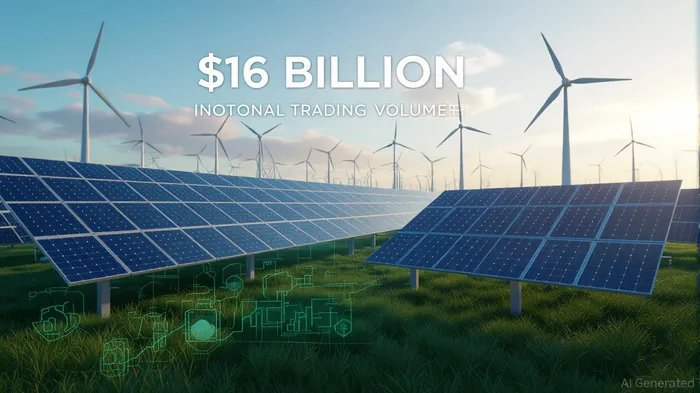
The clean energy derivatives market is undergoing a seismic shift, driven by regulatory innovation, institutional demand, and the urgent need for decarbonization. At the heart of this transformation is REsurety's CleanTrade platform, a CFTC-approved Swap Execution Facility (SEF) that has redefined liquidity and transparency in the sector. With $16 billion in notional trading volume achieved within two months of its September 2025 launch, CleanTrade has emerged as a linchpin for institutional investors seeking to capitalize on the $39 trillion clean energy derivatives market, which is projected to balloon to $125 trillion by 2032. This article examines how CleanTrade's structured approach to virtual power purchase agreements (VPPAs), renewable energy certificates (RECs), and physical PPAs is unlocking new investment avenues while aligning with ESG mandates.
A New Era of Liquidity and Standardization
Historically, the clean energy market has been plagued by fragmented pricing, low liquidity, and opaque transaction processes. CleanTrade addresses these inefficiencies by standardizing the trading of VPPAs and RECs, which are now treated as institutional-grade commodities. By operating as a regulated SEF, the platform ensures real-time transparency, reduces counterparty risk, and streamlines compliance reporting. For example, a corporate buyer hedging against fossil fuel price volatility can now execute a VPPA on CleanTrade with the same rigor as a traditional energy swap, while simultaneously purchasing RECs to meet ESG targets-all within a single, auditable framework according to market analysis.
The platform's rapid adoption underscores its value. Within two months, CleanTrade attracted major players like BlackRockBLK--, Goldman Sachs, and Cargill, which are leveraging its tools to manage carbon exposure and diversify portfolios in a low-yield environment. This institutional participation has not only boosted liquidity but also validated clean energy derivatives as a core asset class. According to a report by REsurety, the platform's advanced analytics for carbon risk and grid congestion further enhance asset valuation, enabling faster project financing and reducing the time-to-market for renewable projects.
Investment Opportunities in a Structured Market
CleanTrade's structured environment is particularly appealing to ESG-focused funds and infrastructure investors. For instance, a hedge fund can short a VPPA while purchasing RECs to offset environmental impact, creating a balanced portfolio that aligns with decarbonization goals according to industry insights. This flexibility is critical in a market where regulatory uncertainties, such as those created by the One Big Beautiful Bill Act (OBBBA), necessitate agile risk management.
Moreover, the platform's role in institutionalizing clean energy derivatives is evident in the surge of ESG-driven investments. In Q3 2025 alone, institutional capital allocated to renewables reached $75 billion, with a significant portion flowing through CleanTrade's standardized instruments. This trend is further supported by global investment forecasts, which predict $3.3 trillion in clean energy funding in 2025, with $2.2 trillion directed toward renewables and grid infrastructure. CleanTrade's ability to tokenize these investments into tradable derivatives makes them accessible to a broader range of investors, from pension funds to private equity firms.
The Road Ahead: Scaling Alpha and Decarbonization
Looking forward, CleanTrade and similar platforms are poised to accelerate the energy transition by bridging the gap between environmental goals and financial returns. The Q1 2025 Clean Investment Monitor reported $67.3 billion in U.S. clean energy and transportation investments, with a growing share directed toward utility-scale projects and industrial decarbonization. While supply chain constraints and policy shifts remain challenges, CleanTrade's tools for carbon risk analytics and grid optimization provide investors with the resilience needed to navigate these uncertainties.
The market's trajectory is clear: as clean energy derivatives mature into a $125 trillion sector by 2032, platforms like CleanTrade will be instrumental in scaling alpha opportunities while advancing global decarbonization. For investors, the message is equally compelling-liquidity, transparency, and ESG alignment are no longer mutually exclusive.

Blending traditional trading wisdom with cutting-edge cryptocurrency insights.
Latest Articles
Stay ahead of the market.
Get curated U.S. market news, insights and key dates delivered to your inbox.
AInvest
PRO
AInvest
PRO



Comments
No comments yet