
Clean Energy Market Liquidity and the Rise of REsurety's CleanTrade Platform


 Aime Summary
The clean energy sector has long grappled with a paradox: while demand for renewable energy and ESG-aligned investments has surged, the underlying markets for virtual and physical power purchase agreements (VPPAs and PPAs) have remained fragmented, illiquid, and riddled with regulatory uncertainty. That dynamic is now shifting, thanks to a pivotal development in 2025: the Commodity Futures Trading Commission's (CFTC) approval of CleanTrade as a Swap Execution Facility (SEF). This regulatory milestone, facilitated by REsurety's CleanTrade platform, is not merely a technical upgrade-it is a structural revolution in how clean energy assets are traded, managed, and valued.
A Market in Need of Infrastructure
For years, institutional investors have been hesitant to scale their clean energy portfolios due to the lack of a centralized, transparent marketplace. VPPAs and PPAs, which allow corporations and utilities to lock in long-term energy prices while supporting renewable projects, were often negotiated through opaque bilateral agreements. This created significant counterparty risk and limited liquidity, deterring large-scale participation. Meanwhile, the CFTC's 2021 advisory, which imposed stringent restrictions on SEF applications, further muddied the regulatory waters, stifling innovation.
CleanTrade's SEF approval, granted in late 2025, marks a turning point. By operating under the Commodity Exchange Act, the platform now provides a regulated framework for trading VPPAs, PPAs, and renewable energy certificates (RECs) with the same institutional-grade safeguards as traditional energy markets. This alignment with established exchanges like the Intercontinental Exchange (ICE) has not only restored clarity but also injected a level of credibility that was previously absent.
Liquidity Unleashed: $16 Billion in Two Months
Within just two months of its launch, the platform facilitated $16 billion in notional trading volume-a figure that underscores the pent-up demand for a liquid, transparent market. 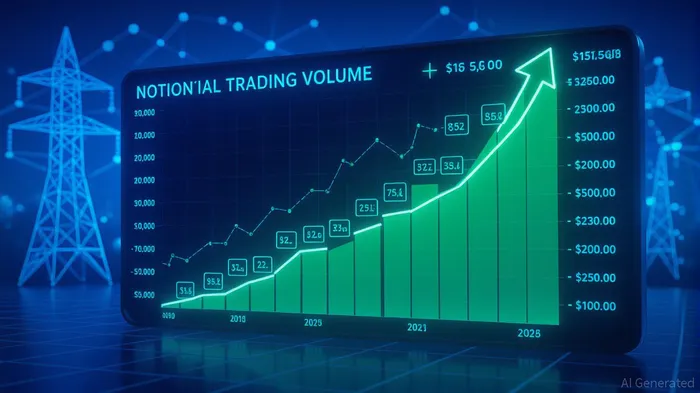 This surge was driven by major institutional players, including Cargill and Mercuria, which executed the first transactions on the platform. By centralizing trading activity, CleanTrade has effectively addressed the "dark pool" problem that plagued the sector, enabling real-time price discovery and reducing the risks associated with bilateral negotiations.
The platform's success is also tied to its integration of advanced environmental analytics. Through REsurety's CleanSight tool, users can track project-specific carbon impact metrics, ensuring alignment with ESG standards and mitigating greenwashing risks. For institutional investors, this means not only financial predictability but also the ability to demonstrate tangible environmental outcomes-a critical factor in an era where ESG compliance is increasingly scrutinized.
Institutional Investors and the ESG Imperative
The CFTC's regulatory shift-from a rigid 2021 advisory to a case-by-case evaluation of SEF applications-has been a game-changer for institutional participation. By reducing compliance uncertainty, the agency has enabled a broader range of participants, from pension funds to hedge funds, to deploy capital with confidence. CleanTrade's SEF structure allows these investors to hedge against energy price volatility, diversify portfolios, and engage in cross-asset arbitrage strategies that were previously unfeasible.
For ESG-focused portfolios, the implications are equally significant. CleanTrade's transparency features-such as real-time carbon tracking and counterparty risk mitigation-align with the growing demand for accountability in sustainability claims. As one industry analyst notes, "This isn't just about trading energy; it's about trading impact. CleanTrade turns clean energy from a niche asset into a quantifiable, tradable commodity" according to market observers.
The Road Ahead: A New Asset Class Emerges
CleanTrade's rise is more than a technological or regulatory win-it is a harbinger of a broader transformation. By addressing liquidity, transparency, and ESG alignment, the platform is laying the groundwork for clean energy derivatives to be recognized as a mainstream asset class. This, in turn, could attract trillions in institutional capital to decarbonization finance, accelerating the transition to a low-carbon economy.
However, challenges remain. The integration of physical and virtual markets must continue to evolve, and regulatory frameworks will need to adapt to the pace of innovation. Yet, as CleanTrade's early success demonstrates, the infrastructure is now in place to turn clean energy's promise into a scalable, investable reality.

Blending traditional trading wisdom with cutting-edge cryptocurrency insights.
Latest Articles
Stay ahead of the market.
Get curated U.S. market news, insights and key dates delivered to your inbox.


AInvest
PRO
AInvest
PRO



Comments
No comments yet