
Clean Energy Market Liquidity and the Rise of CFTC-Approved Platforms


 Aime Summary
A New Era of Liquidity and Transparency
For years, the clean energy market has grappled with fragmented pricing, limited liquidity, and opaque risk management tools, deterring large-scale institutional participation. REsurety's CleanTrade, a CFTC-approved Swap Execution Facility (SEF), has addressed these challenges by introducing a regulated, institutional-grade infrastructure. Since its CFTC approval in September 2025, CleanTrade has achieved a $16 billion notional trading volume within two months, a testament to its rapid adoption by corporations, asset managers, and energy traders. The platform's real-time pricing, standardized contracts, and integration with REsurety's CleanSight analytics provide granular financial and environmental insights, enabling investors to hedge against energy price volatility while securing long-term renewable energy rates.
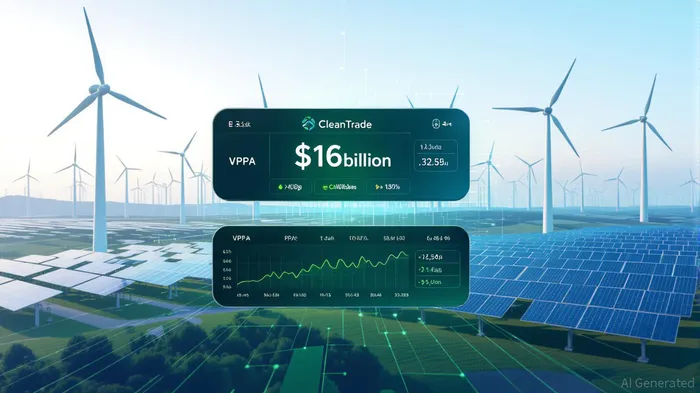 This liquidity is particularly transformative for VPPAs and PPAs, which have traditionally been illiquid and project-specific. CleanTrade's infrastructure allows these instruments to be traded as derivatives, unlocking their value for institutional portfolios. For example, a landmark transaction between Cargill and Mercuria on CleanTrade demonstrated the platform's ability to bridge physical and financial energy markets, offering scalable solutions for decarbonization risk management. By centralizing trading and standardizing contracts, CleanTrade reduces counterparty risk and enhances market efficiency, making clean energy assets more attractive to pension funds, sovereign wealth funds, and ESG-focused investors.
Strategic Implications for Institutional Investors
Institutional investors are increasingly prioritizing decarbonization as a core component of portfolio strategy, driven by regulatory mandates and stakeholder demand. CFTC-approved platforms like CleanTrade provide the tools to operationalize this shift. For instance, CleanTrade's dual investment pathways-direct trading in VPPAs and RECs and investment in the platform itself-allow hedge funds and pension funds to diversify their exposure to the clean energy sector while aligning with long-term sustainability goals.
Risk management is another critical area. CleanSight's analytics enable investors to hedge against project-specific risks such as grid congestion and curtailment, which have historically made clean energy assets less predictable. By quantifying these risks and offering structured derivatives, CleanTrade transforms renewable energy investments into more stable, institutional-grade assets according to market analysis. This is particularly relevant for ESG funds, which now account for 65.40% of the ESG finance market and are projected to grow at a 11.46% CAGR through 2030.
Moreover, the platform's ESG integration-such as project-specific carbon tracking-allows investors to achieve measurable decarbonization outcomes. For example, CleanTrade users have reported a 15% reduction in Scope 1 and 2 emissions through its tools. This alignment of financial and environmental objectives is a key driver for institutional adoption, as regulators like the U.S. SEC and the EU's CSRD mandate greater transparency in greenhouse gas reporting.
Market Projections and Regulatory Tailwinds
The growth of CFTC-approved platforms is not an isolated trend but part of a broader surge in ESG-aligned financial tools. The ESG finance market, valued at $8.71 trillion in 2025, is projected to reach $14.98 trillion by 2030, fueled by regulatory requirements and investor demand. Clean energy derivatives, in particular, are emerging as essential tools for institutional portfolios. The global clean energy market itself is expected to expand from $1.74 trillion in October 2025 to $1.98 trillion in 2026, driven by declining solar costs and wind deployment.
Regulatory tailwinds further reinforce this trajectory. The U.S. SEC's 2026 greenhouse-gas reporting mandate and the EU's expanded CSRD are compelling corporations and investors to adopt transparent, verifiable decarbonization strategies. Platforms like CleanTrade, which offer standardized, auditable carbon tracking, are uniquely positioned to meet these requirements while generating financial returns according to industry reports.
Conclusion: A Blueprint for the Future
The rise of CFTC-approved platforms like CleanTrade marks a pivotal shift in clean energy investment. By introducing liquidity, transparency, and risk management tools to VPPA and PPA markets, these platforms are creating a new asset class that bridges the gap between decarbonization and financial performance. For institutional investors, this represents an opportunity to align portfolios with sustainability goals while accessing high-growth infrastructure assets. As regulatory frameworks evolve and market demand accelerates, the clean energy transition is no longer a moral imperative-it is a strategic investment opportunity.

Blending traditional trading wisdom with cutting-edge cryptocurrency insights.
Latest Articles
Stay ahead of the market.
Get curated U.S. market news, insights and key dates delivered to your inbox.


AInvest
PRO
AInvest
PRO



Comments
No comments yet