
Clean Energy Market Liquidity: How REsurety's CleanTrade Platform is Reshaping Institutional Access and Risk Management in Green Energy Trading


 Aime Summary
A New Era of Liquidity and Standardization
CleanTrade's launch in September 2025 has catalyzed a surge in institutional participation, with the platform facilitating over $16 billion in notional trades within two months of operation. This rapid adoption underscores the market's demand for a transparent, regulated framework to trade Virtual Power Purchase Agreements (VPPAs), Power Purchase Agreements (PPAs), and Renewable Energy Certificates (RECs). Prior to CleanTrade, these instruments were plagued by non-standardized contracts and limited secondary market access, creating barriers for large-scale institutional investment. 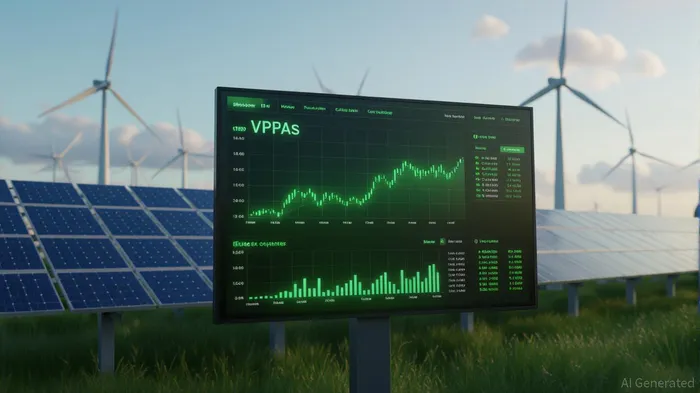 By centralizing bid-ask processes and automating compliance reporting, CleanTrade has transformed these assets into tradable derivatives, mirroring the structure of traditional energy markets.
The platform's success is further amplified by its integration of real-time analytics and verifiable ESG metrics, enabling investors to hedge against fossil fuel volatility while aligning with decarbonization goals. For instance, institutional portfolios can now lock in renewable energy prices using VPPAs, a strategy previously reserved for corporate buyers. This innovation has attracted a broader range of participants, including pension funds and endowments, which are increasingly prioritizing ESG-aligned assets. According to a November 2025 Morgan Stanley Sustainable Signals survey, 86% of asset owners plan to boost allocations to sustainable strategies within two years, with 22% citing strong financial performance as the primary driver.
Risk Mitigation and Regulatory Confidence
One of CleanTrade's most significant contributions is its role in reducing counterparty risk, a persistent concern in green energy trading. By operating under CFTC oversight, the platform ensures adherence to federal standards, providing institutional investors with the regulatory certainty needed to scale their exposure. This is particularly critical in a market where policy shifts such as the Trump-era rollbacks that caused a 36% decline in U.S. renewable investments in 2025 can disrupt long-term returns. CleanTrade's standardized contracts and post-transaction performance management tools further mitigate execution risks, enabling investors to monitor carbon tracking and project performance in real time.
Moreover, the platform's liquidity has created new hedging opportunities. In a low-yield environment, institutional investors are leveraging clean energy derivatives to diversify portfolios and offset volatility from policy changes or technological disruptions. For example, long-duration energy storage and hydrogen infrastructure-sectors expanding rapidly in 2025-are now accessible through structured instruments that balance financial and environmental outcomes.
Challenges and the Path Forward
Despite these advancements, challenges persist. Rising interest rates and capital access barriers remain hurdles for smaller renewable projects, while regulatory uncertainty continues to weigh on investor sentiment. However, platforms like CleanTrade are instrumental in bridging these gaps. By aggregating demand and standardizing pricing, they reduce transaction costs and attract capital to underdeveloped segments of the market.
Looking ahead, the U.S. Department of Energy's investments in fusion and hydrogen technologies, coupled with private-sector infrastructure projects, are expected to further expand the universe of investable clean energy assets. CleanTrade's role in this ecosystem will be critical, as it continues to evolve from a trading platform into a comprehensive risk management tool for institutional portfolios.
Conclusion
REsurety's CleanTrade platform represents a paradigm shift in clean energy markets, addressing liquidity constraints and institutional hesitancy through standardization, transparency, and regulatory alignment. As global energy transition investments reached $2.1 trillion in 2024, the stage is set for institutional capital to play a central role in decarbonization. CleanTrade's success demonstrates that green energy is no longer a niche asset class but a cornerstone of modern portfolio strategy-one where financial returns and ESG objectives can coexist.

Blending traditional trading wisdom with cutting-edge cryptocurrency insights.
Latest Articles
Stay ahead of the market.
Get curated U.S. market news, insights and key dates delivered to your inbox.


AInvest
PRO
AInvest
PRO



Comments
No comments yet