
Clean Energy Market Liquidity: How REsurety's CleanTrade Platform is Reshaping Corporate Renewable Energy Access and Investment
 Aime Summary
A Liquidity Revolution in Renewable Energy Markets
Traditional renewable energy transactions-such as Virtual Power Purchase Agreements (VPPAs), physical PPAs, and Renewable Energy Certificates (RECs)-have historically suffered from fragmented pricing, opaque workflows, and limited secondary market liquidity. CleanTrade disrupts this status quo by centralizing these assets on a regulated, digital marketplace. Within two months of its September 2025 launch, the platform attracted $16 billion in notional value in transactions, signaling robust institutional demand. This rapid adoption reflects a critical need for a modern infrastructure that aligns with evolving regulatory frameworks, such as the EU's Sustainable Finance Disclosure Regulation (SFDR), while providing granular financial and environmental data to participants.
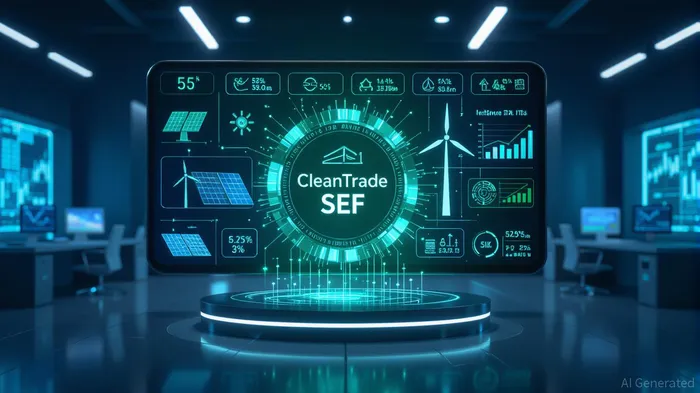 The platform's end-to-end capabilities-from automated contract generation to Dodd-Frank compliance reporting-reduce transactional friction, enabling corporations and investors to navigate complex renewable energy deals with confidence. For instance, CleanTrade integrates REsurety's CleanSight analytics, offering real-time insights into project-specific carbon risk and grid congestion. These tools enhance asset valuation and risk management, making clean energy contracts more attractive to a broader range of investors.
Corporate Procurement: Driving Volume and Decarbonization
Corporate demand for renewable energy has surged as companies prioritize sustainability goals. In 2024 alone, Fortune 500 firms procured 21.7 gigawatts (GW) of clean energy, adding to 100 GW of cumulative capacity since 2014. Tech giants like Amazon, Microsoft, Meta, and Google led this charge, with Amazon securing over 45 GW of renewable energy capacity and displacing 35.5 megatons of CO2 emissions. These contracts not only advance corporate decarbonization but also stabilize revenue streams for clean energy projects, reducing financial distress by up to 90% in key U.S. markets, according to a CEBA-commissioned study.
CleanTrade amplifies this impact by enabling secondary trading of existing contracts. For example, corporations can now monetize underutilized VPPAs or RECs, while investors gain exposure to high-impact, project-specific assets. This liquidity layer is critical for scaling renewable deployment, as it allows buyers to optimize their portfolios and sellers to accelerate project returns.
Investment Opportunities in a Structured Market
The platform's CFTC approval and SEF designation establish a regulatory foundation that attracts institutional capital. By standardizing derivatives and providing transparent pricing, CleanTrade reduces counterparty risk and aligns with ESG reporting requirements, making it a strategic tool for asset managers and hedge funds. For instance, the ability to hedge renewable energy price volatility through structured derivatives opens new avenues for yield generation in clean energy portfolios.
Moreover, CleanTrade's integration with carbon accounting tools allows investors to quantify and track emissions reductions, a key differentiator in markets prioritizing measurable sustainability outcomes. This alignment with global decarbonization targets-such as the International Energy Agency's net-zero roadmap-positions the platform as a bridge between capital and climate action.
Conclusion: A Blueprint for Scalable Clean Energy Markets
REsurety's CleanTrade platform is more than a technological innovation; it is a systemic solution to the liquidity and transparency challenges that have constrained clean energy markets. By democratizing access to corporate renewable energy contracts and providing institutional-grade infrastructure, CleanTrade is accelerating the transition to a low-carbon economy while creating compelling investment opportunities. As corporate procurement continues to drive decarbonization-displacing 10% of U.S. power sector emissions in 2024-platforms like CleanTrade will be pivotal in scaling this momentum. For investors, the message is clear: liquidity in clean energy is no longer a bottleneck but a catalyst for growth.

Mezclando la sabiduría tradicional en el comercio con las perspectivas más avanzadas sobre criptomonedas.
Latest Articles
Stay ahead of the market.
Get curated U.S. market news, insights and key dates delivered to your inbox.
AInvest
PRO
AInvest
PRO



Comments
No comments yet