
Clean Energy Market Liquidity and Investment Potential
 Aime Summary
The CFTC-Regulated Catalyst: CleanTrade's Role in Institutional Adoption
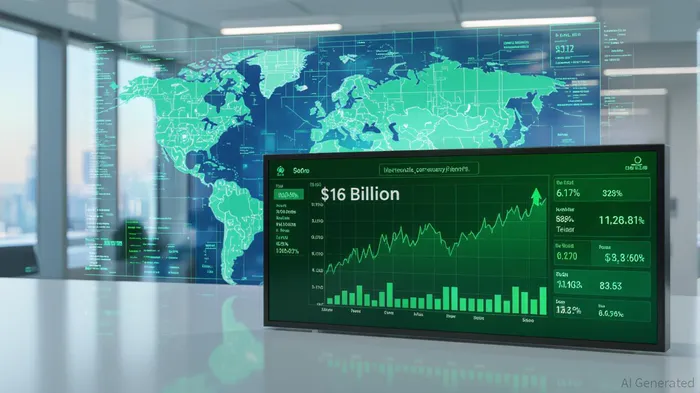
In September 2025, CleanTrade became the first CFTC-approved SEF for clean energy derivatives, a milestone that marked the sector's entry into institutional-grade infrastructure. This regulatory endorsement enabled the platform to standardize trading in Virtual Power Purchase Agreements (VPPAs), Power Purchase Agreements (PPAs), and project-specific Renewable Energy Certificates (RECs), which had previously been traded in opaque, fragmented markets according to industry reports. The result? A surge in institutional participation: CleanTrade attracted $16 billion in notional value within two months of its SEF launch, signaling robust confidence in the sector's financial viability.
 This growth is underpinned by CleanTrade's ability to offer real-time analytics, carbon tracking, and risk management tools, which help investors hedge against price volatility while meeting ESG objectives. For example, institutional portfolios can now lock in long-term renewable energy prices through VPPAs, mitigating exposure to fossil fuel price swings. The platform's automation of Dodd-Frank compliance further reduces operational friction, enabling seamless execution of complex transactions.
Liquidity Metrics and Market Expansion
The liquidity injected by CFTC-regulated platforms like CleanTrade is reshaping the renewable energy derivatives market. By 2025, CleanTrade's SEF had standardized trading across a range of instruments, creating a benchmark for pricing and transparency. This standardization has attracted a diverse array of institutional buyers, including pension funds, endowments, and ESG-focused asset managers, which are now treating clean energy assets as core components of their portfolios.
Data from 2025 highlights the scale of this transformation: CleanTrade's $16 billion notional trading volume within two months represents a significant portion of the sector's total liquidity. This influx of capital is not merely speculative-it reflects a structural shift as investors seek to capitalize on the long-term tailwinds of decarbonization policies and technological advancements in solar, wind, and storage.
The Broader Implications for ESG-Driven Investment
The rise of CFTC-sanctioned platforms is accelerating the convergence of financial and environmental goals. According to projections, ESG-driven investments in clean energy are expected to grow from $39.08 trillion in 2025 to $125.17 trillion by 2032. This trajectory is fueled by the ability of platforms like CleanTrade to provide scalable liquidity and institutional-grade risk management, making renewable energy assets more accessible to large-scale investors.
Moreover, the standardization of RECs and VPPAs on regulated SEFs enhances the credibility of ESG claims, addressing concerns about greenwashing. By enabling precise carbon tracking and verifiable offsets, CleanTrade ensures that investments directly contribute to measurable emissions reductions. This alignment of financial and environmental outcomes is critical as regulators and stakeholders demand greater accountability in sustainability reporting.
Conclusion: A New Era for Clean Energy Markets
CFTC-approved platforms like CleanTrade are redefining the renewable energy landscape, transforming it from a niche, illiquid market into a mainstream asset class. The combination of regulatory clarity, technological innovation, and institutional demand is creating a virtuous cycle: enhanced liquidity attracts more capital, which in turn drives further market development. For investors, this means access to a sector that is not only aligned with global decarbonization targets but also offers robust financial returns. As the energy transition accelerates, the role of regulated infrastructure in facilitating this shift will only grow in importance.

La combinación de la sabiduría tradicional en el comercio con las perspectivas más avanzadas sobre criptomonedas.
Latest Articles
Stay ahead of the market.
Get curated U.S. market news, insights and key dates delivered to your inbox.


AInvest
PRO
AInvest
PRO



Comments
No comments yet