
Clean Energy Market Liquidity and Investment Opportunities: How REsurety's CleanTrade Platform is Reshaping Corporate Procurement and Strategic Investing


 Aime Summary
Institutional-Grade Infrastructure and Market Liquidity
CleanTrade's emergence as a Swap Execution Facility (SEF) under CFTC oversight has introduced a level of transparency and efficiency previously absent in clean energy markets. By enabling the negotiation and execution of Virtual Power Purchase Agreements (VPPAs), physical PPAs, and project-specific Renewable Energy Certificates (RECs) on a single platform, CleanTrade has addressed long-standing inefficiencies in bilateral negotiations and fragmented workflows. Within its first months of operation, the platform achieved $16 billion in notional value, a testament to its appeal for institutional participants seeking liquidity and compliance.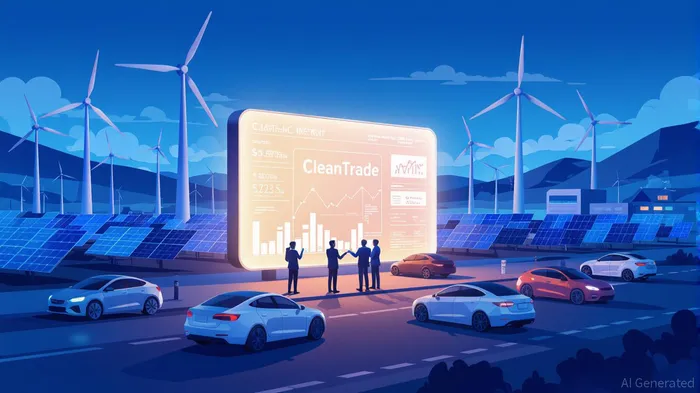
This infrastructure is particularly critical for corporations aiming to meet decarbonization targets while managing financial risk. Traditional clean energy procurement often relied on opaque, manual processes, but CleanTrade's automated workflows-from bid sourcing to Dodd-Frank compliance reporting-reduce transaction costs by up to 30% and streamline post-transaction management. For institutional investors, the platform democratizes access to a $1.2 trillion clean energy investment landscape, aligning financial returns with ESG objectives.
Strategic Investment Opportunities Enabled by CleanTrade
The platform's capabilities extend beyond procurement, enabling sophisticated investment strategies that cater to both speculative and long-term horizons. One such strategy is the use of VPPAs for portfolio hedging, allowing buyers to lock in fixed prices for renewable energy over extended periods. This mitigates exposure to volatile energy settlements, a critical advantage for organizations prioritizing budget certainty. For example, a multinational manufacturer could hedge against rising electricity costs by securing a VPPA for solar energy in a high-growth emerging market, leveraging CleanTrade's analytics to assess grid congestion and energy capture rates.
Another innovation is project-specific REC trading, which allows investors to align their portfolios with granular environmental metrics. Unlike traditional broad-market RECs, project-level trading enables buyers to target specific carbon impact assessments, enhancing ESG alignment. This granularity is particularly attractive to asset managers seeking to construct diversified clean energy portfolios across geographies and technologies.
CleanTrade also facilitates PPA re-trading and risk management for project owners. As PPAs near expiration or face market volatility, owners can renegotiate terms or extend contracts on a transparent, regulated platform. This liquidity is vital for managing merchant market exposure, ensuring that clean energy assets remain financially viable in fluctuating conditions.
Regulatory and Technological Catalysts
The U.S. Inflation Reduction Act (IRA) has further amplified CleanTrade's impact, with $14 billion in quarterly clean manufacturing investments by Q1 2025 fueling solar and battery production. Coupled with CleanTrade's integration of AI and blockchain technologies, which reduce counterparty risk and enhance transparency, the platform is bridging the gap between clean energy's potential and the sophistication of traditional commodity markets. For instance, REsurety's CleanSight analytics provide real-time insights into project-specific financial performance, enabling data-driven decisions that optimize both carbon reduction and ROI.
Conclusion: A New Era for Clean Energy Investing
As the clean energy market matures, platforms like CleanTrade are accelerating the transition to a low-carbon economy by making procurement as efficient and accessible as traditional energy trading. By addressing liquidity constraints, reducing transaction costs, and enabling strategic risk management, CleanTrade is not only transforming corporate clean energy strategies but also empowering institutional investors to capitalize on a $1.8 trillion opportunity by 2033. For stakeholders navigating the energy transition, the platform represents a paradigm shift-one where financial innovation and environmental stewardship converge to redefine the future of energy.

Blending traditional trading wisdom with cutting-edge cryptocurrency insights.
Latest Articles
Stay ahead of the market.
Get curated U.S. market news, insights and key dates delivered to your inbox.
AInvest
PRO
AInvest
PRO



Comments
No comments yet