
Clean Energy Market Liquidity and Investment Opportunities: The Emergence of CFTC-Approved Platforms and Their Impact on Institutional Investment


 Aime Summary
The CleanTrade Revolution
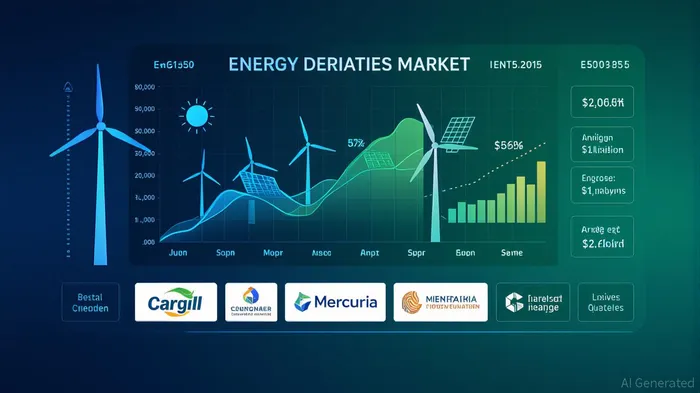
CleanTrade, granted Swap Execution Facility (SEF) status by the CFTC in September 2025, has emerged as a linchpin in this market. Within two months of its launch, it facilitated $16 billion in notional trading volume, a testament to institutional confidence. This platform enables the trading of Virtual Power Purchase Agreements (VPPAs), Power Purchase Agreements (PPAs), and Renewable Energy Certificates (RECs), offering investors a regulated environment with real-time analytics and ESG alignment. By standardizing these instruments, CleanTrade has addressed long-standing issues of fragmented pricing and opaque markets. Early adopters like Cargill and Mercuria have further validated its role as critical infrastructure.
Expanding the Ecosystem
CleanTrade is not alone. Platforms such as Electron Exchange DCM, Railbird Exchange, and Quanta Exchange are expanding the market by offering region-specific and specialized trading options. These platforms collectively enhance liquidity, enabling investors to hedge energy price volatility and align portfolios with sustainability goals. The U.S. Inflation Reduction Act has amplified this trend, providing financial incentives that reduce risks for renewable energy investments.
Institutional Adoption and Market Projections
Institutional participation has surged, with U.S. clean energy and transportation investment reaching $75 billion in Q3 2025. Major financial institutions like BlackRock and Goldman Sachs are leveraging CFTC-regulated platforms for advanced carbon tracking and risk management tools. The institutional clean energy derivatives market is projected to grow from $39 trillion in 2025 to $125 trillion by 2032, driven by demand for diversified, ESG-aligned assets.
Liquidity Metrics and Broader Trends
Q4 2025 data underscores robust liquidity. Secondary market transactions, including clean energy, hit $165 billion through Q3 2025. Meanwhile, the global energy transition is spurring demand for industrial metals like lithium and cobalt, essential for electric vehicles and energy storage. Nuclear energy, too, is gaining traction, with small modular reactors (SMRs) attracting strategic investments.
Conclusion
CFTC-approved platforms are catalyzing a paradigm shift. By transforming clean energy derivatives into a transparent, liquid asset class, they are enabling institutions to reconcile financial returns with sustainability. As regulatory frameworks mature and markets expand, clean energy is poised to become a cornerstone of institutional portfolios-a win for both investors and the planet.

Blending traditional trading wisdom with cutting-edge cryptocurrency insights.
Latest Articles
Stay ahead of the market.
Get curated U.S. market news, insights and key dates delivered to your inbox.
AInvest
PRO
AInvest
PRO



Comments
No comments yet