
Clean Energy Market Liquidity and Investment Opportunities: How CFTC-Approved Platforms Are Reshaping Risk and Transparency


 Aime Summary
Risk Management: Hedging Volatility with Precision
Before CleanTrade, clean energy markets were plagued by fragmented pricing and bilateral negotiations that left investors exposed to counterparty risk. CleanTrade flips the script by standardizing Virtual Power Purchase Agreements (VPPAs), physical PPAs, and Renewable Energy Certificates (RECs) on a regulated, centralized platform. This structure allows institutional investors and ESG-focused funds to hedge energy price volatility using swaps and forward contracts, much like they would in traditional energy markets according to market analysis.
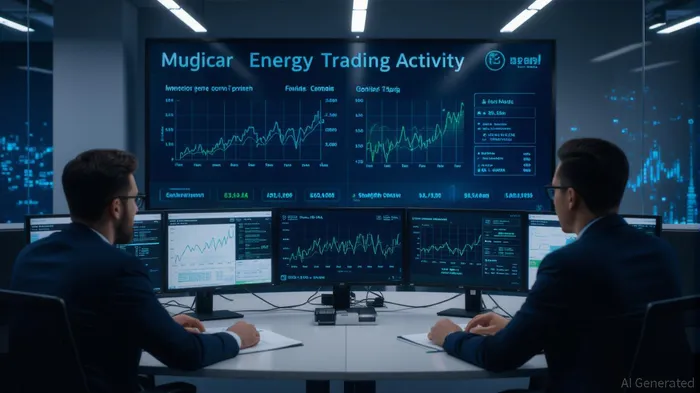 Take ESG funds, for example. With 84% of institutional investors prioritizing sustainable assets, the demand for tools that align financial returns with decarbonization goals is soaring. CleanTrade's real-time analytics empower users to simulate settlements under multiple scenarios, optimizing procurement strategies and reducing risk exposure. Major players like BlackRockBLK-- and Goldman SachsGS-- have already adopted the platform to mitigate fossil fuel price swings while advancing their green portfolios.
Transparency: From Greenwashing to Granular Data
Transparency has been a thorny issue in clean energy investing. CleanTrade tackles this head-on by providing project-level carbon data, enabling corporations and investors to track emissions reductions with surgical precision. This granularity isn't just good for ESG reporting-it's a shield against greenwashing. By aligning with regulations like the EU's Sustainable Finance Disclosure Regulation (SFDR), CleanTrade ensures every transaction is backed by verifiable metrics.
For instance, within two months of its October 2024 launch, CleanTrade facilitated $16 billion in notional value in transactions, a testament to its appeal for transparent, ESG-aligned hedging. This level of liquidity wasn't possible before, as fragmented markets left buyers and sellers in the dark. Now, with real-time pricing data and automated compliance workflows, the platform is bridging the gap between clean energy's promise and its execution according to industry reports.
Liquidity and Efficiency: A New Infrastructure for a New Era
Clean energy markets have historically struggled with low liquidity, but CleanTrade's standardized instruments are changing that. By streamlining workflows-from sourcing bids to post-trade performance tracking-the platform mirrors the efficiency of traditional energy trading. This has been a boon for renewable developers, who can now secure long-term funding with greater certainty, and for corporations seeking budget stability through VPPAs according to market analysis.
The financial impact is staggering. Despite a 15% annual decline in ESG debt markets, CleanTrade's standardization of VPPAs and RECs helped drive $1.1 trillion in global sustainable debt issuance in the first nine months of 2025. This isn't just a win for clean energy-it's a lifeline for infrastructure investors in sectors like solar and electric vehicles, where capital efficiency is critical according to industry reports.
Investment Opportunities: Where to Put Your Money
For investors, CleanTrade's rise signals a shift in how clean energy assets are valued. ESG funds are no longer just chasing "green" labels-they're demanding the same rigor as traditional portfolios. Platforms like CleanTrade enable this by offering tools to measure carbon impact alongside financial returns.
Consider the solar sector. With CleanTrade's workflows, developers can lock in long-term contracts faster, reducing project risk and attracting yield-focused investors. Similarly, electric vehicle companies can hedge against energy costs, making their business models more predictable. For infrastructure funds, this means a pipeline of high-conviction opportunities with clear ESG metrics according to market analysis.
The Road Ahead: A Market in Motion
CleanTrade's success isn't an anomaly-it's a harbinger of what's to come. As the clean energy transition accelerates, platforms that combine regulatory compliance with cutting-edge analytics will dominate. The CFTC's approval was a watershed moment, but the real story is the $16 billion in notional value that followed. This is a market that's not just growing-it's maturing according to industry analysis.
For investors, the message is clear: Clean energy isn't a side bet anymore. It's a core asset class, and platforms like CleanTrade are the rails that will carry it forward. Whether you're an ESG fund manager or a traditional energy trader, the time to act is now.

Blending traditional trading wisdom with cutting-edge cryptocurrency insights.
Latest Articles
Stay ahead of the market.
Get curated U.S. market news, insights and key dates delivered to your inbox.
AInvest
PRO
AInvest
PRO



Comments
No comments yet