
Clean Energy Market Liquidity and Institutional Investment Opportunities: The CleanTrade Revolution


 Aime Summary
The clean energy sector is undergoing a seismic shift, driven by the convergence of regulatory innovation, technological advancement, and institutional demand for sustainable assets. At the heart of this transformation lies REsurety's CleanTrade platform, a CFTC-approved Swap-Execution Facility (SEF) that is redefining liquidity, transparency, and scalability in clean energy markets. By addressing long-standing inefficiencies in renewable energy trading, CleanTrade is not only attracting institutional capital but also reshaping the risk management landscape for clean energy asset classes.
Risk Management: From Uncertainty to Precision
Traditional clean energy markets have been plagued by fragmented pricing, opaque counterparty risks, and limited tools for hedging volatility. CleanTrade disrupts this paradigm by integrating REsurety's CleanSight analytics, which provide granular insights into project-specific risks. For institutional investors, this means the ability to model and mitigate financial and operational risks with unprecedented precision. For example, the platform's automated Dodd-Frank reporting and post-settlement tracking streamline compliance, reducing the administrative burden associated with bilateral deals. This structured approach aligns with the growing demand for institutional-grade infrastructure in clean energy, where predictability and accountability are paramount.
Transparency and Liquidity: A New Benchmark
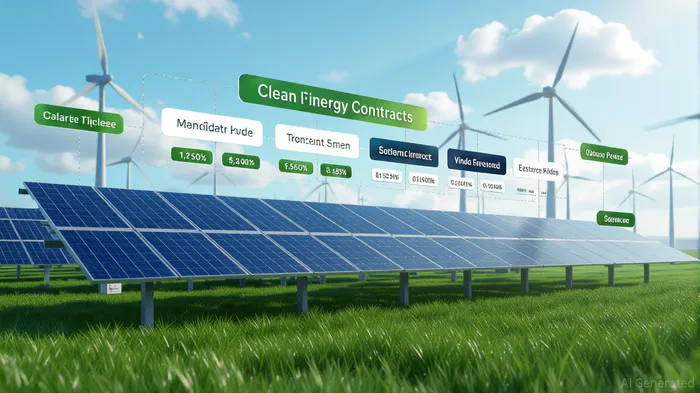
Liquidity has historically been a barrier to institutional participation in clean energy markets, where transactions often rely on opaque bilateral negotiations. CleanTrade's centralized marketplace for Virtual Power Purchase Agreements (VPPAs), physical PPAs, and Renewable Energy Certificates (RECs) introduces real-time pricing and standardized workflows, mirroring the efficiency of traditional energy exchanges like ICE. Within two months of its launch, the platform facilitated $16 billion in notional value, a testament to its capacity to scale and meet market demand. This liquidity is further amplified by the CFTC's regulatory framework, which ensures transparency and reduces counterparty risk-a critical factor for institutions prioritizing both financial returns and ESG alignment.
Scalability and Institutional Adoption: A Symbiotic Relationship
The scalability of clean energy assets is inextricably linked to institutional adoption. CleanTrade's ability to hedge P&L volatility and optimize procurement based on carbon impact aligns with the dual priorities of institutional investors: financial performance and sustainability outcomes. A 2025 Morgan StanleyMS-- report underscores this trend, noting that 84% of institutional investors expect to increase their allocation to sustainable assets, with energy efficiency and renewable energy as top priorities. By offering a regulated environment for trading diverse contract types, CleanTrade lowers entry barriers for new participants while enabling existing players to scale their portfolios. This dynamic is particularly relevant as climate adaptation strategies gain prominence, with 75% of institutional investors anticipate physical climate risks to impact asset prices within five years.
The Road Ahead: Regulatory Synergy and Market Maturity
CleanTrade's success is not an isolated phenomenon but part of a broader regulatory push to modernize energy markets. The CFTC's approval of digital assets as collateral, for instance, reflects a systemic shift toward institutional-grade infrastructure that enhances liquidity and accessibility. As clean energy markets mature, platforms like CleanTrade will play a pivotal role in bridging the gap between innovation and institutional confidence. For investors, this means opportunities to deploy capital in assets that are not only environmentally impactful but also financially resilient.

Blending traditional trading wisdom with cutting-edge cryptocurrency insights.
Latest Articles
Stay ahead of the market.
Get curated U.S. market news, insights and key dates delivered to your inbox.
AInvest
PRO
AInvest
PRO



Comments
No comments yet