
Clean Energy Investments: Seizing the $3 Trillion Opportunity in 2025
The clean energy transition is no longer a distant ideal—it's a market reality. With global clean energy investments surging to a record $2.1 trillion in 2024 and poised to hit $3.3 trillion by 2025, now is the time for investors to align with this unstoppable momentum. Strategic allocations into solar, battery storage, and grid infrastructure are not just about sustainability—they're about capitalizing on one of the most robust growth stories of the decade. Let's unpack the data-driven case for immediate action.
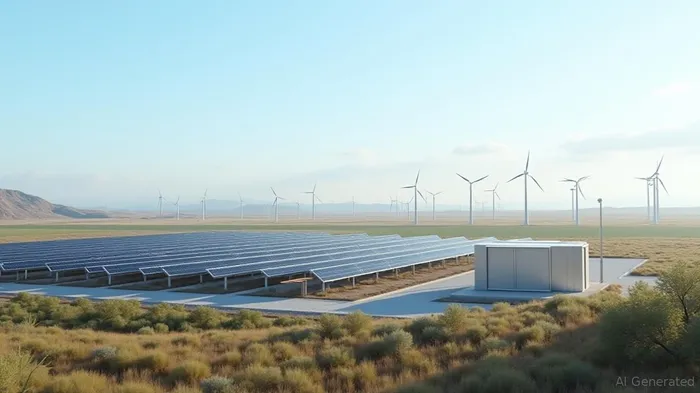
The Data-Backed Surge in Clean Energy Momentum
Recent forecasts from the International Energy Agency (IEA) and BloombergNEF (BNEF) paint a clear picture: clean energy is the fastest-growing segment of global investment. In 2024, renewables accounted for 92.5% of all new power capacity additions, with solar leading the charge at 451.9 GW added globally—a 32% year-on-year jump. This growth isn't just about volume; it's about cost efficiency. Solar module prices dropped to a record low of $0.11/Wdc in early 2024, making it the cheapest power source in most regions.
The Inflation Reduction Act (IRA) in the U.S. is a game-changer. Tax credits, manufacturing incentives, and grid modernization funding have slashed risks for investors. BNEF estimates that IRA-driven demand could push U.S. clean energy investment to $1.2 trillion by 2030, outpacing fossilFOSL-- fuels by a factor of four. Meanwhile, China's dominance in solar manufacturing—90% of global PV capacity—positions it as a critical supply chain hub for global projects.
Key Sectors to Watch: Where the Growth Is
- Solar and Wind: The Core of the Transition
Solar is the clear leader, with $450 billion in projected 2025 investments (IEA). Companies like Enphase Energy (ENPH), which dominates solar inverters, and First Solar (FSLR), known for utility-scale panels, are poised to benefit. Wind is also expanding, though at a slower pace—113 GW added in 2024—with giants like Vestas (VWS.CO) and NextEra Energy (NEE) leading offshore and onshore projects.
Battery Storage: The Grid's New Heartbeat
Lithium-ion battery prices have fallen by over 90% since 2010, and storage investments are projected to hit $65 billion in 2025. Tesla's Powerwall (TSLA) and QuantumScape (QS), a solid-state battery innovator, are at the forefront. Utilities like NextEra Energy Resources are pairing solar farms with storage to stabilize grids, a trend that will only accelerate as demand for 24/7 renewable power grows.Nuclear and Hydrogen: Long-Term Plays
While solar and wind dominate, small modular reactors (SMRs) and green hydrogen projects offer diversification. Companies like NuScale Power (a subsidiary of Fluor Corporation) and Plug Power (PLUG) are laying groundwork for scalable, low-carbon solutions. These sectors may lag in short-term returns but are critical for achieving net-zero goals.
Policy and Demand: Tailwinds for Growth
- Regulatory Support: The EU's Fit for 55 plan and U.S. IRA are driving $500 billion in annual subsidies for clean energy. Even oil-rich nations like Saudi Arabia are pledging $1.3 trillion for renewables by 2030.
- Corporate Commitments: Over 4,000 companies have set net-zero targets, creating $12 trillion in cumulative demand for clean energy solutions by 2030 (BNEF).
- AI and Data Centers: The rise of AI-driven cloud computing is boosting electricity demand, but it's also pushing tech giants like Microsoft (MSFT) and Google (GOOGL) to invest in renewables to power their data centers sustainably.
Addressing Risks: Why Now Is the Time to Act
Critics cite supply chain bottlenecks, grid bottlenecks, and geopolitical tensions. Yet these risks are being mitigated:
- Supply Chains: The U.S. and EU are investing in domestic critical mineral production and recycling (e.g., Lithium Americas (LACM)).
- Grid Upgrades: The IRA allocates $65 billion for grid modernization, and private companies like Dominion Energy (D) are partnering with tech firms to digitize grids.
- Geopolitical Risks: Diversification is key. Exposure to China's solar manufacturing (e.g., JinkoSolar (JKS)) must be balanced with investments in U.S.-focused firms like SunPower (SPWR).
Investment Strategies for 2025
- ETF Plays: The Invesco Solar ETF (TAN) and iShares Global Clean Energy ETF (ICLN) offer diversified exposure.
- Sector Leaders: Prioritize companies with IRA credits, like Tesla (TSLA) (battery + EVs) and Enphase (ENPH) (solar inverters).
- Utilities with Clean Focus: NextEra Energy (NEE) and NextEra Energy Resources (NEE) are among the largest renewable generators in the U.S.
- Geographic Diversification: Look beyond China—Germany's RWE (RWEGY) and Australia's Renewables Infrastructure Group (RIG) are expanding in underserved markets like Africa and Southeast Asia.
Conclusion: The Transition Isn't Optional—It's Inevitable
Clean energy is no longer a niche sector. With costs plummeting, policies accelerating, and demand surging, this is a rare opportunity to invest in a market that's both morally aligned and financially robust. The risks? Yes, they exist—but they're outweighed by the structural tailwinds. For investors, the question isn't if to allocate to clean energy, but how much and how soon. The $3.3 trillion market of 2025 won't wait.
Act now, and position your portfolio for the energy future.

Delivering real-time insights and analysis on emerging financial trends and market movements.
Latest Articles
Stay ahead of the market.
Get curated U.S. market news, insights and key dates delivered to your inbox.


AInvest
PRO
AInvest
PRO



Comments
No comments yet