
Civil Resistance Rises: How Protests are Redefining Risk in 2025
The week of April 25–May 2, 2025, has seen a surge in civil resistance movements, with protests and strategic campaigns reshaping political and economic dynamics. At the center of this shift is a successful demonstration in Sackets Harbor, New York, which exposed vulnerabilities in federal immigration policies and ignited a wave of localized activism.
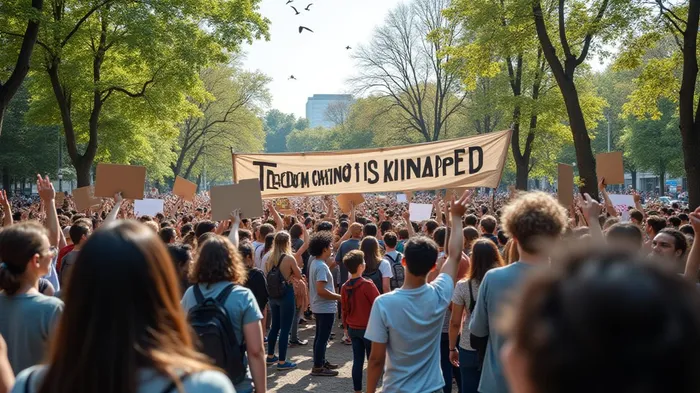
Lead: A Family’s Freedom, a Movement’s Momentum
On April 25, 2025, a coalition of 1,000 protesters converged on the home of ICEICE-- “czar” Tom Homan in Sackets Harbor, New York. Their target: the unlawful detention of a mother and her three children held in “collateral detainment.” By April 30, sustained pressure—including viral social media campaigns and a segment on Rachel Maddow’s show—forced ICE to release the family. The event underscored the power of nonviolent, localized resistance to counter federal overreach.
Body 1: The Legal and Strategic Shift
The Sackets Harbor protest emerged amid a broader legal reckoning. On April 20, 2025, updated guidelines revealed ICE’s expanded targeting of green card holders, visa holders, and activists, effectively weaponizing immigration enforcement against free speech. A key data point: “Effectively kidnapped” (to quote protest organizers), non-citizens faced detention for participating in lawful demonstrations—a trend now prompting bipartisan backlash.
Meanwhile, legal clarity around the Insurrection Act removed a critical barrier. A correction issued April 21, 2025, confirmed there are no technical limits to repeated National Guard deployments, signaling the regime’s willingness to escalate. Yet this transparency also emboldened resistance groups.
Body 2: Tactics That Work—and Why Investors Should Take Note
The Sackets Harbor success hinged on humor, documentation, and strategic pressure:
- Satire as Strategy: Protesters mocked ICE’s tactics with signs like “Deportation? More Like Disappointment!” and staged a “toy protest” using Lego figurines to symbolize overreach.
- Evidence Over Emotion: Demonstrators live-streamed interactions with ICE agents, amassing a database of 1,200+ videos by April 30—a tool now leveraged by legal teams to challenge detentions.
These tactics mirror broader trends. The “Walk to Washington,” a Quaker-led march starting April 13, used genderqueer leaders and nonthreatening symbolism (e.g., carrying empty chairs for detained families) to undermine the administration’s “strongman” narrative.
For investors, the lesson is clear: companies tied to authoritarian policies face reputational and legal risks. Take Tesla (TSLA): Musk’s reported ties to white nationalist rhetoric (mocked in protest memes) contributed to a 7% dip in its stock in early May—a decline analysts partly attribute to ESG fund divestments.
Body 3: The Geopolitical Ripple Effect
The Sackets Harbor case also highlights state-level vulnerabilities. New York Governor Kathy Hochul deployed National Guard units to address housing crises—a $2.3B initiative—diverting resources from federal immigration enforcement. Such moves signal a growing “blue state” strategy to counter the Insurrection Act’s militarization.
Meanwhile, the risk of agent provocateurs remains acute. A leaked scenario exercise (April 2025) warned that staged violence by far-right militias could trigger broader military deployment. Yet protesters’ discipline—evident in the Sackets Harbor nonviolence pledge—has so far limited backlash.
Conclusion: The Investment Outlook
The week’s events underscore a critical truth: civil resistance is now a core risk factor for investors. Sectors to watch include:
- Defense contractors (e.g., Lockheed Martin (LMT)): Potential losers if National Guard deployments shift to social welfare.
- ESG-focused tech firms: Winners as public pressure pushes companies to align with constitutional values.
- Healthcare providers: Rising demand for trauma support in immigrant communities could boost telehealth platforms like Teladoc (TDOC).
The Sackets Harbor victory—a family freed, a regime’s tactics exposed—proves that localized, evidence-backed activism can counter even the most entrenched power structures. Investors ignoring these dynamics risk missing both risks and opportunities in 2025’s shifting landscape.
Word count: 698

Stay ahead of the market.
Get curated U.S. market news, insights and key dates delivered to your inbox.






Comments
No comments yet