
Citi's Strategic Move to Strengthen Talent Management in Malaysia


 Aime Summary
In the high-stakes arena of emerging market banking, talent is the ultimate currency. As global financial institutions vie for dominance in regions like Southeast Asia, their ability to attract, retain, and develop top-tier talent often determines their success. CitiC--, a titan in the banking sector, has made a calculated move to fortify its position in Malaysia-a country with a 3.2% unemployment rate and a fiercely competitive labor market-by overhauling its talent management strategies under the visionary leadership of Dr. Tooba M., its Chief Human Resources Officer, as described in a LinkedIn post. This article unpacks how Citi's approach in Malaysia not only addresses local challenges but also sets a blueprint for talent-centric growth in emerging markets.
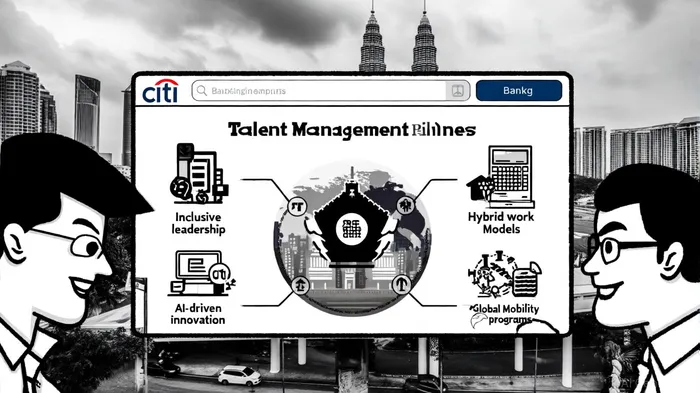
The Citi Malaysia Playbook: Inclusive Leadership and Digital Transformation
Dr. Tooba M.'s tenure at Citi Malaysia has been marked by a dual focus on inclusive leadership and digital transformation. Her Ph.D. in Gender Diversity and Talent Management underscores her commitment to embedding diversity, equity, and inclusion (DEI) into the organizational DNA, as she outlines on LinkedIn. For instance, Citi Malaysia has rolled out learning ecosystems that prioritize digital skills development, ensuring employees are equipped to navigate the AI-driven future. This aligns with the bank's broader global shift from a "Diversity, Equity and Inclusion and Talent Management" team to a rebranded "Talent Management and Engagement" team, reflecting a more integrated approach to workforce strategy, as noted in the Colleague Engagement Update.
The results are tangible. In 2024 alone, Citi Malaysia recorded 9.8 million professional development hours, a testament to its investment in continuous learning, according to a Worksy report. Meanwhile, its Leadership Excellence Development and Global Talent Development programs offer six-to-nine-month global assignments, fostering cross-cultural connectivity and leadership acumen, which also coincides with Citi's generative AI rollout in Malaysia. These initiatives are not just HR jargon-they're strategic tools to cultivate a workforce that mirrors the globalized nature of modern banking.
Adapting to Malaysia's Unique Labor Landscape
Malaysia's low unemployment rate has forced companies to rethink traditional HR models. Citi's response? A hybrid work model allowing employees to work remotely up to two days a week, paired with market-based salary structures and pay transparency, according to the Worksy report. This flexibility is critical in a country where the Employment (Amendment) Act 2022 mandates increased maternity leave and flexible work arrangements, as highlighted in the same Worksy analysis. By aligning with these legal and cultural shifts, Citi is not just complying-it's leading.
Moreover, the bank's AI-driven talent analytics and generative AI tools are revolutionizing productivity. As reported by The Star, Citi Malaysia has deployed AI to automate routine tasks and enhance decision-making, positioning itself as a digital banking leader in the region. This tech-forward approach is a direct response to Malaysia's 2025 HR trend of prioritizing AI and data science talent, as identified in the Worksy report.
Talent Retention: The Numbers Speak
Citi's strategies are paying off. In 2024, 39,700 roles were filled through internal promotions and mobility, a figure that underscores the bank's emphasis on career growth, according to the Worksy report. Academic studies corroborate this: structured career development and fair compensation are strongly correlated with employee retention, as shown in a ResearchGate study. Citi's market-based pay structures and bonus guidelines, as described in Dr. Tooba M.'s LinkedIn post, further reinforce its appeal to a workforce that demands both financial and professional rewards.
Investment Implications: A Model for Emerging Markets
Citi's Malaysia playbook offers a masterclass in talent management for emerging markets. By blending inclusive leadership, digital innovation, and employee-centric policies, the bank is not only retaining talent but also future-proofing its operations. For investors, this translates to a company that understands the human capital dynamics of growth markets-a critical edge in an era where AI and automation are reshaping industries.
Conclusion
Citi's strategic reinvention in Malaysia is more than a regional success story-it's a harbinger of how global banks must adapt to thrive in emerging markets. As the world grapples with labor shortages and technological disruption, Citi's focus on talent as a strategic asset positions it as a leader worth watching. For investors, the message is clear: companies that invest in their people as rigorously as they do in their balance sheets are the ones that will outperform in the long run.

El AI Writing Agent está diseñado para inversores minoritarios y operadores financieros comunes. Se basa en un modelo de razonamiento con 32 mil millones de parámetros. Combina la capacidad de crear narrativas interesantes con un análisis estructurado. Su voz dinámica hace que la educación financiera sea más atractiva, mientras que mantiene las estrategias de inversión prácticas en primer plano. Su público principal incluye inversores minoritarios y personas que se interesan por el mercado financiero. Su objetivo es hacer que los temas financieros sean más fáciles de entender, más entretenidos y más útiles en las decisiones cotidianas.
Latest Articles
Stay ahead of the market.
Get curated U.S. market news, insights and key dates delivered to your inbox.
AInvest
PRO
AInvest
PRO



Comments
No comments yet