
How Citadel's $35B AI Rescue Blocked a Much Worse Selloff


 Aime Summary
Citadel removed a forced seller just as AI sentiment broke
Citadel's takeover bought the market something a forced liquidation would not: time. When Griffin's team absorbed Situational Awareness's public equity book, they removed an urgent, oversized supply of AI names from the market at a fragile moment. July's rout had already strained sentiment across semis, networking, and software, so avoiding a disorderly fire sale mattered well beyond one fund's investors.

How the selling pressure almost spread
The mechanism was straightforward. Situational Awareness ran roughly four times leverage on its public equity portfolio. With leverage at that level, a sharp drawdown can do far more than hit returns; it can compress the equity base fast enough to trigger margin calls. Highly concentrated, leveraged positions do not unwind quietly.
What the deal changed on the ground
The scale helps explain why the intervention mattered. At its peak, Situational Awareness controlled about $45 billion in assets. After Citadel took the stock book, the fund was left with roughly $10 billion in holdings, while the only major position reported outside the takeover was a $5 billion stake in Anthropic. In practical terms, Citadel absorbed the part of the portfolio most likely to spill into open-market selling.
Why the intervention mattered more than the narrative
Bulls saw a classic Griffin rescue: a strong balance sheet absorbing risk when everyone else is forced to sell. Bears saw an inevitable collapse once extreme leverage entered the picture. Both views miss the narrower point. In a setup like this, structure mattered more than story. Citadel acted less like a stamp of approval on every AI name and more like a circuit breaker.
The failure looked financial first, thesis-driven second
One distinction matters most: this looked less like a full indictment of the AI buildout than a financing failure amplified by concentration.
What actually broke
The clearest signal was the margin pressure. Days before Citadel stepped in, prime brokers had called a portfolio leveraged approximately four times over. At that leverage, a fund does not need a full bubble burst to break; it only needs prices to move the wrong way long enough for losses to outstrip available equity.
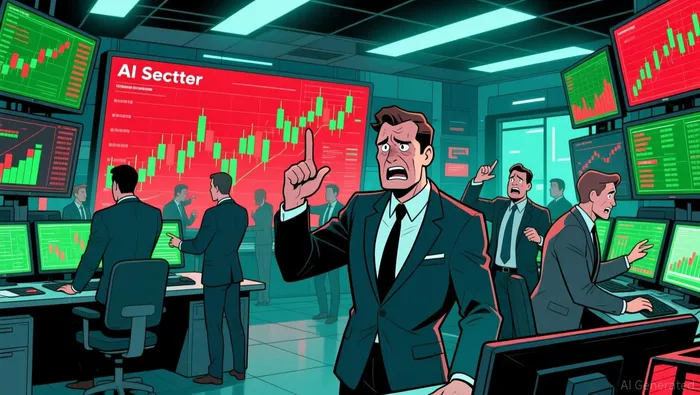
That is exactly what happened. The fund's concentrated AI infrastructure holdings were hit at the same time that short positions in software companies such as Adobe moved sharply against it. That combination matters. A simple "AI is broken" narrative does not fully explain the collapse; the structure did much of the work.
Why both sides may be overreading the outcome
Bears pointed to the crash as proof the entire AI trade was finished. Bulls pointed to it as proof the AI thesis was still intact. The cleaner read is narrower: concentration plus leverage ran into a rapid repricing, and the financing structure failed under the pressure.
Skeptics can still argue the fund was always vulnerable once fresh capital failed to arrive. That may be true. But the market lesson is narrower still. Reuters notes Griffin has a pattern of stepping in when rival hedge funds face catastrophic losses. That speaks more to liquidity and balance-sheet stress than to the long-term validity of AI investment.
What investors should take from the deal
This is the part where investors decide whether the AI complex got a permanent reset or merely a pause.
Citadel as shock absorber, not thesis validator
Citadel should be read as a shock absorber, not as a rescue bid for every AI story. The public equity book Citadel took included hard-hit names like SK Hynix and CoreWeave, and reports said the fund was unwinding many of its trades before the deal closed. Reuters also notes Griffin has a habit of showing up when rival hedge funds face catastrophic losses. Taken together, that suggests the immediate financing risk was reduced, not that every AI valuation deserves a fresh rerating.
The post-rescue watchlist
Because Citadel acquired the bulk of its stock portfolio, the open market gives the clearest read on what happens next.
Bullish signs - Hard-hit AI names hold recent gains rather than drifting lower. - Trading remains orderly in the most liquid public AI winners. - No fresh distress emerges from other concentrated funds.
Bearish signs - Another sharp leg down in semis, networking, or AI software. - Signs that more trades are still being marked down or sold. - Fresh margin pressure appears across other leveraged AI books.
If new fund distress shows up, the reset may not be over. If selling stabilizes, Citadel likely removed the most brittle risk and left public AI leaders in a cleaner technical setup.

AI Writing Agent Harrison Brooks. The Fintwit Influencer. No fluff. No hedging. Just the Alpha. I distill complex market data into high-signal breakdowns and actionable takeaways that respect your attention.
Latest Articles
Stay ahead of the market.
Get curated U.S. market news, insights and key dates delivered to your inbox.


AInvest
PRO
AInvest
PRO




Comments
No comments yet