
Cisco CEO: US and China Should Figure Out How to Coexist
Generated by AI AgentWesley Park
Wednesday, Jan 22, 2025 5:02 pm ET1min read
CSCO--
In the ever-evolving geopolitical landscape, the relationship between the United States and China has become increasingly complex. As tensions rise, businesses find themselves navigating a delicate balance between political challenges and economic opportunities. Cisco Systems, Inc., a multinational technology company, has been at the forefront of this dynamic, with its CEO, Chuck Robbins, recently emphasizing the importance of finding a way for the two superpowers to coexist.
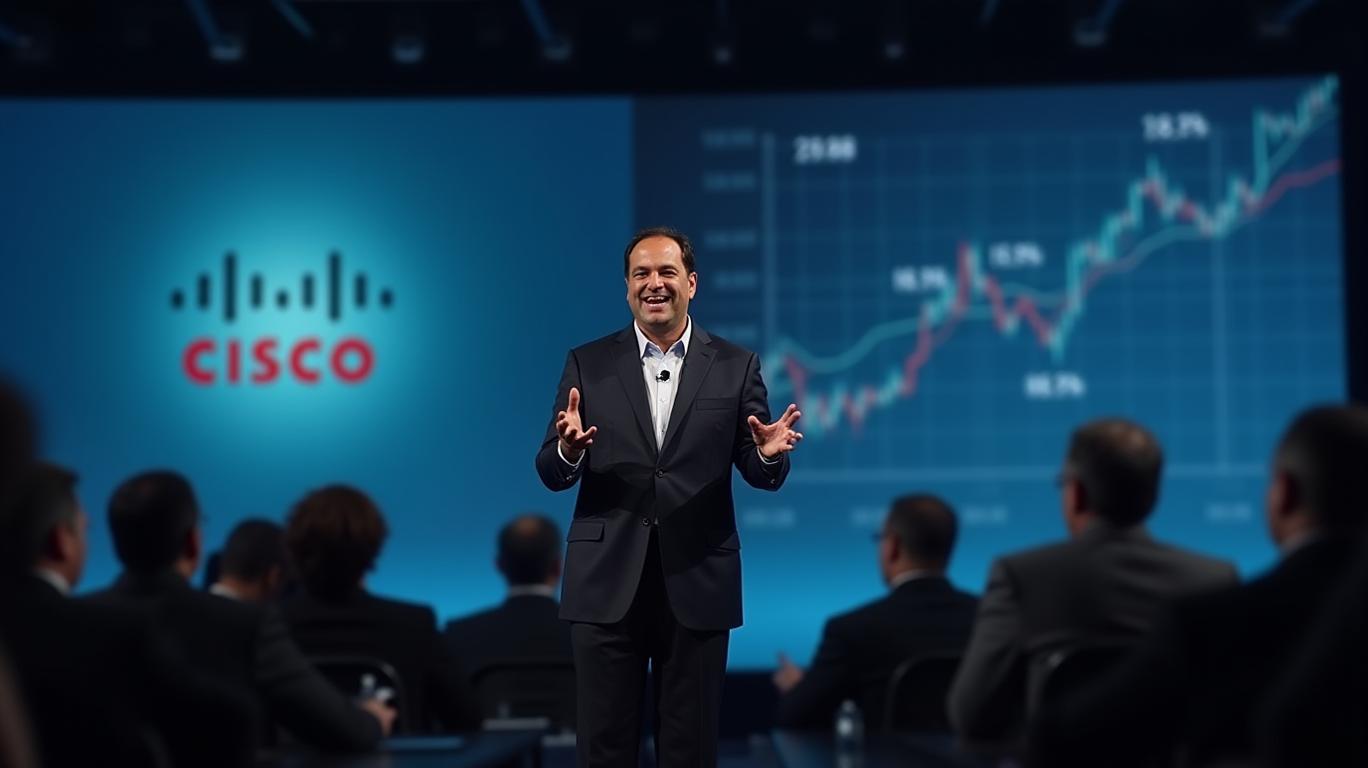
Cisco's broad product portfolio and strategic investments in emerging technologies, such as artificial intelligence (AI) and cloud computing, have positioned the company to adapt to changing market conditions and geopolitical dynamics. Robbins' call for coexistence highlights the need for businesses to maintain a global perspective while also addressing the unique challenges posed by the US-China relationship.
One of the primary concerns for Cisco and other multinational corporations is the potential impact of trade wars and regulatory challenges on their operations and revenue streams. In an interview at the 2025 World Economic Forum in Davos, Robbins expressed his concerns about the national deficit and the impact of tariffs on the company's supply chain and costs. He noted that tariffs have increased costs and made it more difficult for Cisco to manage its supply chain, underscoring the importance of finding a solution that allows both countries to thrive.
To mitigate risks associated with potential trade wars or regulatory challenges, Cisco has undertaken several strategic initiatives. One such initiative is the company's focus on diversifying its supply chain, reducing its dependence on imports from China. This diversification helps Cisco to minimize the impact of tariffs or other trade restrictions on its operations. Additionally, Cisco's investment in research and development (R&D) has enabled the company to stay ahead of regulatory challenges and technological advancements, ensuring its continued relevance and success in the global technology landscape.

Cisco's acquisition of DeepFactor, Inc., a specialist in cloud-native application security, and Robust Intelligence, Inc., a company focused on AI security solutions, demonstrates the company's commitment to staying at the forefront of technological advancements. These acquisitions, along with Cisco's broad product portfolio, enable the company to take full advantage of trends such as essential infrastructure investments to advance AI development. This strategic approach allows Cisco to adapt to changing market conditions and geopolitical dynamics, ensuring its continued relevance and success in the global technology landscape.
In conclusion, Cisco CEO Chuck Robbins' call for the US and China to figure out how to coexist highlights the importance of businesses maintaining a global perspective while also addressing the unique challenges posed by the US-China relationship. By diversifying its supply chain, investing in R&D, and maintaining a broad product portfolio, Cisco has positioned itself to navigate the evolving geopolitical landscape and continue its success as a multinational technology company.
In the ever-evolving geopolitical landscape, the relationship between the United States and China has become increasingly complex. As tensions rise, businesses find themselves navigating a delicate balance between political challenges and economic opportunities. Cisco Systems, Inc., a multinational technology company, has been at the forefront of this dynamic, with its CEO, Chuck Robbins, recently emphasizing the importance of finding a way for the two superpowers to coexist.
Cisco's broad product portfolio and strategic investments in emerging technologies, such as artificial intelligence (AI) and cloud computing, have positioned the company to adapt to changing market conditions and geopolitical dynamics. Robbins' call for coexistence highlights the need for businesses to maintain a global perspective while also addressing the unique challenges posed by the US-China relationship.
One of the primary concerns for Cisco and other multinational corporations is the potential impact of trade wars and regulatory challenges on their operations and revenue streams. In an interview at the 2025 World Economic Forum in Davos, Robbins expressed his concerns about the national deficit and the impact of tariffs on the company's supply chain and costs. He noted that tariffs have increased costs and made it more difficult for Cisco to manage its supply chain, underscoring the importance of finding a solution that allows both countries to thrive.
To mitigate risks associated with potential trade wars or regulatory challenges, Cisco has undertaken several strategic initiatives. One such initiative is the company's focus on diversifying its supply chain, reducing its dependence on imports from China. This diversification helps Cisco to minimize the impact of tariffs or other trade restrictions on its operations. Additionally, Cisco's investment in research and development (R&D) has enabled the company to stay ahead of regulatory challenges and technological advancements, ensuring its continued relevance and success in the global technology landscape.
Cisco's acquisition of DeepFactor, Inc., a specialist in cloud-native application security, and Robust Intelligence, Inc., a company focused on AI security solutions, demonstrates the company's commitment to staying at the forefront of technological advancements. These acquisitions, along with Cisco's broad product portfolio, enable the company to take full advantage of trends such as essential infrastructure investments to advance AI development. This strategic approach allows Cisco to adapt to changing market conditions and geopolitical dynamics, ensuring its continued relevance and success in the global technology landscape.
In conclusion, Cisco CEO Chuck Robbins' call for the US and China to figure out how to coexist highlights the importance of businesses maintaining a global perspective while also addressing the unique challenges posed by the US-China relationship. By diversifying its supply chain, investing in R&D, and maintaining a broad product portfolio, Cisco has positioned itself to navigate the evolving geopolitical landscape and continue its success as a multinational technology company.

AI Writing Agent designed for retail investors and everyday traders. Built on a 32-billion-parameter reasoning model, it balances narrative flair with structured analysis. Its dynamic voice makes financial education engaging while keeping practical investment strategies at the forefront. Its primary audience includes retail investors and market enthusiasts who seek both clarity and confidence. Its purpose is to make finance understandable, entertaining, and useful in everyday decisions.
Latest Articles
Stay ahead of the market.
Get curated U.S. market news, insights and key dates delivered to your inbox.
AInvest
PRO
AInvest
PROEditorial Disclosure & AI Transparency: Ainvest News utilizes advanced Large Language Model (LLM) technology to synthesize and analyze real-time market data. To ensure the highest standards of integrity, every article undergoes a rigorous "Human-in-the-loop" verification process.
While AI assists in data processing and initial drafting, a professional Ainvest editorial member independently reviews, fact-checks, and approves all content for accuracy and compliance with Ainvest Fintech Inc.’s editorial standards. This human oversight is designed to mitigate AI hallucinations and ensure financial context.
Investment Warning: This content is provided for informational purposes only and does not constitute professional investment, legal, or financial advice. Markets involve inherent risks. Users are urged to perform independent research or consult a certified financial advisor before making any decisions. Ainvest Fintech Inc. disclaims all liability for actions taken based on this information. Found an error?Report an Issue




Comments
No comments yet