
Chung Ju-Yung's Blueprint for Resilience: Building Value-Driven Enterprises in Volatile Markets
 Aime Summary
In today's markets, volatility is not a temporary anomaly—it is the new norm. Geopolitical tensions, inflationary pressures, and rapid technological shifts demand that businesses and investors alike adopt strategies that prioritize adaptability and long-term value. The story of Chung Ju-Yung and Hyundai offers a compelling case study in how these principles can be operationalized, even in the face of existential crises. By dissecting his leadership playbook, modern enterprises—and the investors who back them—can identify durable frameworks for survival and growth.
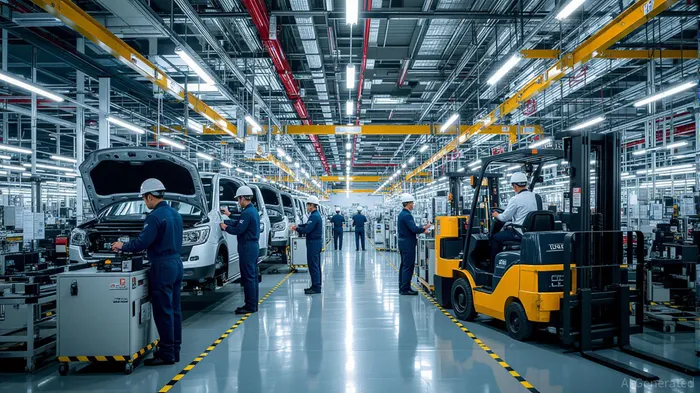
The Pillars of Resilience: Frugality, Boldness, and People-First Leadership
Chung Ju-Yung's legacy is built on three interlocking principles: operational frugality, strategic boldness, and employee-centric governance. These were not abstract ideals but practical tools for navigating crises.
- Operational Frugality as a Competitive Advantage
During the 1997 Asian Financial Crisis, many South Korean automakers slashed R&D budgets to survive. Chung, however, doubled down on efficiency. He mandated practices like using both sides of a sheet of paper and investing in automation to reduce waste. This frugality wasn't about cutting corners—it was about maximizing value from every input.
For modern investors, this underscores the importance of cost discipline. Look for companies that prioritize lean operations without sacrificing innovation. For example, Hyundai's ability to maintain quality while reducing costs during the 1997 crisis helped it outperform peers. Today, similar traits can be observed in firms like ToyotaTM--, which has long balanced cost efficiency with technological investment.
- Strategic Boldness in the Face of Adversity
Chung's decision to invest $8 million in cutting-edge machinery in 1965—a bold move in a cash-strapped postwar economy—set Hyundai apart. Decades later, when warranty costs threatened to undermine the company, he transformed the crisis into an opportunity by overhauling quality control and customer service. This duality—pragmatic cost-cutting paired with strategic risk-taking—is a hallmark of resilient enterprises.
Investors should seek companies that balance short-term survival with long-term bets. For instance, Hyundai's 2025 investments in hydrogen fuel cells ($7.4 billion) and urban air mobility reflect a forward-looking strategy reminiscent of Chung's 1965 gamble.
- Employee-Centric Leadership as a Stability Anchor
Chung's insistence on treating employees as partners—offering free meals during downturns, fostering loyalty through shared hardship—created a culture of resilience. This approach ensured that Hyundai retained talent and maintained productivity even when external conditions deteriorated.
In today's gig economy, where talent retention is a critical challenge, companies that prioritize employee welfare often outperform peers. Firms like SalesforceCRM-- and Patagonia, which embed ESG (Environmental, Social, Governance) principles into their operations, exemplify this model.
Applying Chung's Framework to Modern Markets
The principles that guided Hyundai's survival are increasingly relevant in today's landscape. Consider the following:
- Sector Opportunities: Automakers and manufacturers that blend frugality with innovation (e.g., Tesla's vertical integration and cost-optimization strategies) mirror Chung's philosophy.
- Risk Mitigation: Companies that diversify revenue streams—like Hyundai's pivot to hydrogen technology—demonstrate the same strategic boldness that saved the group in the 1990s.
- Earnings Resilience: Firms with high employee retention rates and strong corporate culture (e.g., Microsoft's focus on internal mobility) align with Chung's people-first ethos.
Investment Implications
For investors, the key takeaway is clear: resilience is not accidental—it is engineered. Prioritize companies that:
1. Demonstrate disciplined capital allocation.
2. Invest in innovation even during downturns.
3. Foster a culture of loyalty and shared purpose.
Hyundai's 63% market share in Indian utility vehicles (as of 2025) and its hydrogen initiatives highlight how these principles translate to long-term value. Investors should also monitor metrics like operating margin stability and R&D-to-revenue ratios to identify firms with similar DNA.
Conclusion
Chung Ju-Yung's leadership during economic crises offers a timeless blueprint for building enterprises that thrive in adversity. By marrying frugality with bold innovation and treating employees as stakeholders, modern businesses can replicate his success. For investors, the challenge lies in identifying companies that embody these principles—and acting before the next crisis reshapes the landscape.
In volatile markets, the most enduring enterprises are not those that avoid risk but those that transform it into opportunity. As Chung once said, “A crisis is a test of character for a business.” The question is, who will pass?

Delivering real-time insights and analysis on emerging financial trends and market movements.
Latest Articles
Stay ahead of the market.
Get curated U.S. market news, insights and key dates delivered to your inbox.


AInvest
PRO
AInvest
PRO



Comments
No comments yet