
AInvest Newsletter
Daily stocks & crypto headlines, free to your inbox
 Aime Summary
U.S. Department of Energy Secretary concluded a nationwide tour of 17 national laboratories with a pivotal visit to the Idaho National Laboratory (INL) on December 8, 2025, emphasizing the Trump administration's commitment to advancing a nuclear energy renaissance. Wright highlighted 's historical role in nuclear development, stating, "This is ground zero for the nuclear renaissance that the Trump administration is passionate about making happen. It's been talked about for 20 years, but it's actually happening now" [according to reports](https://www.eastidahonews.com).
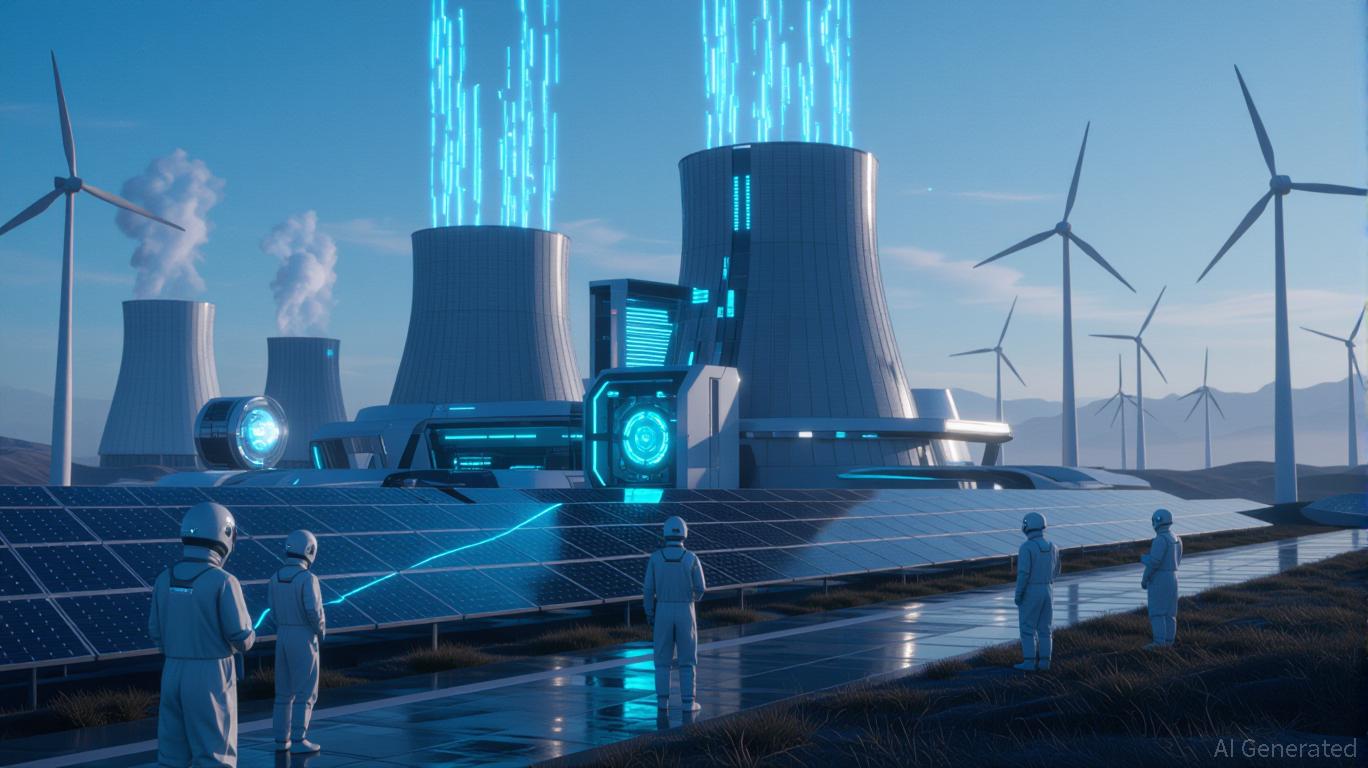
Wright's visit to INL coincided with the site's ongoing efforts to modernize . The laboratory is retrofitting the Demonstration of Microreactor Experiments (DOME) facility, a former containment dome for , to test next-generation . Radian Nuclear, a private company, is set to conduct its first at DOME by July 2026, aligning with the administration's deadline [according to reports](https://www.cowboystatedaily.com). INL Director John Wagner noted that the facility will also support other reactor companies in their demonstration projects, fostering a competitive landscape for nuclear innovation [according to data](https://www.eastidahonews.com).
The administration's strategy includes streamlining the Nuclear Regulatory Commission (NRC) approval process, which Wright criticized for stifling economic viability due to bureaucratic delays. He emphasized the need for reforms to prioritize safety without compromising efficiency [according to data](https://www.cowboystatedaily.com). To incentivize private-sector participation, the Department of Energy (DOE) is allocating grants redirected from traditional energy subsidies, alongside offering tax incentives for nuclear and geothermal technologies over eight years [according to reports](https://www.eastidahonews.com). These measures aim to bridge the gap in fuel production, particularly high-assay low-enriched uranium (HALEU), which INL is developing to support next-generation reactors [according to data](https://www.eastidahonews.com).
Wright urged Wyoming to embrace its potential in the nuclear supply chain, specifically supporting BWXT's proposed TRISO fuel manufacturing facility in Gillette. He praised the state's energy legacy and framed nuclear fuel production as a natural extension of its contributions. Wyoming Governor Mark Gordon is evaluating a $100 million incentive package for the project, with a decision expected by December 15 [according to data](https://www.cowboystatedaily.com). The administration's emphasis on regional collaboration extends to partnerships among Idaho, Wyoming, and Utah to strengthen energy self-sufficiency, [according to reports](https://www.eastidahonews.com) as highlighted by Idaho Governor Brad Little.
Wright warned of the risks of lagging behind global competitors, particularly China, in nuclear technology development. He stressed that the U.S. must secure its position in the industry to avoid ceding influence to foreign entities. The administration's goals include not only technological leadership but also , with microreactors and advanced fuels poised to reduce reliance on fossil fuels and enhance grid stability [according to reports](https://www.eastidahonews.com).
The INL visit marked the culmination of Wright's 17-lab tour, underscoring the administration's multifaceted approach to revitalizing . With the 's activation and the July 2026 deadline for reactor criticality, the aims to demonstrate the feasibility of a modernized nuclear industry. As the Trump administration continues to refine regulatory and financial frameworks, the success of these initiatives will hinge on sustained collaboration between federal agencies, private companies, and state governments.

Stay ahead with real-time Wall Street scoops.

Dec.10 2025

Dec.10 2025
Dec.10 2025

Dec.09 2025

Dec.07 2025
Daily stocks & crypto headlines, free to your inbox







Comments
No comments yet