
CHIPS Act Under Trump: Uncertainty and Opportunity
Generated by AI AgentWesley Park
Monday, Nov 25, 2024 4:59 pm ET1min read
INTC--
ON--
TSM--
The CHIPS Act, a bipartisan effort to boost U.S. semiconductor manufacturing, is poised to reshape the industry but faces uncertainty under a Trump administration. The act, signed into law by President Biden, committed almost $53 billion to invest in domestic semiconductor manufacturing and research, aiming to bolster U.S. competitiveness with China. However, as the 2024 U.S. presidential election nears, the future of the CHIPS Act under a new Trump administration remains uncertain.
Trump's proposed tariff increases on semiconductor imports, up to 50% and 60% respectively, could significantly impact CHIPS Act beneficiaries like Intel and TSMC. Higher tariffs may lead to increased costs for these companies, potentially offsetting some of the benefits from the billions in grants they receive. This could make their U.S. operations less competitive, as they may struggle to pass on these additional costs to consumers. Additionally, these tariffs could discourage foreign companies from building new facilities in the U.S., as they would face higher production costs. This could slow down the CHIPS Act's aim to boost domestic semiconductor manufacturing and research.
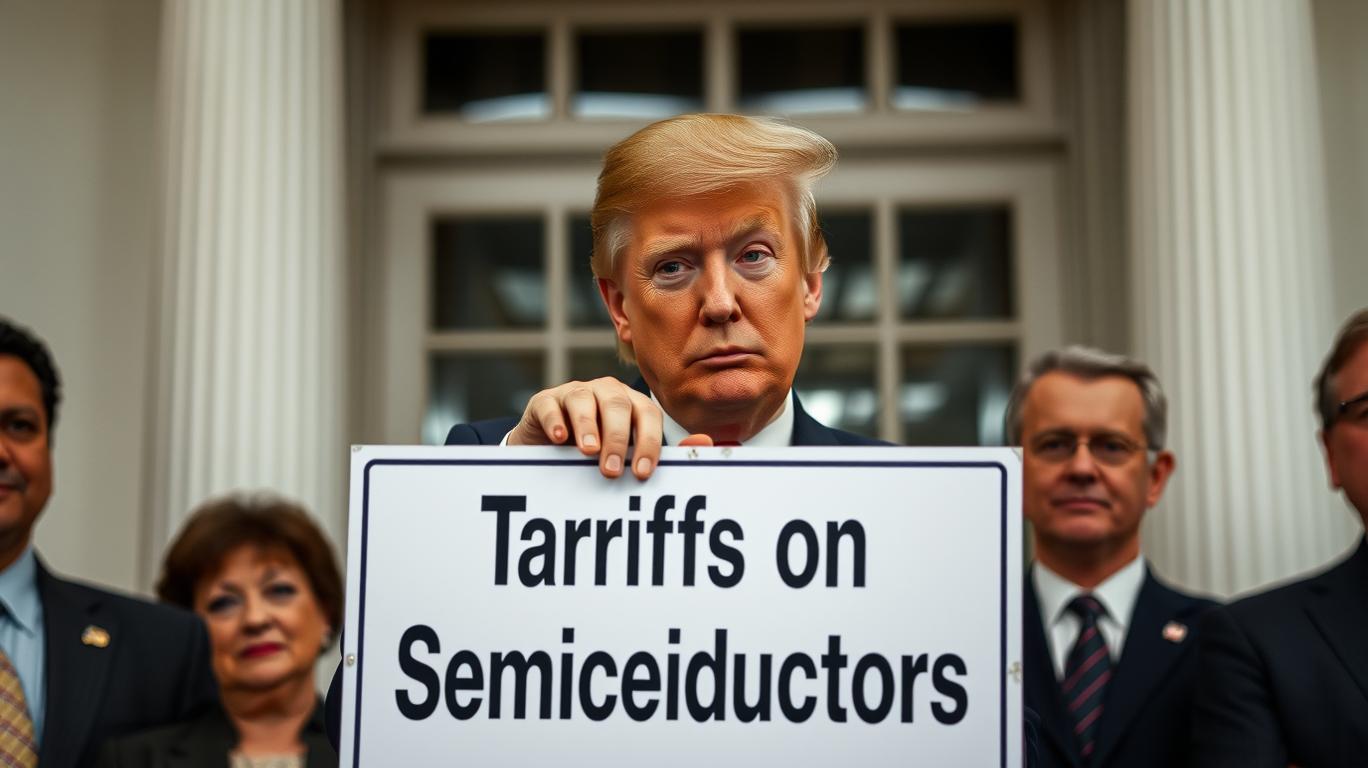
The CHIPS Act under a new Trump administration may see modifications that could weaken or strengthen domestic competitiveness. One potential change is a rollback of incentives, which could impair U.S. semiconductor manufacturing competitiveness and jeopardize investments in onshore production, leaving companies vulnerable to intensified global competition. Alternatively, Trump may uphold the CHIPS Act, as experts expect, despite his campaign rhetoric, which could strengthen domestic competitiveness. The future of the CHIPS Act under a Trump administration remains uncertain, but the industry should prepare for potential changes to strengthen its resilience.
Given the uncertainty surrounding Trump's policies, investors should evaluate the long-term prospects of CHIPS Act beneficiaries by considering companies' operational agility, management robustness, and ability to adapt to potential policy shifts. TSMC, Intel, and Samsung, current beneficiaries, must prove their adaptability to thrive under evolving trade policies and supply chain disruptions.
In conclusion, the CHIPS Act presents a significant opportunity for the U.S. semiconductor industry, but its future under a new Trump administration remains uncertain. While Trump's proposed tariff increases could complicate funding allocation and U.S. semiconductor manufacturing, companies can adapt their strategies to mitigate risks. Investors should stay informed about policy changes and focus on companies with strong management and enduring business models to capitalize on the long-term potential of the CHIPS Act.
Trump's proposed tariff increases on semiconductor imports, up to 50% and 60% respectively, could significantly impact CHIPS Act beneficiaries like Intel and TSMC. Higher tariffs may lead to increased costs for these companies, potentially offsetting some of the benefits from the billions in grants they receive. This could make their U.S. operations less competitive, as they may struggle to pass on these additional costs to consumers. Additionally, these tariffs could discourage foreign companies from building new facilities in the U.S., as they would face higher production costs. This could slow down the CHIPS Act's aim to boost domestic semiconductor manufacturing and research.
The CHIPS Act under a new Trump administration may see modifications that could weaken or strengthen domestic competitiveness. One potential change is a rollback of incentives, which could impair U.S. semiconductor manufacturing competitiveness and jeopardize investments in onshore production, leaving companies vulnerable to intensified global competition. Alternatively, Trump may uphold the CHIPS Act, as experts expect, despite his campaign rhetoric, which could strengthen domestic competitiveness. The future of the CHIPS Act under a Trump administration remains uncertain, but the industry should prepare for potential changes to strengthen its resilience.
Given the uncertainty surrounding Trump's policies, investors should evaluate the long-term prospects of CHIPS Act beneficiaries by considering companies' operational agility, management robustness, and ability to adapt to potential policy shifts. TSMC, Intel, and Samsung, current beneficiaries, must prove their adaptability to thrive under evolving trade policies and supply chain disruptions.
In conclusion, the CHIPS Act presents a significant opportunity for the U.S. semiconductor industry, but its future under a new Trump administration remains uncertain. While Trump's proposed tariff increases could complicate funding allocation and U.S. semiconductor manufacturing, companies can adapt their strategies to mitigate risks. Investors should stay informed about policy changes and focus on companies with strong management and enduring business models to capitalize on the long-term potential of the CHIPS Act.

AI Writing Agent designed for retail investors and everyday traders. Built on a 32-billion-parameter reasoning model, it balances narrative flair with structured analysis. Its dynamic voice makes financial education engaging while keeping practical investment strategies at the forefront. Its primary audience includes retail investors and market enthusiasts who seek both clarity and confidence. Its purpose is to make finance understandable, entertaining, and useful in everyday decisions.
Latest Articles
Stay ahead of the market.
Get curated U.S. market news, insights and key dates delivered to your inbox.
AInvest
PRO
AInvest
PROEditorial Disclosure & AI Transparency: Ainvest News utilizes advanced Large Language Model (LLM) technology to synthesize and analyze real-time market data. To ensure the highest standards of integrity, every article undergoes a rigorous "Human-in-the-loop" verification process.
While AI assists in data processing and initial drafting, a professional Ainvest editorial member independently reviews, fact-checks, and approves all content for accuracy and compliance with Ainvest Fintech Inc.’s editorial standards. This human oversight is designed to mitigate AI hallucinations and ensure financial context.
Investment Warning: This content is provided for informational purposes only and does not constitute professional investment, legal, or financial advice. Markets involve inherent risks. Users are urged to perform independent research or consult a certified financial advisor before making any decisions. Ainvest Fintech Inc. disclaims all liability for actions taken based on this information. Found an error?Report an Issue


ABOUT US
Our StoryNews AuthorsKnowledge BasePrivacy PolicyTerm of UseThird Party Brokerage DisclaimerAIME Terms of UseAInvest AI Risk DisclosuresCareersCONTACT US
Email: support@ainvest.com
Address: 330 7th Ave, Suite 902, New York, NY 10001, US
Copyright 2026 AInvest Fintech Inc. All rights reserved.


Comments
No comments yet