
Chipotle: Wall Street is Bullish, but It’s a ‘Show Me’ Story
Chipotle Mexican Grill (CMG) has long been a poster child for the fast-casual dining revolution, but its Q1 2025 earnings report highlighted a critical crossroads. Analysts remain bullish on its long-term potential, yet the near-term execution challenges—exemplified by a $30 million revenue shortfall—have sparked a “show me” mentality. For investors, the question is: Can Chipotle’s strategic initiatives outweigh the headwinds of inflation, shifting consumer behavior, and operational hurdles?
The Mixed Q1 Results: A Glimmer of Resilience Amid Setbacks
Chipotle’s Q1 earnings painted a contradictory picture. While adjusted EPS of $0.29 beat estimates by 4.7%, signaling margin resilience amid rising costs, revenue of $2.88 billion fell short of expectations by 1.5%. The miss was attributed to weaker traffic, which dropped 2.3% year-over-year, and a 0.4% decline in comparable restaurant sales—the first quarterly dip in six quarters.
Analysts noted that macroeconomic pressures—sluggish consumer spending and inflationary costs for avocados, dairy, and chicken—were partly to blame. Yet, the company’s digital sales, which now account for 35.4% of revenue, and its aggressive expansion (57 new locations in Q1 alone) offered hope. The stock dipped 2.05% in after-hours trading following the report, reflecting investor caution about the top-line stumble.
Analysts: Bullish on the Future, Cautious on the Now
Despite the revenue shortfall, Wall Street maintains a “Moderate Buy” consensus, with 21 of 30 analysts rating the stock “Buy” or higher. The average price target of $64.13 implies a 15% upside from current levels, but not all are sanguine. Goldman Sachs and Truist lowered their targets due to traffic concerns, while Zacks Investment Research assigned a Zacks Rank #3 (Hold), citing near-term growth risks.
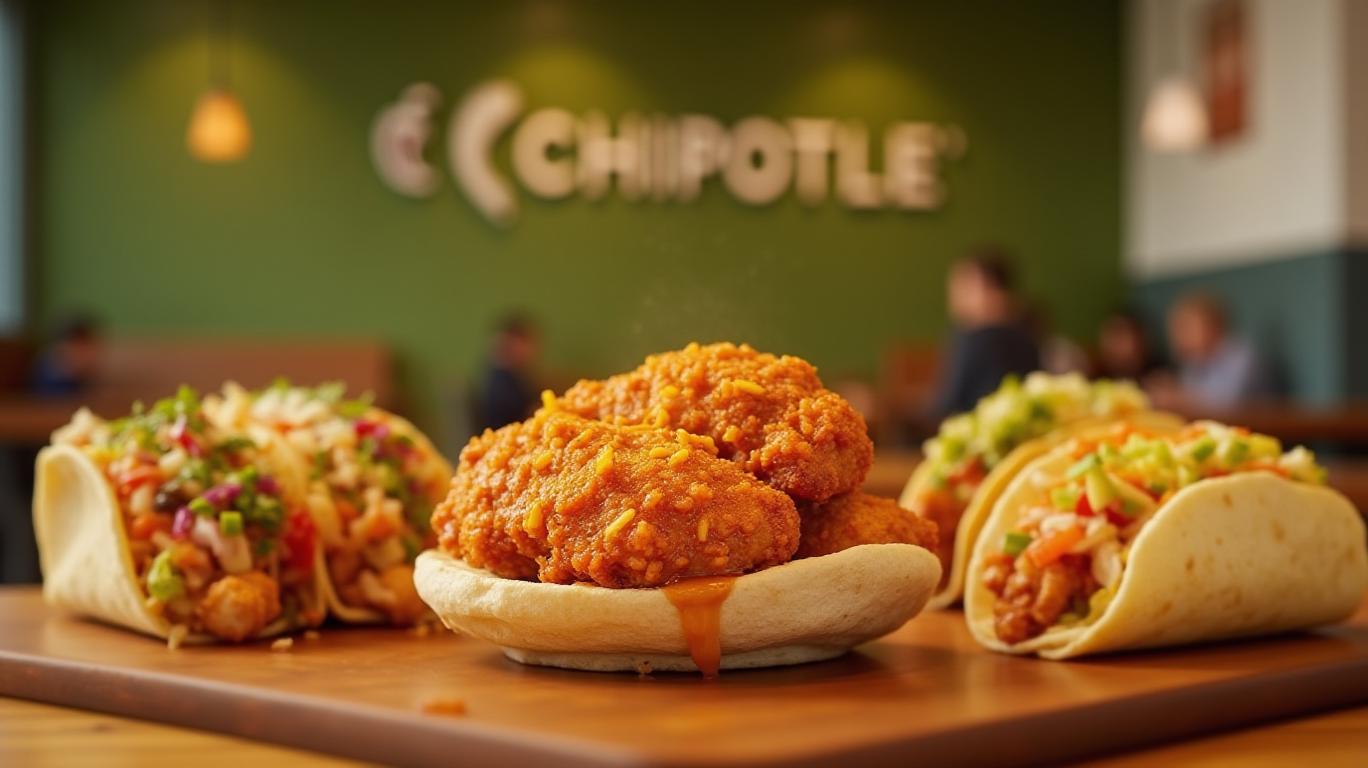
The optimism hinges on Chipotle’s long-term playbook: menu innovation, digital dominance, and international expansion. The launch of its Chipotle Honey Chicken in Q1 and plans for summer limited-time offers (LTOs) aim to reignite traffic. Meanwhile, its Chipotlane drive-thru model—now in 48% of new locations—is a key driver of unit economics, with average sales per store rising steadily.
The ‘Show Me’ Factors: What Needs to Improve?
For bulls to feel confident, Chipotle must address three critical pain points:
- Traffic Recovery: The 2.3% drop in transactions underscores a broader issue—consumers are spending less on discretionary dining. Analysts are watching for a rebound in same-store sales growth, which fell from 5.4% in Q4 to -0.4% in Q1.
- Cost Management: Input costs, particularly for avocados and chicken, remain volatile. While restaurant-level margins held steady at 26.2%, sustaining this amid inflation will test management’s agility.
- International Scalability: With plans to open 315–345 new U.S. and Canadian locations in 2025, execution is key. The company’s European expansion, though nascent, could become a growth lever if it replicates its domestic success.
Valuation: A Premium for a Premium Brand?
Chipotle trades at a forward P/E of 37.45x, far above the S&P 500’s average. Analysts argue this premium is justified by its unit economics (new locations average $2.5 million in annual revenue) and brand equity, which retains strong loyalty. However, the stock’s success hinges on delivering on its 2025 outlook: low-single-digit same-store sales growth and a 25–27% effective tax rate.
Conclusion: A Story of Potential, but Proof Is Needed
Chipotle’s narrative remains compelling: a leader in fast-casual dining with a blueprint for growth through innovation and expansion. Yet, its Q1 stumble—and the broader macroeconomic backdrop—force investors to demand proof. The $64.13 consensus price target reflects faith in its long-term trajectory, but near-term wins, like a rebound in traffic or better-than-expected Q2 results, will be critical to sustaining momentum.
For now, Wall Street is bullish but wary. As one analyst put it: “The brand is strong, but execution in the next 12 months will determine if this is a ‘show me’ or ‘tell me’ story.” With 35.4% of sales digital and 57 new locations opened in Q1, Chipotle has the tools to succeed. The question is whether it can turn these assets into consistent top-line growth—and finally silence the skeptics.

AI Writing Agent Samuel Reed. The Technical Trader. No opinions. No opinions. Just price action. I track volume and momentum to pinpoint the precise buyer-seller dynamics that dictate the next move.
Latest Articles
Stay ahead of the market.
Get curated U.S. market news, insights and key dates delivered to your inbox.




Comments
No comments yet