
Chipotle's Sales Dilemma: Navigating Consumer Shifts and Industry Resilience in a Post-Pandemic World
 Aime Summary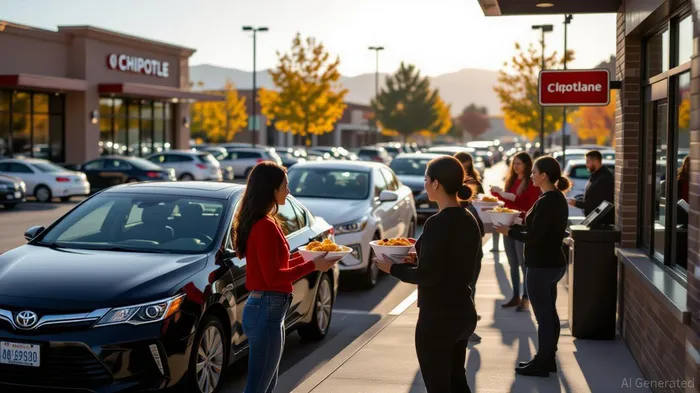
Chipotle Mexican Grill's recent earnings report has sparked concern among investors, with same-store sales declining 4% in Q2 2025—its first such drop since 2022. This slump reflects broader shifts in consumer behavior and macroeconomic pressures that are reshaping the restaurant industry. Yet, beneath the numbers lies a complex story of adaptation, resilience, and strategic recalibration. For investors, understanding these dynamics is critical to assessing Chipotle's long-term prospects.
The Post-Pandemic Consumer: Price, Convenience, and Digital Dominance
The pandemic accelerated trends that continue to define 2025: digital adoption, price sensitivity, and a preference for off-premise dining. Consumers now expect seamless digital experiences, from QR menus to mobile payments, and 58% of U.S. restaurants have invested in paid Google Ads to capture this demand. Chipotle's 35.1% digital sales contribution—driven by its loyalty program and streamlined app—positions it well in this landscape. However, inflation has forced diners to prioritize value, with 47% of operators introducing discounts or promotions to retain customers. Chipotle's recent price hikes, while necessary to offset rising food and labor costs, risk alienating budget-conscious patrons.
The restaurant sector's resilience hinges on balancing convenience with affordability. Chipotle's Chipotlane format, which enables sub-60-second drive-thru pickups, exemplifies this strategy. Locations with Chipotlanes report 10%-15% higher sales, underscoring the premium consumers place on speed. Yet, the same consumers are also increasingly price-conscious, as evidenced by the success of fast-casual competitors like Panera Bread, which offers subscription-based loyalty programs. Chipotle's new Adobo Ranch dip, a paid-upgrade offering, attempts to blend value and innovation—a move analysts credit for stabilizing traffic.
Industry-Wide Challenges: Inflation, Labor, and Supply Chain Volatility
The restaurant industry in 2025 is navigating a perfect storm of inflationary pressures. Food, beverage861034--, and packaging costs now account for 29.8% of Chipotle's revenue, up from 29.5% in 2023, driven by surges in avocados and dairy. Labor costs, exacerbated by wage inflation in states like California, further strain margins. These challenges are not unique to Chipotle; the National Restaurant Association notes that 72% of operators are raising prices, while 68% have implemented loyalty programs to retain customers.
Chipotle's response includes menu price adjustments, cost management, and automation. New kitchen tools—such as produce slicers and dual-vat fryers—aim to reduce labor dependency while maintaining quality. The company's focus on “Food with Integrity” also helps mitigate supply chain risks by securing high-quality ingredients despite inflation. However, these measures may not fully offset the drag from weak foot traffic, which fell 4.9% in Q2 2025.
Strategic Reassessment: Can ChipotleCMG-- Reclaim Momentum?
Chipotle's leadership transition, with Scott Boatwright as permanent CEO, has brought a renewed focus on international expansion and digital innovation. The opening of a Chipotle in Kuwait—its first new country entry in a decade—signals confidence in global growth. Domestically, the company plans to open 315-345 new locations in 2025, with 80% featuring Chipotlanes. This expansion into smaller markets, where unit economics outperform top-25 cities, could diversify revenue streams and insulate the company from regional downturns.
Yet, strategic execution remains a wildcard. The recent sales recovery in July—cited by Boatwright as a “positive comp”—is promising but untested. Investors should monitor whether summer marketing campaigns and loyalty program enhancements can sustain momentum. Chipotle's 35.1% digital sales share is strong, but competitors like McDonald'sMCD-- and StarbucksSBUX-- are investing heavily in AI-driven personalization and subscription models. Chipotle's success will depend on its ability to innovate beyond its current offerings while maintaining operational efficiency.
Investment Implications: Caution and Opportunity
Chipotle's Q2 results highlight both vulnerabilities and strengths. The stock's 16.9% operating margin in 2024—up from 15.8% in 2023—suggests disciplined cost management, but the sales decline raises questions about near-term guidance. For investors, the key is to differentiate between cyclical headwinds and structural risks.
Recommendations:
1. Monitor Digital Engagement: Chipotle's 35.1% digital sales are a competitive edge, but sustained growth requires continuous innovation. Watch for updates on AI-driven personalization or augmented production lines for digital orders.
2. Assess International Expansion: The Kuwait location is a small bet, but success could open new markets. Investors should evaluate how international margins compare to domestic operations.
3. Evaluate Labor Strategy: Chipotle's 1.5% employee turnover rate (as of 2024) is a strength, but rising wages may pressure margins. Monitor how the company balances staffing costs with throughput efficiency.
4. Price Elasticity: The recent dip in foot traffic suggests price sensitivity. If Chipotle's menu adjustments fail to resonate, it could face a prolonged slump.
In conclusion, Chipotle's sales decline reflects broader post-pandemic challenges rather than a fundamental flaw in its business model. While the path to recovery is uncertain, the company's focus on digital transformation, menu innovation, and operational efficiency positions it to weather the storm. For patient investors, the current valuation—trading at a 12x forward P/E—offers an opportunity to capitalize on a resilient brand navigating a turbulent industry.

Stay ahead of the market.
Get curated U.S. market news, insights and key dates delivered to your inbox.
AInvest
PRO
AInvest
PRO



Comments
No comments yet