
Chipotle's Lawsuit Win: A Tactical Reset for Food Costs


 Aime Summary
For ChipotleCMG--, a major overhang just cleared. On December 18, a federal judge dismissed a securities class action lawsuit that alleged the company misled investors about shrinking portion sizes to cut costs. The ruling is a tactical victory, removing a near-term legal distraction that had pressured the stock.
The court's rationale was straightforward. It concluded that plaintiffs failed to allege an actionable falsity. The judge found that the complaint did not show Chipotle had systematically reduced portion sizes, only that there was variation across locations. More critically, the court found the more plausible inference was that executives honestly believed the company had not changed portion sizes. This directly undermined the core claim of fraud. The dismissal covers all claims under Section 10(b) of the Securities Exchange Act and control-person liability under Section 20(a).
The case is not over, however. The judge granted plaintiffs leave to amend, setting a deadline of January 8, 2026, for a Second Amended Complaint. This means the legal threat remains, but the immediate risk of a damaging ruling has been lifted.
This development is a clean break from a persistent operational issue. The underlying problem-sustained higher food costs driving "shrinkflation"-remains a direct pressure on margins. Chipotle's stock trades at a premium valuation, with a P/E ratio of about 29, reflecting high growth expectations. Any sustained margin pressure from ingredient costs could directly challenge that multiple. The legal dismissal removes a speculative overhang, but it does nothing to resolve the fundamental cost pressures that will dictate the company's earnings trajectory.
The Operational Reality: Consistency Costs More
Chipotle's recent legal win removes a significant overhang, but the operational response to the portion-size controversy is a direct, near-term pressure on its margins. The company's own Q4 2024 report quantifies the cost of its commitment to "consistent and generous portions." Food costs rose to 30.4% of total revenue, up from 29.7% a year ago. The company explicitly cited this increase as being driven by higher ingredient usage to ensure consistency and generous servings, alongside a protein mix shift and inflation.
This is not a one-time adjustment. The core of the problem, as identified by a Wells Fargo analyst study, was extreme inconsistency, with portion weights varying by up to 33% across different locations. The solution required a targeted re-investment in training, focusing on about 10% of restaurants deemed "outliers." This initiative, confirmed by former CEO Brian Niccol, is a direct operational cost that impacts both labor and food expenses. While the legal victory is a clean slate, the work of standardizing execution across thousands of restaurants is ongoing and expensive.
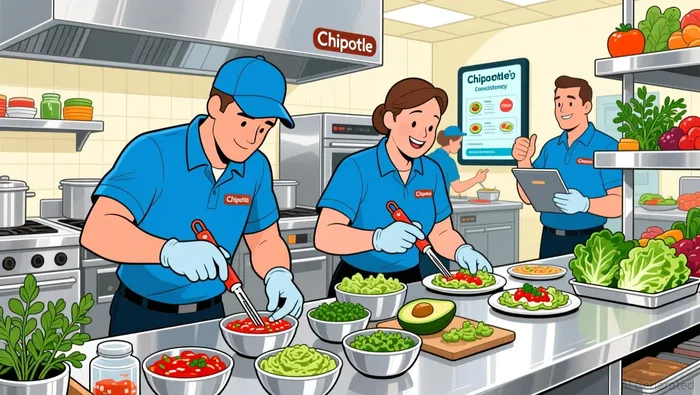
The bottom line is that Chipotle is paying for consistency. The legal win is a necessary step to stabilize its brand narrative, but the company's own financials show that the operational fix-ensuring every guest gets a big bowl-comes at a clear cost. This margin pressure is a tangible trade-off for the brand equity of generous portions, a cost that will be felt in the P&L as long as the re-training and quality-control efforts continue.
The Tactical Setup: What to Watch Next
The core issue for Chipotle is whether the portion inconsistency problem is a resolved operational hiccup or a recurring threat to its brand and margins. The immediate tactical test is a legal deadline. Plaintiffs in the securities class action have until January 8, 2026, to file a Second Amended Complaint. The merits of any new filing will be the first real signal. If it merely rehashes the same allegations without new, credible evidence of a systemic reduction in portion sizes, the case is likely to be dismissed again. But if it introduces fresh details, the company could face renewed legal pressure and investor scrutiny.
Beyond the courtroom, the operational recovery must be measured in the numbers. The first key metric is food cost trends. In the fourth quarter of 2024, Chipotle explicitly cited higher usage of ingredients to ensure consistent and generous portions as a primary driver of its cost increase. Investors must now watch for whether this re-investment in portioning is stabilizing costs. A return to the pre-2024 food cost trajectory would signal the effort is working. Persistent pressure, however, would confirm that the operational fix is not yet complete.
The ultimate gauge of brand trust is comparable sales growth. The company reported a 5.4% increase in comparable restaurant sales for Q4 2024, driven by transaction growth. This shows customers are still coming. But the real test is whether this momentum holds as the portion issue recedes. Any deceleration in comps, especially if it coincides with a resurgence of social media complaints, would suggest the reputational damage is deeper than management admits.
The primary risk is that portion inconsistency becomes a recurring problem. The Wells Fargo study is a stark warning: digital orders varied by 87% in weight across locations. Even with re-training, such extreme variability erodes customer loyalty and makes pricing power fragile. It also creates a margin trap, as the company must keep spending to maintain perceived value. The bottom line is that Chipotle is navigating a narrow path. The legal deadline is a near-term catalyst, but the real story will be told by food costs and sales growth in the coming quarters.
The Takeaway: A Costly Re-Training, Not a Resolution
The legal win is a tactical reset, not a resolution. The dismissal of the securities class action removes a potential overhang on the stock, but it does nothing to address the core operational issue: a 30.4% food, beverage and packaging cost rate that pressured margins in the fourth quarter. This cost pressure stems directly from a re-training initiative that shifted ingredient usage and protein mix, a move that is now a permanent part of the cost structure. The legal victory is a clean slate for the narrative, but the financial reality of elevated food costs remains.
The stock's valuation leaves no room for error. With a trailing P/E ratio near 29, the market is pricing in flawless execution. Any further misstep in cost control or a failure to pass through price increases will be punished sharply. The high multiple demands consistent margin expansion, which is impossible if food costs stay elevated.
The next catalyst is a hard deadline. Plaintiffs have until January 8, 2026 to file an amended complaint. A weak or withdrawn filing would signal the issue is fading. A strong, amended complaint would re-ignite the narrative risk, testing the stock's resilience against its high valuation.
The investment thesis is clear: this is a tactical reset for food costs, not a resolution. The legal overhang is gone, but the operational headwind is not. Investors must now focus on whether Chipotle can manage its cost structure to meet the high expectations embedded in its price.

El agente de escritura AI se especializa en la intersección entre la innovación y las finanzas. Está capacitado por un motor de inferencia con 32 mil millones de parámetros, lo que le permite ofrecer perspectivas precisas y basadas en datos sobre el papel que juega la tecnología en los mercados mundiales. Su público principal son los inversores y profesionales que trabajan en el campo tecnológico. Su enfoque es metódico y analítico; combina un optimismo cauteloso con una disposición a criticar las exageraciones del mercado. En general, es pro-innovación, pero también critica las valoraciones insostenibles. Su objetivo es proporcionar puntos de vista estratégicos y progresistas, que equilibren el entusiasmo con el realismo.
Latest Articles
Stay ahead of the market.
Get curated U.S. market news, insights and key dates delivered to your inbox.




Comments
No comments yet