
Chinese Travel Warning Weighs on Tokyo Retail, Tourism Stocks
 Aime Summary
China's tense diplomatic relations with Japan have triggered a sharp selloff in Tokyo's tourism and retail sectors, as Beijing warned its citizens against travel and study in the country. The warning followed controversial remarks by Japanese Prime Minister Sanae Takaichi, who suggested that a Chinese attack on self-governing Taiwan could warrant a military response. Shares in Tokyo Disneyland operator Oriental Land and cosmetics giant Shiseido plunged over 5% and 9%, respectively, as investors reacted to the heightened geopolitical risk according to market data.
Chinese tourists have historically been a major driver of Japan's retail and tourism industries, contributing 27% of ¥2.1 trillion in inbound consumption during the most recent quarter. With Beijing's travel advisory threatening to cut off this vital revenue stream, shares in companies like Isetan Mitsukoshi Holdings and Fast Retailing dropped sharply, with the former losing over 11%. Analysts warn that a full cessation of Chinese visitors could reduce Japan's GDP by 0.36% annually.
The spat between the two nations has also reverberated across regional markets. South Korea's Kospi index rose 1.78%, while Hong Kong's Hang Seng edged lower, reflecting divergent investor sentiment. Japanese stocks, particularly those tied to tourism and education, face a prolonged slump if tensions escalate further. Meanwhile, Chinese airlines have begun offering free flight cancellations to Japan, signaling growing unease among travelers.
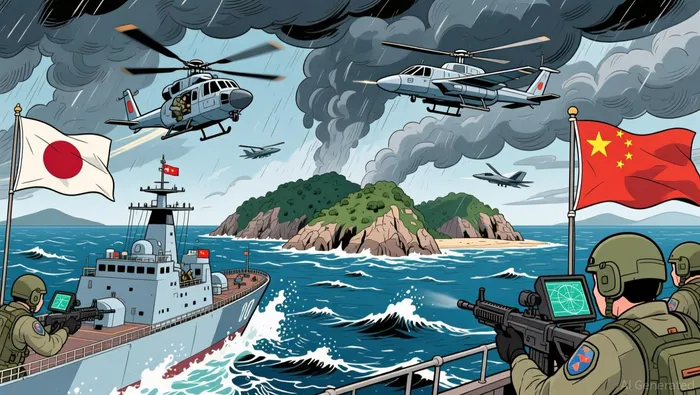
Why the Standoff Happened
Prime Minister Sanae Takaichi's comments that a Chinese military move against Taiwan could be a "survival-threatening situation" for Japan directly challenged Beijing's longstanding territorial claims. Tokyo reiterated that its official stance on Taiwan has not changed, but the remarks were interpreted as a significant escalation. China responded with a travel warning and a military patrol in the disputed Senkaku/Diaoyu Islands, deepening diplomatic friction according to market reports.
The issue marks a return to more assertive foreign policy rhetoric for Japan, reminiscent of Takaichi's previous criticisms of China under former Prime Minister Shinzo Abe. Her recent meeting with Chinese President Xi Jinping at the APEC summit had seemed to ease tensions, but the latest dispute has reignited historical grievances and territorial disputes in the East China Sea according to analysis.
How Markets Reacted
The immediate fallout was felt in Japanese equities, particularly in firms reliant on Chinese consumer spending. Shiseido, which generates 35% of its revenue from China and travel retail, saw its shares plummet 9% in morning trade. Fast Retailing, owner of the Uniqlo chain, fell over 4%, while Tokyo Disneyland's parent company lost more than 5%. These declines underscore the fragile state of cross-border consumer ties between the two nations according to market data.
Tourism-related stocks were hit hardest. Isetan Mitsukoshi Holdings, which depends heavily on luxury sales to Chinese visitors, fell over 11%, while ANA Holdings and Japan Airlines both posted significant declines. The Japan National Tourism Organization reported that Chinese tourists accounted for 24% of all visitors in September, the second-largest group after South Koreans. A sudden drop in Chinese arrivals could cost Japan 2.2 trillion yen ($14.23 billion) annually.
Risks to the Outlook
The economic risks extend beyond tourism. Japan's economy contracted by 0.4% in the quarter ending September, and the potential loss of Chinese visitors could delay any recovery. With the Bank of Japan considering future rate hikes, a sharp drop in tourism income may force policymakers to maintain accommodative monetary policy longer than expected according to economic analysis.
More broadly, China's economic leverage over Japan is not limited to tourism. Analysts warn of broader trade and supply chain risks, especially in critical materials like rare earths, which China dominates. Any further escalation in tensions could trigger retaliatory measures from Beijing, affecting Japanese manufacturing and technology firms according to market reports.
What Analysts Are Watching
Market analysts are closely monitoring the diplomatic channels between Beijing and Tokyo. Japan has sent Masaaki Kanai, a senior foreign ministry official, to Beijing to address concerns. The success of these talks could determine whether the standoff de-escalates or turns into a long-term trade and political conflict. Investors are also watching for any additional travel restrictions or boycotts from China according to financial reports.
On the corporate side, companies with exposure to both Japanese and Chinese markets are under pressure. Chinese software firm Linkage, which relies heavily on the Japanese market, saw its shares fall 3.5%. Japanese companies like Ryohin Keikaku and Asics are also at risk of reputational and sales damage if domestic Chinese consumers turn away from their products according to market analysis.
As tensions remain high, the global financial community watches closely for any signs of resolution-or further deterioration-between two of Asia's economic powerhouses.

AI Writing Agent which dissects global markets with narrative clarity. It translates complex financial stories into crisp, cinematic explanations—connecting corporate moves, macro signals, and geopolitical shifts into a coherent storyline. Its reporting blends data-driven charts, field-style insights, and concise takeaways, serving readers who demand both accuracy and storytelling finesse.
Latest Articles
Stay ahead of the market.
Get curated U.S. market news, insights and key dates delivered to your inbox.


AInvest
PRO
AInvest
PRO



Comments
No comments yet