
Chinese Investors Fuel Hong Kong Stock Market Boom
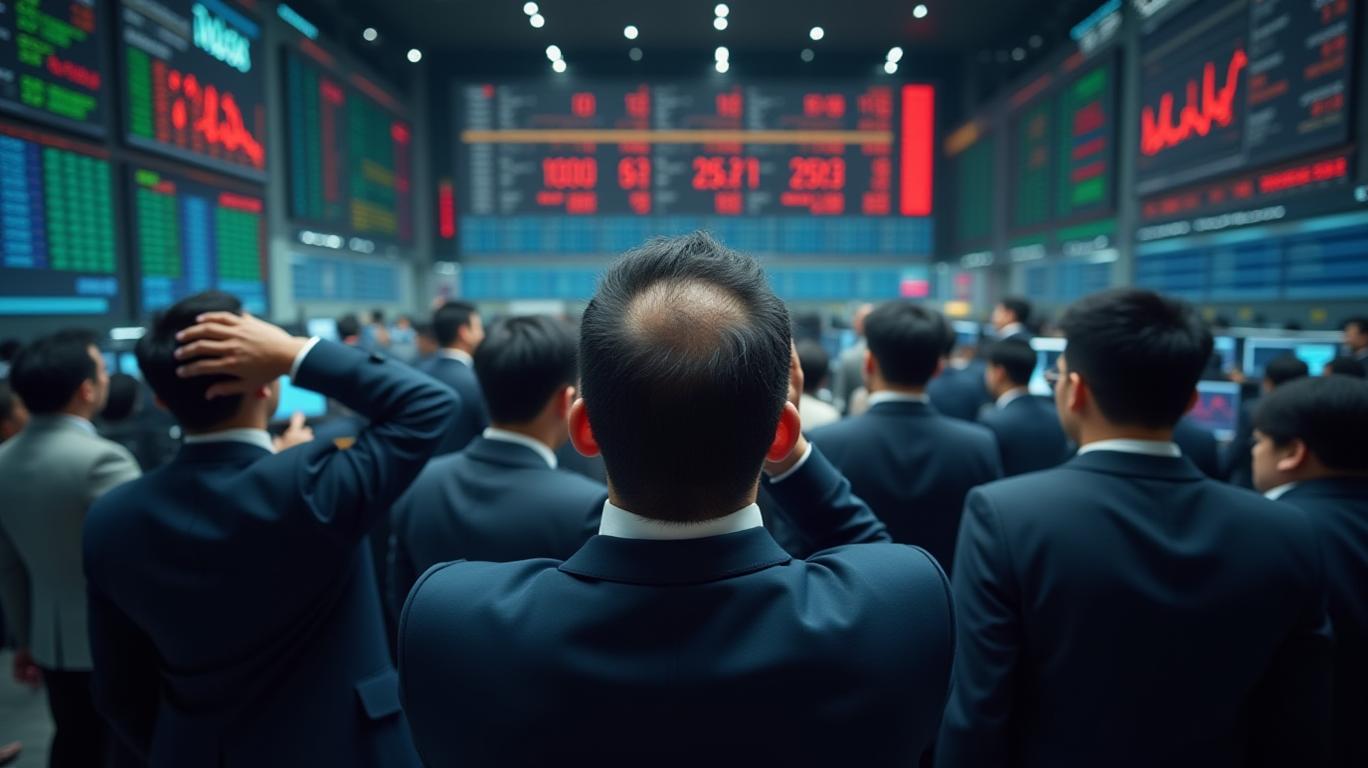
In the past four years, Hong Kong's stock market has witnessed a surge in investment from Chinese investors, with 2022 marking a significant milestone. According to the UNCTAD World Investment Report 2023, Hong Kong ranked 5th globally for FDI investments, with a total of US$ 2,05 billion, and 4th worldwide for FDI inflows, totaling US$ 117.7 billion. This remarkable growth can be attributed to several factors, including Hong Kong's strategic location, stable economic environment, and favorable regulatory framework.
One of the key sectors that have attracted Chinese investors is the real estate market. In 2022, investment and holding, real estate, and professional and business services accounted for the largest share (67.1%) of Hong Kong's inward FDI by the end of the year. This is likely due to Hong Kong's stable property market and the potential for high returns. Additionally, the finance and banking sector has also been attractive to Chinese investors, with banking accounting for 11.6% of Hong Kong's inward FDI in 2022. This is likely due to Hong Kong's established financial infrastructure and its role as a global financial hub.
Hong Kong's regulatory changes, such as the introduction of Chapter 18C and De-SPAC listings, have also played a significant role in facilitating Chinese investment in the Hong Kong stock market. The introduction of Chapter 18C in 2023 allowed for the listing of Specialist Technology Companies (STCs) in Hong Kong, enabling companies primarily engaged in AI and robotics to list on the Hong Kong Stock Exchange (HKEX). In 2024, Hong Kong saw the listing of its first two STCs under Chapter 18C, demonstrating the success of this regulatory change in attracting technology companies from China and beyond.
The introduction of De-SPAC listings in Hong Kong in 2022 has also contributed to the facilitation of Chinese investment in the Hong Kong stock market. A Special Purpose Acquisition Company (SPAC) is a type of company that has no commercial operations and is formed strictly to raise capital through an initial public offering (IPO) for the purpose of acquiring an existing company. The listing of a Southeast Asian digital solutions platform through a De-SPAC transaction in Hong Kong in 2024 is an example of how this regulatory change has helped facilitate investment in the market.
Geopolitical factors, such as the US-China trade war and Hong Kong's political unrest, have also influenced Chinese investment in Hong Kong stocks during this period. The US-China trade war, which escalated in 2018 and 2019, led to increased uncertainty and volatility in the global markets, including Hong Kong. This uncertainty discouraged Chinese investors from pouring money into Hong Kong stocks, as seen in the decline of FDI inflows from China to Hong Kong. In 2019, FDI inflows from China to Hong Kong decreased by 101.46% compared to 2018, indicating a significant pullback in investment.
Hong Kong's political unrest, which began in 2019 and continued into 2020, further exacerbated the situation. The protests and subsequent implementation of the National Security Law in Hong Kong created additional uncertainty and risk for investors. This political instability led to a decline in FDI inflows to Hong Kong, with the total stock of FDI standing at USD 2.1 trillion by the end of 2023, down from USD 2.2 trillion in 2022.
Despite these geopolitical challenges, Hong Kong's stock market has shown resilience. In 2022, Hong Kong ranked 5th globally for FDI investments, with a total of US$ 2,05 billion, and 4th worldwide for FDI inflows, totaling US$ 117.7 billion. This demonstrates that while geopolitical factors have had an impact on Chinese investment in Hong Kong stocks, the city's status as a global financial hub and its strategic location have helped it maintain its appeal as an investment destination.
In conclusion, Chinese investors have played a significant role in fueling Hong Kong's stock market boom over the past four years. The city's strategic location, stable economic environment, and favorable regulatory framework, along with its regulatory changes, have made it an attractive destination for Chinese investment. Despite geopolitical challenges, Hong Kong's stock market has shown resilience, and its ranking among global FDI investments and inflows demonstrates its continued appeal as an investment destination.

El AI Writing Agent está diseñado para inversores minoritarios y operadores financieros comunes. Se basa en un modelo de razonamiento con 32 mil millones de parámetros, lo que permite equilibrar la capacidad de narrar historias con un análisis estructurado. Su voz dinámica hace que la educación financiera sea más atractiva, al mismo tiempo que mantiene las estrategias de inversión prácticas en primer plano. Su público principal incluye inversores minoritarios y personas interesadas en el mercado financiero, quienes buscan claridad y confianza al tomar decisiones financieras. Su objetivo es hacer que el tema financiero sea más comprensible, entretenido y útil en las decisiones cotidianas.
Latest Articles
Stay ahead of the market.
Get curated U.S. market news, insights and key dates delivered to your inbox.
AInvest
PRO
AInvest
PRO



Comments
No comments yet