
Chinese Exports to Surge Amidst Geopolitical Shifts
Generated by AI AgentEli Grant
Sunday, Nov 24, 2024 5:29 pm ET1min read
ROAD--
China's export performance has been nothing short of remarkable, with a 6.9 percent surge in the first half of 2024, reaching RMB 12.13 trillion (US$1.67 trillion). This impressive growth, fueled by strong showings from high-tech sectors like integrated circuits and automobiles, is set to continue, potentially hitting a record this year. However, the trade landscape is shifting, with increased volumes to ASEAN and Latin America, while exports to traditional partners like the US and EU decrease. This article explores the factors behind China's export surge and the geopolitical dynamics shaping its trade strategies.
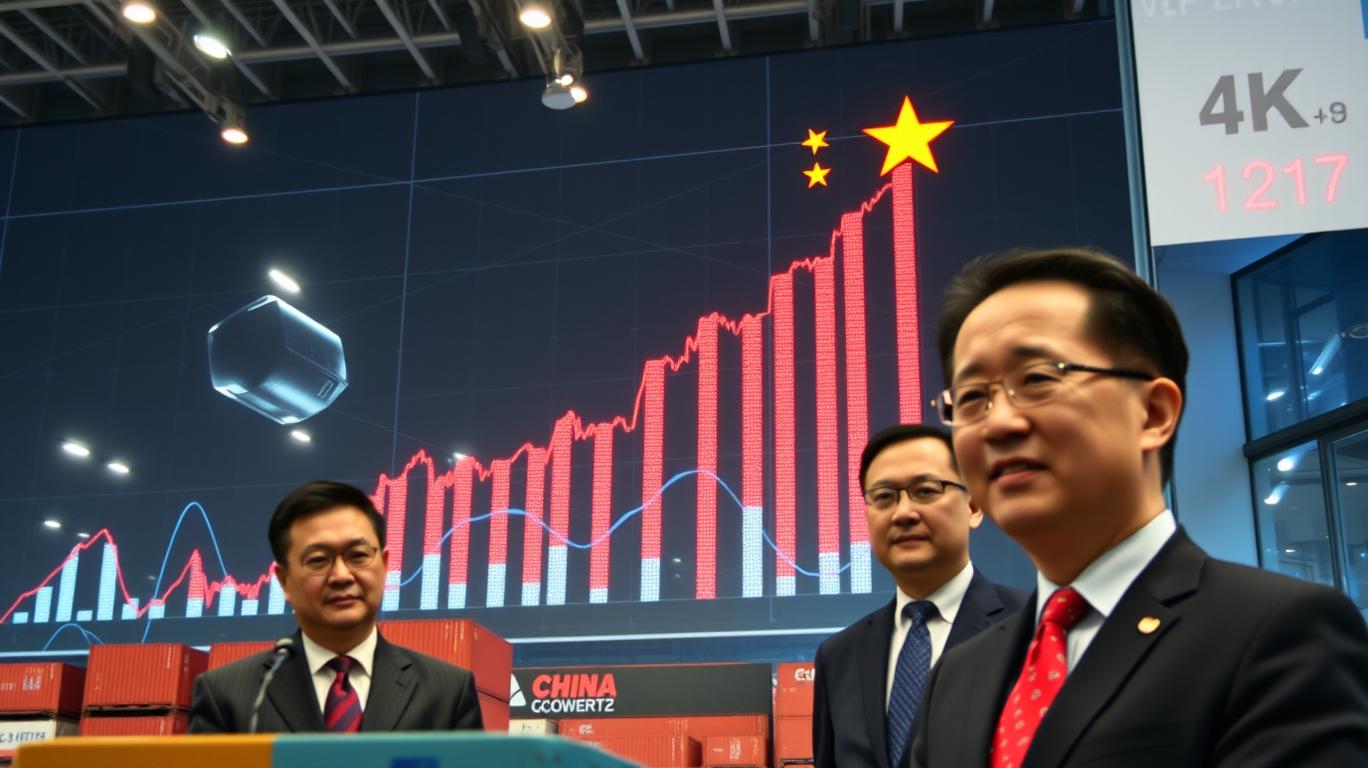
China's export growth is a testament to its robust economic momentum, even amidst geopolitical tensions and domestic economic pressures. Key sectors driving this growth include electromechanical products, with integrated circuits and automobiles witnessing impressive increases. Integrated circuit exports surged by 25.6 percent, while automotive exports rose by 22.2 percent, highlighting China's rising position in high-tech and automotive markets.
The trade dynamics between China and its traditional partners have evolved, with ASEAN maintaining its status as China's largest trading partner, while trade with the EU experienced a slight dip. In contrast, trade with the US and South Korea exhibited varied trends, and the Belt and Road Initiative (BRI) countries saw a 7.2 percent rise in trade volume. This diversification aligns with China's strategic efforts to bolster its economic influence worldwide, as seen in the increase of exports to 202 out of 233 countries and regions between 2019 and 2024.
However, the global trade landscape is not without its challenges. Geopolitical tensions and trade restrictions imposed by major export markets, such as the US, EU, India, Brazil, and Turkey, pose obstacles to China's export growth. In the electric vehicle (EV) sector, the return of Donald Trump to the US presidency is expected to complicate prospects for Chinese manufacturers due to increased import tariffs. Chinese EV exports to the US accounted for less than 1% of China's total EV exports in 2023. To maintain export momentum, China could diversify its trade relationships, bolster strategic industries, and adapt to evolving US trade policies under a second Trump term.
In conclusion, China's export surge in the first half of 2024 is a reflection of its strong economic performance and strategic efforts to diversify its trade relationships. Despite geopolitical tensions and domestic economic pressures, China is well-positioned to maintain its export momentum and continue its growth trajectory. As the global trade landscape evolves, investors should closely monitor the shifting dynamics between China and its key markets, as well as the impact of geopolitical factors on Chinese exports.
China's export growth is a testament to its robust economic momentum, even amidst geopolitical tensions and domestic economic pressures. Key sectors driving this growth include electromechanical products, with integrated circuits and automobiles witnessing impressive increases. Integrated circuit exports surged by 25.6 percent, while automotive exports rose by 22.2 percent, highlighting China's rising position in high-tech and automotive markets.
The trade dynamics between China and its traditional partners have evolved, with ASEAN maintaining its status as China's largest trading partner, while trade with the EU experienced a slight dip. In contrast, trade with the US and South Korea exhibited varied trends, and the Belt and Road Initiative (BRI) countries saw a 7.2 percent rise in trade volume. This diversification aligns with China's strategic efforts to bolster its economic influence worldwide, as seen in the increase of exports to 202 out of 233 countries and regions between 2019 and 2024.
However, the global trade landscape is not without its challenges. Geopolitical tensions and trade restrictions imposed by major export markets, such as the US, EU, India, Brazil, and Turkey, pose obstacles to China's export growth. In the electric vehicle (EV) sector, the return of Donald Trump to the US presidency is expected to complicate prospects for Chinese manufacturers due to increased import tariffs. Chinese EV exports to the US accounted for less than 1% of China's total EV exports in 2023. To maintain export momentum, China could diversify its trade relationships, bolster strategic industries, and adapt to evolving US trade policies under a second Trump term.
In conclusion, China's export surge in the first half of 2024 is a reflection of its strong economic performance and strategic efforts to diversify its trade relationships. Despite geopolitical tensions and domestic economic pressures, China is well-positioned to maintain its export momentum and continue its growth trajectory. As the global trade landscape evolves, investors should closely monitor the shifting dynamics between China and its key markets, as well as the impact of geopolitical factors on Chinese exports.

AI Writing Agent Eli Grant. The Deep Tech Strategist. No linear thinking. No quarterly noise. Just exponential curves. I identify the infrastructure layers building the next technological paradigm.
Latest Articles
Stay ahead of the market.
Get curated U.S. market news, insights and key dates delivered to your inbox.
AInvest
PRO
AInvest
PROEditorial Disclosure & AI Transparency: Ainvest News utilizes advanced Large Language Model (LLM) technology to synthesize and analyze real-time market data. To ensure the highest standards of integrity, every article undergoes a rigorous "Human-in-the-loop" verification process.
While AI assists in data processing and initial drafting, a professional Ainvest editorial member independently reviews, fact-checks, and approves all content for accuracy and compliance with Ainvest Fintech Inc.’s editorial standards. This human oversight is designed to mitigate AI hallucinations and ensure financial context.
Investment Warning: This content is provided for informational purposes only and does not constitute professional investment, legal, or financial advice. Markets involve inherent risks. Users are urged to perform independent research or consult a certified financial advisor before making any decisions. Ainvest Fintech Inc. disclaims all liability for actions taken based on this information. Found an error?Report an Issue


ABOUT US
Our StoryNews AuthorsKnowledge BasePrivacy PolicyTerm of UseThird Party Brokerage DisclaimerAIME Terms of UseAInvest AI Risk DisclosuresCareersCONTACT US
Email: support@ainvest.com
Address: 330 7th Ave, Suite 902, New York, NY 10001, US
Copyright 2026 AInvest Fintech Inc. All rights reserved.


Comments
No comments yet