
Chinese EV Surge in Europe, Threatens U.S. Auto Giants


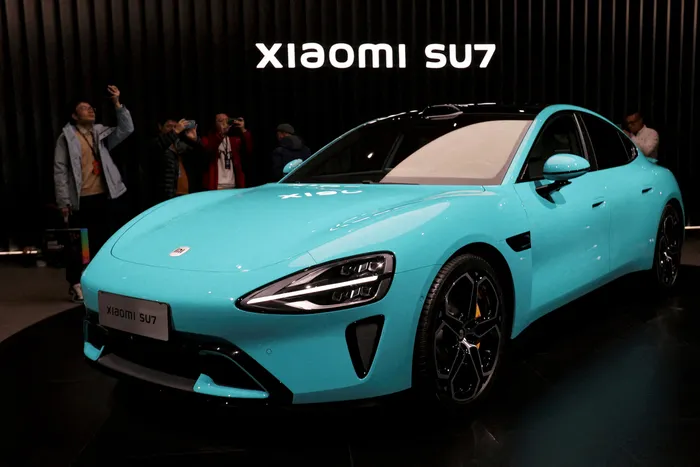
According to CNBC, Xiaomi conducted on-site research in Europe this June to prepare for establishing a sales network and seeking local partners.
Xiaomi will first open showrooms in Europe to showcase its highly anticipated electric vehicles (EVs) and smart ecosystem. Xiaomi Vice President Xu Fei stated that although localized production is not the “first step,” building a factory in Europe is inevitable in the long run if the company is to achieve its goal of becoming one of the world’s top five automakers.
Xiaomi’s European expansion plan will thrust it directly into an increasingly competitive market. The company will not only face European legacy brands but also compete head-on with Chinese peers such as BYD and XpengXPEV--, which are already operating in the region.
Xiaomi’s market-entry strategy will focus on user experience. According to Xu, the company plans to replicate its showroom model from China in Europe, allowing potential customers not only to test drive vehicles but also to explore its integrated ecosystem that spans smartphones to home appliances.
In terms of product strategy, Xiaomi seems inclined to use models already validated in the market. Xu stated that the company will not “design an entirely new product” for Europe, though she did not disclose which models will be introduced. Xiaomi entered the EV market last year with the SU7 sedan and subsequently the YU7 SUV, delivering over 300,000 vehicles to date.
Facing criticism that Xiaomi is moving more slowly than its Chinese rivals already active in Europe, Xu defended the cautious pace. She stressed that the company needs ample preparation time to ensure its products are “reliable enough” and meet “very high standards” for European consumers.
“When we enter the market, we are very focused. This is not just some random Chinese product entering Europe,” Xu added. “It is a product designed to deliver the best user experience to European customers.”
European Buyers Increasingly Favor Chinese Cars, U.S Brands Losing Appeal
According to Escalent’s “China Auto Brand Influence” study, 47% of European car buyers would consider purchasing a Chinese vehicle, compared with 44% for U.S. brands. In contrast, in 2024, only 31% considered Chinese cars, while 51% considered American ones.
KC Boyce, Vice President of Escalent, said in an interview: “Although this study was not specifically designed to assess why factors beyond Chinese brands have shifted, I believe geopolitical issues—tariffs, trade agreements, and the U.S. stance on the Russia-Ukraine conflict—are shaping European consumer perceptions of America and its car brands.”
Boyce pointed out that European buyers’ trust in goods from other countries has risen, except for the U.S. Trust in Japanese goods increased from 50% to 54%, Korean goods from 30% to 34%, and Chinese goods from 12% to 19%. Meanwhile, trust in American goods fell from 31% to 24%.
Price considerations are also critical. Boyce noted that European buyers generally expect Chinese cars to be cheaper, which is closely linked to consumer affordability under high inflation.
Moreover, the European Union’s strict environmental policies and consumer preference for EVs create opportunities for Chinese brands offering multiple electric models in the region.
Sales Data Confirms the Trend
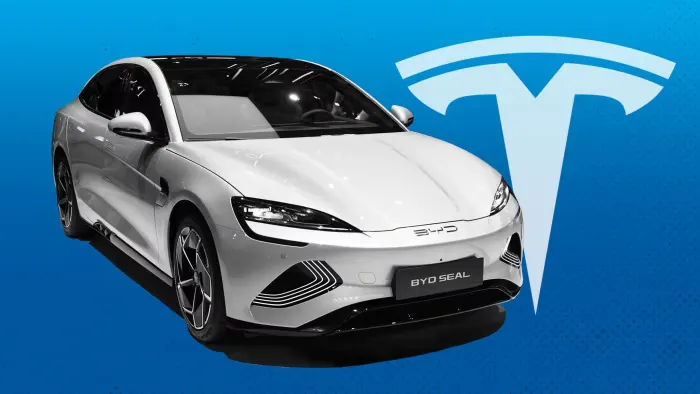
Recent sales data reinforce this trend. According to the European Automobile Manufacturers’ Association (ACEA), Tesla’s EV registrations in Europe—a proxy for sales—plunged 40.2% year-on-year in July to just 8,837 units.
By contrast, total EV registrations in the EU, UK, and EFTA region rose 33.6% in July, with overall car registrations across all powertrains up 5.9%.
Chinese automaker BYD, which sells both battery EVs and plug-in hybrids (PHEVs), saw registrations soar 225% in July to 13,503 units—easily surpassing TeslaTSLA--.
Having emerged from China’s fiercely competitive EV market, BYD’s product strength is formidable. In Europe, BYD has introduced PHEVs, which have been rapidly embraced by consumers.
This strategy has multiple advantages: PHEVs help automakers meet increasingly strict emissions standards, are often more cost-effective and profitable than pure EVs, and mitigate tariff risks.
In contrast, Tesla’s product lineup looks increasingly outdated.

Expert analysis on U.S. markets and macro trends, delivering clear perspectives behind major market moves.
Latest Articles
Stay ahead of the market.
Get curated U.S. market news, insights and key dates delivered to your inbox.
AInvest
PRO
AInvest
PRO



Comments
No comments yet