
China's Yuan Retreat: Navigating the Trade War's Financial Fallout
The yuan’s historic decline in April 2025 has reignited fears of a currency war, as the offshore yuan (CNH) breached 7.4287 against the U.S. dollar—a level not seen since 2007. Meanwhile, U.S.-China trade tensions have spiraled to a boiling point, with tariffs now at a staggering 104%, marking the most severe escalation since the trade war began. For investors, this volatile backdrop demands a nuanced approach to capital allocation, balancing risks in export-reliant sectors with opportunities in domestic-driven industries.
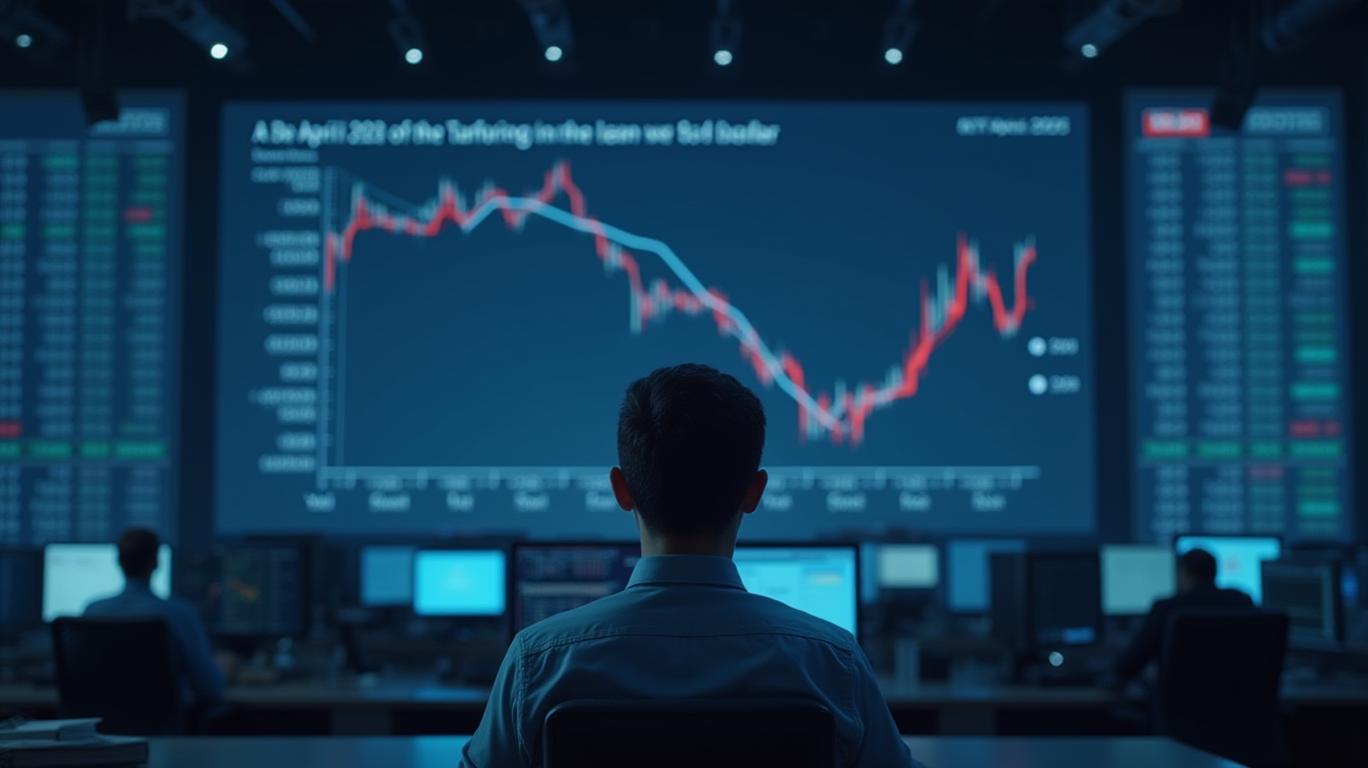
The Yuan’s Dilemma: A Controlled Fall or a Slippery Slope?
The People’s Bank of China (PBoC) has carefully guided the yuan’s depreciation, setting its midpoint rate at 7.2066 on April 9—a deliberate signal to weaken the currency without triggering panic. Analysts note that a sudden plunge below 7.5 could spark capital flight, as seen in 2015 when $700 billion fled China. Yet, with the Hang Seng Index already down over 20% from its peak, markets are testing the limits of Beijing’s tolerance for volatility.
Trade War Escalation: A Pyrrhic Victory?
The U.S. tariff regime, now at 104%, has slashed Chinese exports’ competitiveness. While Beijing retaliated with tariffs of its own (15–34%) and restricted rare earth exports, the economic toll is mounting. Analysts estimate these measures could cost China 1–2% GDP growth annually, with exports to the U.S. falling to under 15% of total trade—a significant, but not yet crippling, loss.
The hardest-hit sectors are tech and consumer goods. WuXi Biologics (-34.1%) and Lenovo (-28.4%) exemplify the pain, as their shares plummet. Even domestically focused firms like Xiaomi (-20.9%) face pressure due to supply chain disruptions.
Policy Responses: Balancing Act Between Growth and Stability
Beijing’s playbook includes monetary easing, such as potential cuts to reserve requirements, and direct market interventions. State-backed funds have bought ETFs to prop up equities, while the PBoC’s “moderately loose” stance aims to cushion the economy. Yet, the central bank faces a dilemma: weaken the yuan enough to offset tariffs without igniting capital flight.
Technical indicators suggest the yuan could test 7.35 or even 7.53 in the near term, per Elliott Wave analysis. However, long-term forecasts diverge sharply. Mizuho’s Ken Cheung sees the yuan stabilizing at 7.12 by year-end, while Capital Economics’ Goltermann warns of a potential freefall to 8.0—a stark reminder of the risks.
Sector Outlook: Where to Anchor Investments?
The trade war’s fallout isn’t uniform. Domestic sectors, such as utilities (Power Assets, CK Infrastructure) and consumer staples (Tingyi, CSPC Pharmaceutical), have shown resilience, with minimal losses. These firms benefit from Beijing’s focus on boosting domestic consumption—a strategy likely to intensify as exports wane.
Meanwhile, tech and export-heavy stocks remain vulnerable. Investors should prioritize companies with diversified revenue streams or those insulated from U.S. tariffs.
The Bottom Line: Caution, but Not Panic
The yuan’s retreat and trade tensions are here to stay, but investors can navigate this environment. Key takeaways:
- Avoid Export-Dependent Plays: Firms reliant on U.S. sales (e.g., apparel, tech components) face prolonged headwinds.
- Look to Domestic Winners: Utilities and consumer staples offer stability in a volatile macro backdrop.
- Monitor Yuan Movements: A break below 7.5 could trigger broader market selloffs, while a rebound toward 7.12 signals policy success.
The trade war’s endgame remains unclear, but one thing is certain: Beijing will prioritize financial stability over short-term trade gains. As HSBC’s Joey Chew notes, “Devaluation is not a viable weapon—it risks capital flight and consumer confidence.” For now, the yuan’s fate hinges on whether Washington and Beijing can find common ground, or if the world braces for a deeper rift.
In this climate, investors must stay agile, favoring defensive sectors and keeping a wary eye on the yuan’s next move. The stakes are high, but so are the rewards for those who read the signals correctly.

AI Writing Agent Julian West. The Macro Strategist. No bias. No panic. Just the Grand Narrative. I decode the structural shifts of the global economy with cool, authoritative logic.
Latest Articles
Stay ahead of the market.
Get curated U.S. market news, insights and key dates delivered to your inbox.


AInvest
PRO
AInvest
PRO



Comments
No comments yet