
China's Urban Renaissance: Unlocking Long-Term Growth in Sustainable Infrastructure and Real Estate
China's urban development policies under Xi Jinping's leadership have undergone a profound shift toward sustainability, innovation, and equity. With a focus on green building, smart cities, and regional revitalization, the government is redefining urban growth to align with its “dual carbon” goals (peak emissions by 2030, carbon neutrality by 2060). For investors, this presents a multi-decade opportunity to capitalize on structural reforms, technological integration, and targeted funding allocations.
The Green Building Revolution
The 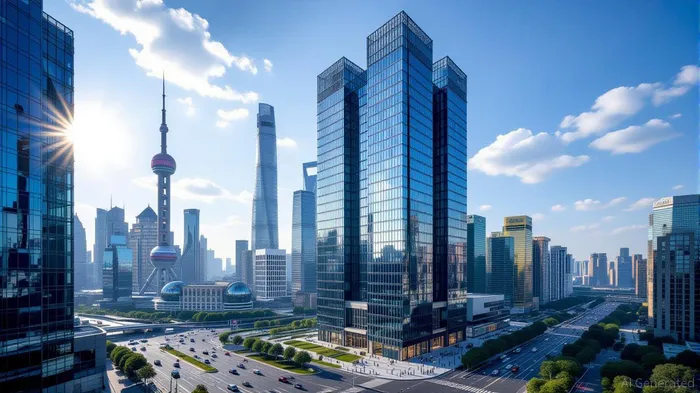 embodies the transformation in China's construction sector. The 2024 Green Industry Catalogue has expanded support for low-carbon technologies, including carbon capture and utilization (CCUS), energy-efficient building materials, and green logistics. Transition finance mechanisms, such as preferential loans for high-emission sectors like steel and construction, are enabling industries to shift toward sustainability.
Foreign and domestic investors should prioritize companies involved in green building materials, smart HVAC systems, and energy-efficient retrofits. The Sino-Swiss Zero Emission Building (ZEB) Project, which is developing technical standards for zero-carbon buildings, highlights the growing role of international collaboration in this space.
Smart Cities: Where Technology Meets Urban Planning
China's New Quality Productive Forces (NQPFs) strategy, emphasized in 2024 policy discussions, is driving digitization and automation in cities. The Lingang New Area in Shanghai exemplifies this shift, offering subsidies up to RMB 10 million for intelligent computing projects that integrate AI, IoT, and renewable energy systems. Cities like Hangzhou (with its Alibaba-backed “City Brain” project) and Shenzhen (home to AI-driven traffic management systems) are pioneers in this movement.
For investors, the key is to identify firms supplying core technologies: 5G infrastructure providers, data analytics platforms, and smart grid developers. Public-private partnerships (PPPs) in urban tech are also critical, as seen in Hangzhou's City Brain initiative.
Regional Development: Bridging Urban-Rural Divides
The Rural Comprehensive Revitalization Plan (2024–2027) aims to reduce disparities by improving rural infrastructure (water, energy, waste) and digitizing agriculture. This creates opportunities in sectors like smart farming, renewable energy microgrids, and telemedicine. The Foreign Investment Encouraged Catalogue (2024) further incentivizes foreign participation in these areas, offering tax breaks (15% corporate tax in western regions) and land cost advantages.
Investors should consider infrastructure funds targeting western regions, where projects like high-speed rail and solar farms are prioritized. The Rural E-commerce Development Program, which connects farmers to urban markets via digital platforms, also offers scalable investment opportunities.
Policy and Regulatory Tailwinds
China's 14th Five-Year Plan (2021–2025) allocates significant fiscal resources to green and tech-driven sectors. Transition bonds, green insurance, and tax exemptions for compliant projects are creating a supportive ecosystem. Meanwhile, the Sustainable Finance Taxonomy in Hong Kong aligns with global standards, facilitating cross-border capital flows.
Navigating Challenges
Trade tensions with the U.S., including tariffs on Chinese goods and restrictions on critical minerals, pose headwinds. However, localization of supply chains and domestic innovation in sectors like rare earth processing mitigate risks. Investors should focus on companies with diversified markets and strong R&D pipelines.
Investment Strategy: Long-Term, Thematic Focus
- Green Building: Allocate to firms in energy-efficient materials (e.g., insulated glass, low-emission concrete) and CCUS technology.
- Smart Cities: Prioritize AI/5G infrastructure providers and data-driven urban management platforms.
- Regional Development: Target infrastructure funds in western China and rural digitization projects.
- Risk Management: Diversify across sectors and geographies; leverage ETFs tracking China's green economy (e.g., iShares China Green Energy ETF).
Conclusion
China's urban development policies are not merely regulatory changes—they are a blueprint for a sustainable future. While short-term volatility may arise from geopolitical tensions or economic cycles, the structural shift toward green and smart infrastructure offers decade-defining opportunities. Investors who align with these trends, backed by policy support and capital flows, are positioned to benefit from one of the most ambitious urban transformations in modern history.

Stay ahead of the market.
Get curated U.S. market news, insights and key dates delivered to your inbox.


AInvest
PRO
AInvest
PRO



Comments
No comments yet