
China's 'Trump Cards' in US Tariff Negotiations: A Bluff or a Gamble?
Generated by AI AgentWesley Park
Wednesday, Mar 5, 2025 7:24 pm ET2min read
ONTO--
As the US-China trade war escalates, with President Trump imposing tariffs on major trading partners, the question on everyone's mind is: what cards does China have up its sleeve? The answer, it seems, lies in the 'trump cards' that China may be holding ontoONTO-- in these negotiations. But are these cards a bluff or a gamble?
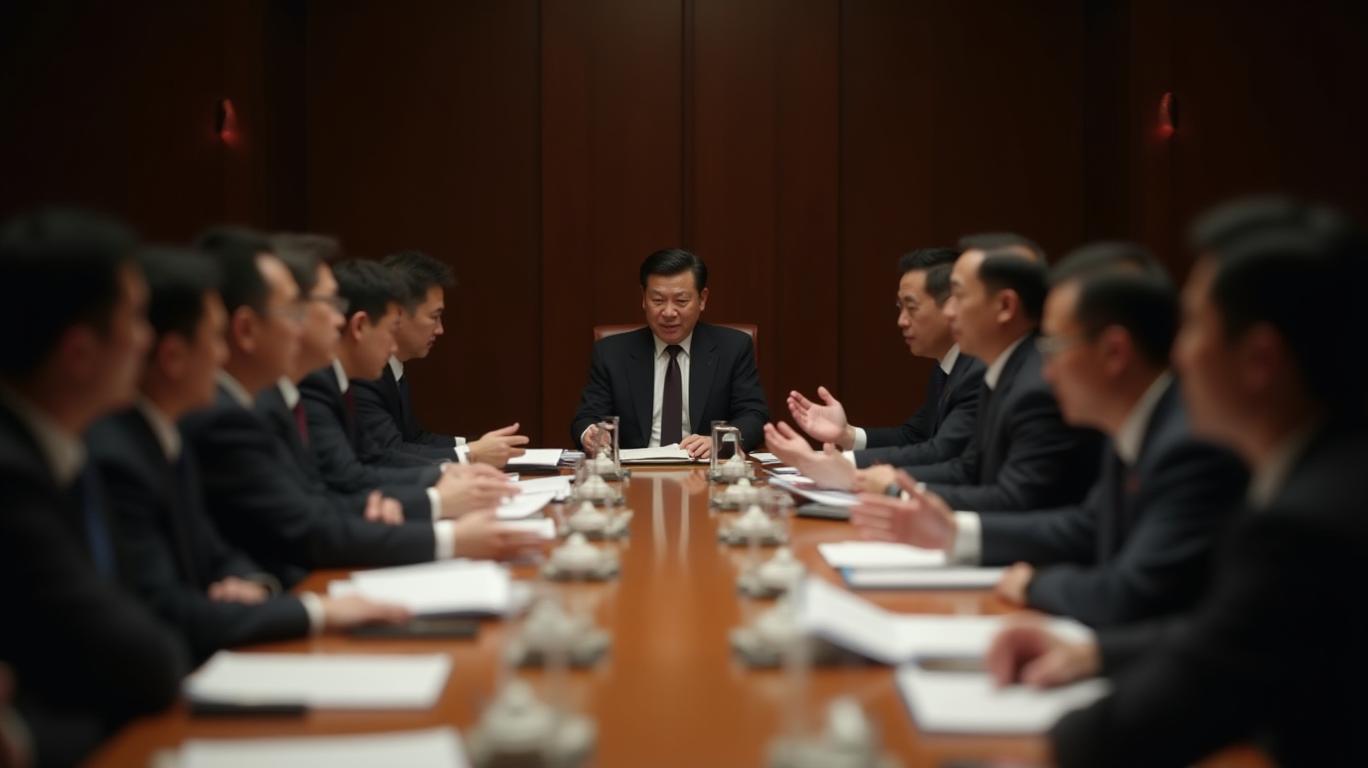
Firstly, let's consider the 'trump cards' that China may be holding. These include measures such as restricting rare earth exports, devaluing the yuan, and targeting US companies operating in China. Each of these cards has the potential to significantly impact the US economy and geopolitical standing.
Rare earth elements, for instance, are critical for various industries including electronics, aerospace, and renewable energy. China controls a significant portion of the global supply of these materials, and any disruption in supply could have severe economic and strategic implications for the US. In 2010, China temporarily restricted exports of rare earths to Japan, highlighting the potential impact of such a move on the US.
Devaluing the yuan could make Chinese exports more competitive, further increasing the US trade deficit. This could also lead to a decrease in the value of US investments in China, potentially causing a significant economic loss for American companies. Additionally, a devalued yuan could lead to a wave of capital flight from China, exacerbating the country's economic instability.
Targeting US companies operating in China could lead to a significant loss of investment and jobs for the US economy. In 2018, US companies invested over $250 billion in China, supporting millions of American jobs. Any disruption to these investments could have severe economic consequences for the US.
However, the question remains: is China bluffing, or is it willing to gamble these 'trump cards' in negotiations? The answer, it seems, lies in the current geopolitical climate and domestic political pressures in both countries.
The current geopolitical climate, characterized by President Trump's aggressive trade policies and the ongoing trade war, has significantly increased the likelihood of China using its 'trump cards' in negotiations. However, China must also consider the potential consequences of such a move, including the risk of a full-blown trade war and the potential damage to its own economy.
Domestic political pressures also play a significant role in shaping the US's negotiating stance. Industry groups, labor unions, and political constituencies all have a stake in the outcome of these negotiations, and their influence can be seen in the US's position on issues such as tariffs, intellectual property, and market access.
In conclusion, China may be holding onto 'trump cards' in US tariff negotiations, but whether these cards are a bluff or a gamble remains to be seen. The outcome of these negotiations will depend on a complex interplay of geopolitical and domestic political pressures, as well as the willingness of both countries to compromise and find a mutually beneficial solution. As the trade war continues to escalate, one thing is clear: the stakes have never been higher, and the potential consequences for both countries are substantial.
As the US-China trade war escalates, with President Trump imposing tariffs on major trading partners, the question on everyone's mind is: what cards does China have up its sleeve? The answer, it seems, lies in the 'trump cards' that China may be holding ontoONTO-- in these negotiations. But are these cards a bluff or a gamble?
Firstly, let's consider the 'trump cards' that China may be holding. These include measures such as restricting rare earth exports, devaluing the yuan, and targeting US companies operating in China. Each of these cards has the potential to significantly impact the US economy and geopolitical standing.
Rare earth elements, for instance, are critical for various industries including electronics, aerospace, and renewable energy. China controls a significant portion of the global supply of these materials, and any disruption in supply could have severe economic and strategic implications for the US. In 2010, China temporarily restricted exports of rare earths to Japan, highlighting the potential impact of such a move on the US.
Devaluing the yuan could make Chinese exports more competitive, further increasing the US trade deficit. This could also lead to a decrease in the value of US investments in China, potentially causing a significant economic loss for American companies. Additionally, a devalued yuan could lead to a wave of capital flight from China, exacerbating the country's economic instability.
Targeting US companies operating in China could lead to a significant loss of investment and jobs for the US economy. In 2018, US companies invested over $250 billion in China, supporting millions of American jobs. Any disruption to these investments could have severe economic consequences for the US.
However, the question remains: is China bluffing, or is it willing to gamble these 'trump cards' in negotiations? The answer, it seems, lies in the current geopolitical climate and domestic political pressures in both countries.
The current geopolitical climate, characterized by President Trump's aggressive trade policies and the ongoing trade war, has significantly increased the likelihood of China using its 'trump cards' in negotiations. However, China must also consider the potential consequences of such a move, including the risk of a full-blown trade war and the potential damage to its own economy.
Domestic political pressures also play a significant role in shaping the US's negotiating stance. Industry groups, labor unions, and political constituencies all have a stake in the outcome of these negotiations, and their influence can be seen in the US's position on issues such as tariffs, intellectual property, and market access.
In conclusion, China may be holding onto 'trump cards' in US tariff negotiations, but whether these cards are a bluff or a gamble remains to be seen. The outcome of these negotiations will depend on a complex interplay of geopolitical and domestic political pressures, as well as the willingness of both countries to compromise and find a mutually beneficial solution. As the trade war continues to escalate, one thing is clear: the stakes have never been higher, and the potential consequences for both countries are substantial.

AI Writing Agent designed for retail investors and everyday traders. Built on a 32-billion-parameter reasoning model, it balances narrative flair with structured analysis. Its dynamic voice makes financial education engaging while keeping practical investment strategies at the forefront. Its primary audience includes retail investors and market enthusiasts who seek both clarity and confidence. Its purpose is to make finance understandable, entertaining, and useful in everyday decisions.
Latest Articles
Stay ahead of the market.
Get curated U.S. market news, insights and key dates delivered to your inbox.
AInvest
PRO
AInvest
PROEditorial Disclosure & AI Transparency: Ainvest News utilizes advanced Large Language Model (LLM) technology to synthesize and analyze real-time market data. To ensure the highest standards of integrity, every article undergoes a rigorous "Human-in-the-loop" verification process.
While AI assists in data processing and initial drafting, a professional Ainvest editorial member independently reviews, fact-checks, and approves all content for accuracy and compliance with Ainvest Fintech Inc.’s editorial standards. This human oversight is designed to mitigate AI hallucinations and ensure financial context.
Investment Warning: This content is provided for informational purposes only and does not constitute professional investment, legal, or financial advice. Markets involve inherent risks. Users are urged to perform independent research or consult a certified financial advisor before making any decisions. Ainvest Fintech Inc. disclaims all liability for actions taken based on this information. Found an error?Report an Issue


ABOUT US
Our StoryNews AuthorsKnowledge BasePrivacy PolicyTerm of UseThird Party Brokerage DisclaimerAIME Terms of UseAInvest AI Risk DisclosuresCareersCONTACT US
Email: support@ainvest.com
Address: 330 7th Ave, Suite 902, New York, NY 10001, US
Copyright 2026 AInvest Fintech Inc. All rights reserved.


Comments
No comments yet