
US-China Trade War Expands into Auto, Steel, and Rare Earth Sectors, Disrupting Daido Steel’s Supply Chains
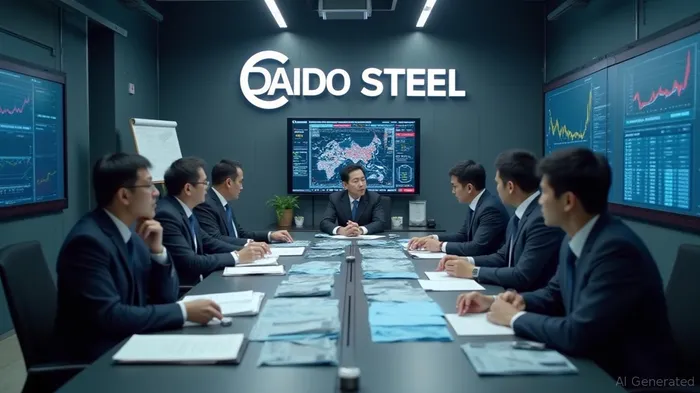
The U.S.-China trade conflict has broadened its scope to include the auto, steel, and rare earth industries, creating significant challenges for global manufacturing. Among the affected companies is Daido Steel Co., a leading Japanese supplier of automotive components, which now confronts tariffs and restrictive export policies. These developments, effective in June 2025, have intensified pressures on international supply chains, particularly for firms reliant on cross-border material flows.
Trade Tensions Escalate into Critical Industries
The trade war’s expansion into the auto sector has introduced new tariffs on vehicles and parts, raising production costs for manufacturers. Steel industriesSTLD-- face retaliatory duties on exports, while rare earth metals—vital for electric vehicles, batteries, and advanced machinery—have become a focal point of geopolitical tension. China’s imposition of stricter export controls on rare earths has limited global access to these resources, further complicating supply chain logistics.
For Daido Steel, these policies have introduced dual challenges. As a major supplier to automakers worldwide, the company sources steel and rare earth materials from multiple regions. However, U.S. tariffs on imported steel products have increased the cost of raw materials, squeezing profit margins. Simultaneously, China’s export restrictions on rare earths—used in high-end automotive components—have constrained Daido’s ability to secure critical inputs reliably.
Daido Steel Navigates Tariffs and Supply Chain Disruptions
Daido Steel’s operations exemplify the trade war’s ripple effects. The company relies on a mix of domestic and international suppliers to meet global demand. New U.S. tariffs on imported steel, averaging 25%, have forced Daido to seek alternative sourcing or absorb higher costs. Meanwhile, China’s decision to tighten rare earth export quotas—reducing annual shipments by 15%—has disrupted Daido’s procurement of materials like neodymium and dysprosium, essential for manufacturing precision automotive parts.
The company has attempted to mitigate risks through diversification, expanding partnerships with non-Chinese rare earth producers. However, these alternatives often come at a premium or lack the scale required for large-scale production. Daido’s executives have acknowledged the need to restructure supply chains, but doing so amid ongoing trade uncertainties has proven logistically and financially burdensome.
Supply Chain Fragmentation Threatens Global Production
The combination of tariffs and export controls has fragmented global supply chains, particularly for automotive and machinery sectors. Companies like Daido Steel now face a precarious balancing act: maintaining cost efficiency while adhering to trade restrictions. Delays in material delivery, increased logistics expenses, and the need for contingency planning have strained operational flexibility.
Automakers dependent on Daido’s components—including those in North America and Europe—report delays in production schedules due to shortages of specialized parts. The disruption underscores how localized trade policies can destabilize interconnected industries. Analysts warn that prolonged trade friction could force manufacturers to adopt nearshore production models, further raising costs for consumers.
Outlook: Trade Policies and Supply Chain Resilience
As the trade war’s impact deepens, Daido Steel and its peers are reevaluating long-term strategies. Companies may accelerate investments in alternative materials or domestic production capacity to reduce reliance on restricted imports. However, such shifts require substantial capital and time, leaving many businesses vulnerable to short-term volatility.
The current environment highlights the fragility of globalized supply chains in the face of geopolitical conflict. For Daido Steel, navigating these challenges will hinge on its ability to adapt swiftly to policy changes while sustaining relationships with key clients. The broader industry, meanwhile, faces a critical juncture: either endure the costs of fragmented supply networks or invest in reshaping manufacturing ecosystems to withstand future disruptions.

Stay ahead of the market.
Get curated U.S. market news, insights and key dates delivered to your inbox.
AInvest
PRO
AInvest
PRO



Comments
No comments yet